About Pinus wallichiana A.B.Jacks.
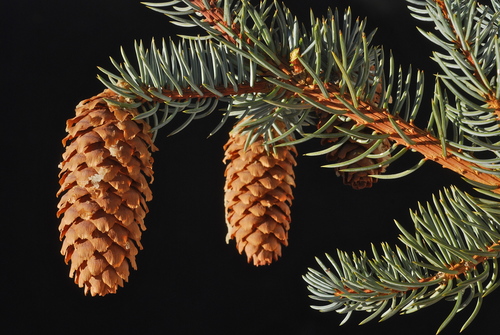
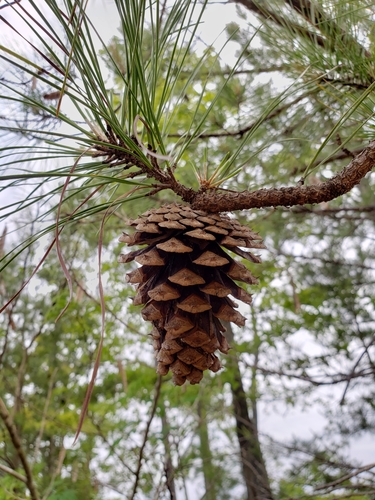
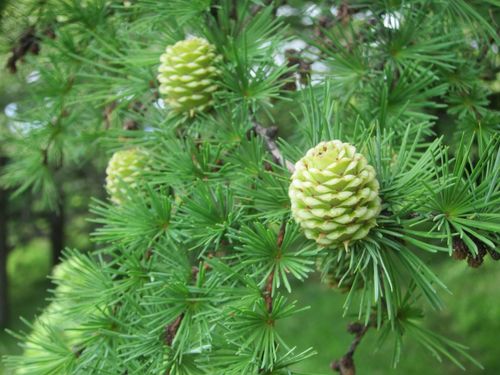
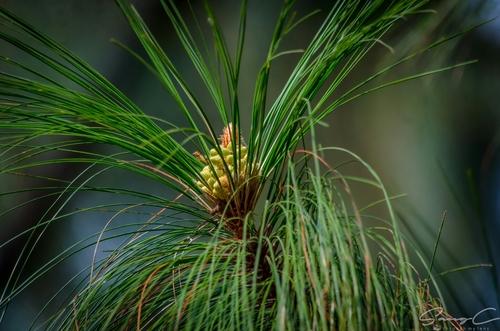
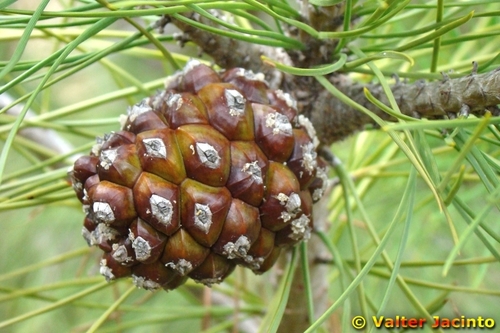
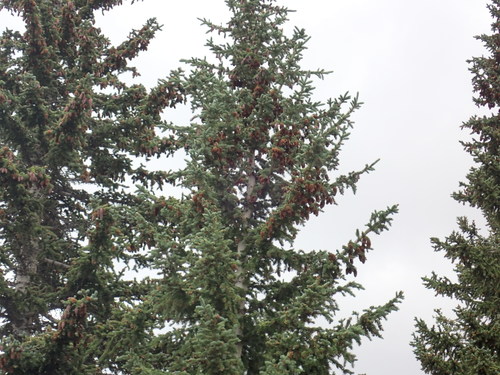
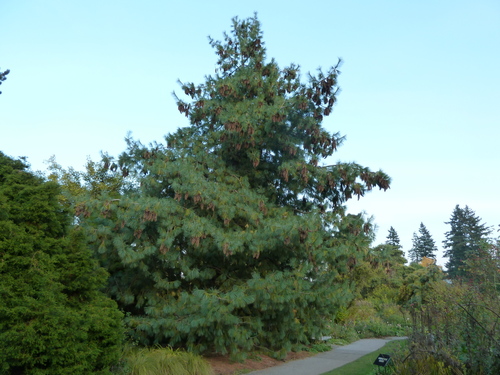
This species, Pinus wallichiana A.B.Jacks., has needle-like leaves that grow in bundles of five, measuring 12–18 cm in length. The needles are flexible along their length, and often droop in a graceful manner. Its mature cones are long and slender, 16–32 cm long, and colored yellow-buff, with thin scales. The seeds of this tree are 5–6 mm long, with a 20–30 mm wing. Typical habitats for Pinus wallichiana include mountain screes and glacier forelands. It can also form old-growth forests as the primary tree species, or grow in mixed forests alongside deodar, birch, spruce, and fir. In some locations, it grows all the way to the tree line. Pinus wallichiana is the primary host plant for Himalayan dwarf mistletoe. The wood of this species is moderately hard, durable, and highly resinous. It works well as firewood, but produces a strong, pungent resinous smoke when burned. It is a commercial source of turpentine; this turpentine is higher quality than that obtained from Pinus roxburghii, but it is not produced as readily. The tree entered the European nursery trade in 1836, nine years after Danish botanist Nathaniel Wallich first brought its seeds to England. It is a popular tree planted in parks and large gardens, grown for its attractive foliage and large, decorative cones. It is also valued for its relatively high resistance to air pollution, which it tolerates better than many other conifers. Both the species itself and its slow-growing cultivar 'Nana' have received the Royal Horticultural Society's Award of Garden Merit.