About Pinus pumila (Pall.) Regel
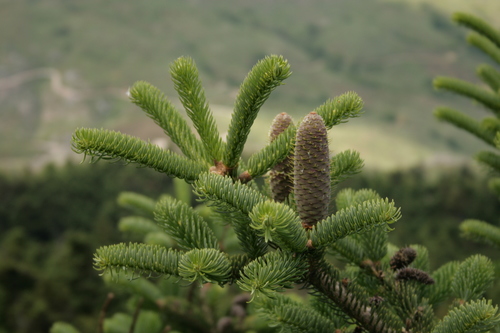
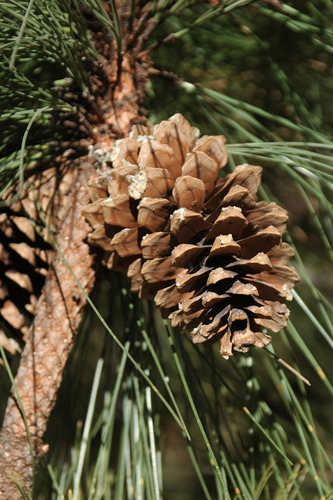
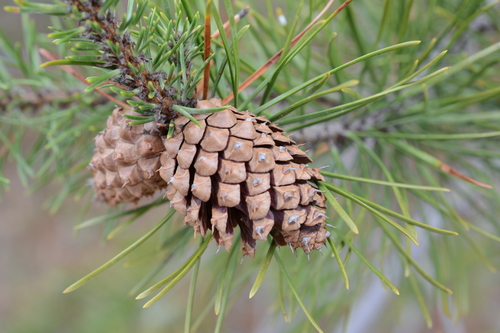
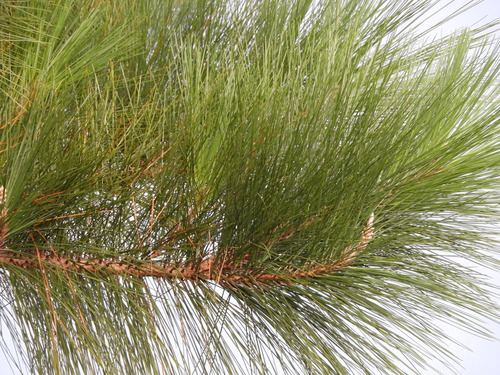
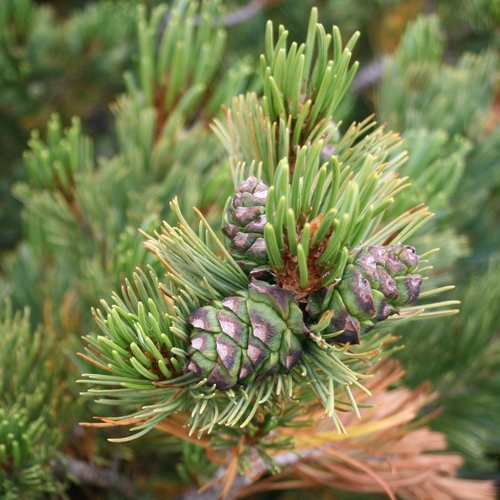
Pinus pumila (Pall.) Regel, commonly known as Siberian dwarf pine, is a coniferous evergreen shrub. It typically reaches 1 to 3 meters (3 to 10 feet) in height, and may exceptionally grow up to 5 meters (16 feet) tall; individual branches can extend further along the ground. In the mountains of northern Japan, it sometimes hybridizes with the related Japanese white pine (Pinus parviflora). The resulting hybrid, Pinus × hakkodensis, is larger than P. pumila, occasionally reaching 8 to 10 meters (26 to 33 feet) in height. Its leaves are needle-like, produced in bundles of five, and measure 4 to 6 centimeters long. Its cones are 2.5 to 4.5 centimeters long, and contain large nut-like seeds called pine nuts. The natural range of Pinus pumila includes the Far East, Eastern Siberia, northeastern Mongolia, northeastern China, northern Japan, and Korea. It grows along mountain chains above the tree line, where it forms dense, continuous thickets. It also grows on headlands above the Okhotsk and Bering Seas, the Tatarsk coast, and the Pacific coast of the Kuril Islands. P. pumila grows very slowly. It can live up to 300 years, and in some cases may reach 1,000 years of age. In ecological terms, the seeds of P. pumila are harvested and dispersed by the spotted nutcracker (Nucifraga caryocatactes). The needles, branches, and cones of P. pumila are highly flammable, so it readily spreads crown fires, especially where it grows continuously across local landscapes. It produces serotinous cones that release seeds after fire, which helps the species recover after severe fires caused by lightning strikes and other sources. This species is cultivated as an ornamental shrub for planting in parks and gardens. The cultivar P. pumila 'Glauca' has received the Royal Horticultural Society's Award of Garden Merit.