About Pinus peuce Griseb.
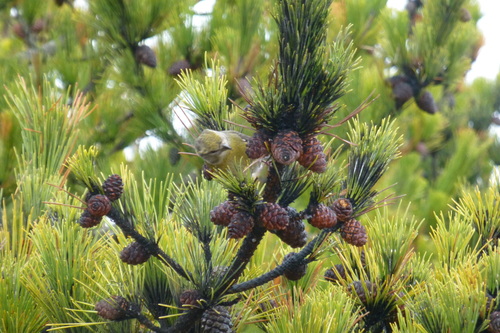
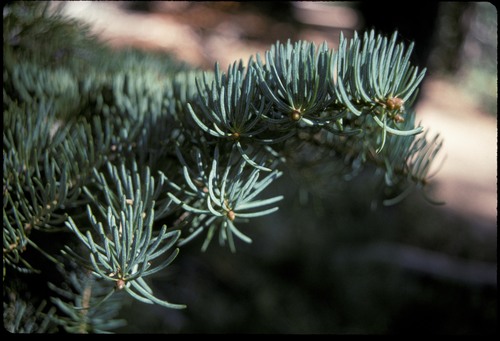
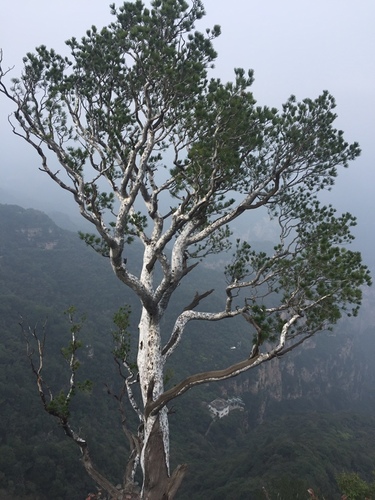
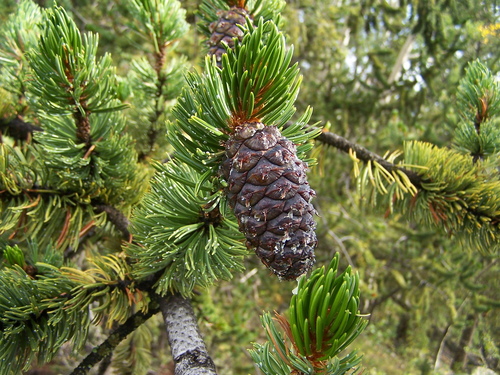
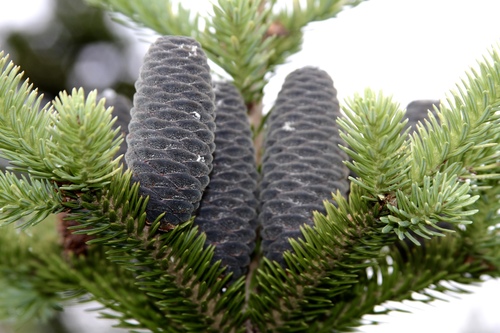
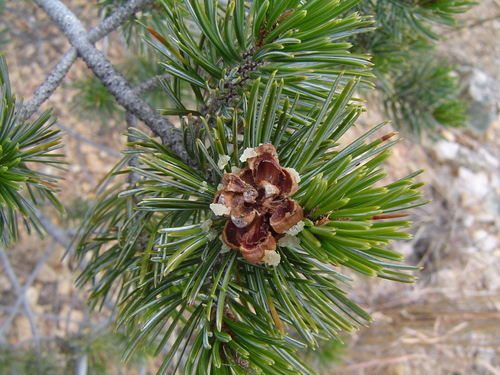
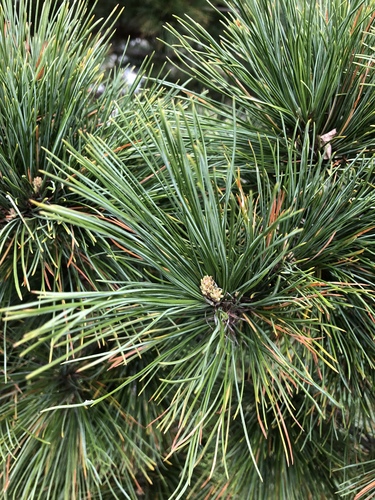
Pinus peuce, commonly known as Macedonian pine or Balkan pine (called molika in Serbo-Croatian and Macedonian, byala mura in Bulgarian), is a pine species native to the mountains of North Macedonia, Bulgaria, Albania, Montenegro, Kosovo, extreme southwest Serbia, and extreme northwest Greece. It typically grows at altitudes between 1,000 and 2,200 m, with a range that extends from 600 m up to 2,300 m. In this region, it often grows right up to the alpine tree line. Mature trees reach 35 to 40 m in height with trunk diameters up to 1.5 m, but trees growing near the upper tree line are much shorter, and can even take on a low, shrub-like form. Macedonian pine belongs to the white pine group, Pinus subgenus Strobus. Like all members of this group, its needle-like leaves grow in bundles (fascicles) of five, with a deciduous sheath. The needles themselves are 6 to 11 cm long. Its pine cones are mostly 8 to 16 cm long, and occasionally reach 20 cm. Cones are green when young, turning yellow-brown when mature, and have broad, flat to downward-curved scales. The tree's seeds are 6 to 7 mm long, with a 2 cm wing. Seeds can be dispersed by wind, but very often they are dispersed by spotted nutcrackers instead. This species was first formally described for scientific literature by August Grisebach in 1844, based on his field observations of montane pines growing on Baba Mountain, above Bitola. Macedonian pine is one of the most valuable conifer species on the Balkan Peninsula. Its durable wood is highly valued for construction, furniture production, wood-carving, and cooperage. It adapts exceptionally well to severe mountain climate conditions, making it a valuable species for afforestation of high terrain to prevent erosion. Local populations use P. peuce resin to treat wounds, pectoral diseases, skin diseases, stomach diseases, varicose veins, and other illnesses. It is also a popular ornamental tree, planted in parks and large gardens. It grows reliably and steadily, though not quickly, across a wide range of site conditions. It tolerates severe winter cold, with hardiness down to at least -45 °C, and is also tolerant of strong wind exposure. It is locally naturalized in Punkaharju, eastern Finland. Like other European and Asian white pines, Macedonian pine is highly resistant to white pine blister rust, a fungal disease caused by Cronartium ribicola. This fungus was accidentally introduced from Europe to North America, where it has caused widespread severe mortality in native North American white pine species such as western white pine, sugar pine, and whitebark pine. Macedonian pine is highly valuable for research into hybridization and genetic modification, aimed at developing rust resistance in North American native white pines. Hybrids between Macedonian pine and eastern white pine inherit some level of this rust resistance.