About Pinus bungeana Zucc. ex Endl.
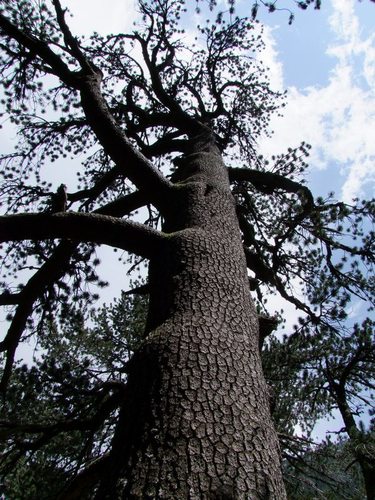
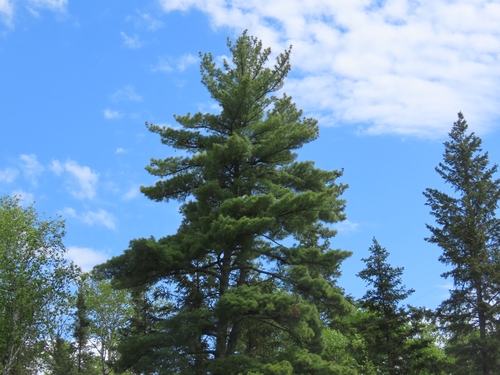
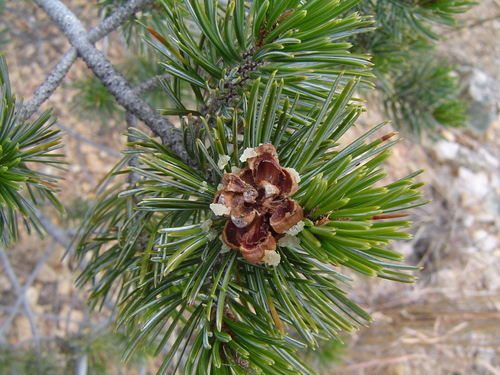
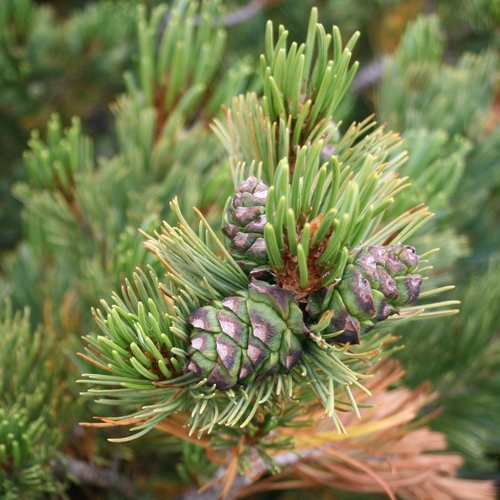
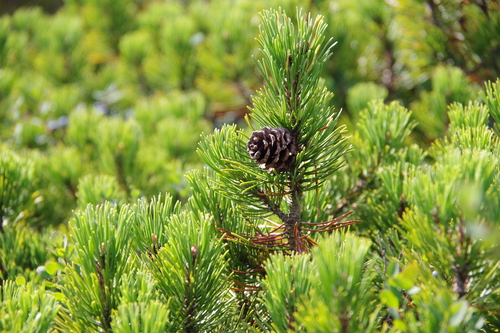
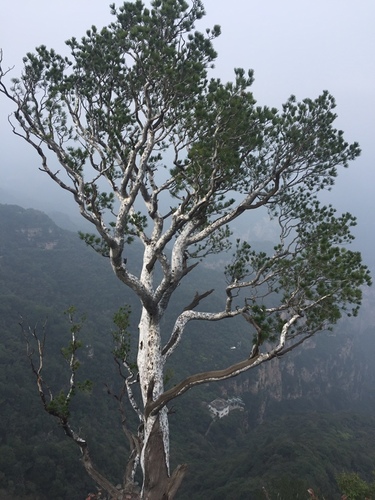
Pinus bungeana Zucc. ex Endl., commonly known as lacebark pine, may grow either a single upright trunk (monopodial growth) or a forked trunk (sympodial growth). Its crown has a loose shape, forming either a pyramid or an umbrella. The needles grow in groups of three, are 5–10 centimetres (2.0–3.9 in) long, and each needle has a triangular semicircular cross-section. Mature cones of this species are yellowish-brown, roughly egg-shaped, and 5–7 centimetres (2.0–2.8 in) long. The seeds inside the cones are grey-brown, slightly egg-shaped, and 10 millimetres (0.39 in) long. Pinus bungeana is native to mountain temperate forests of China, and occurs wild in the Chinese provinces of Shanxi, western Henan, southern Gansu, southern Hebei, northern Sichuan, Shaanxi, western Shandong, and Hubei. In the wild, it grows on limestone rocks and south-facing slopes at relatively high elevations between 500–2,150 metres (1,640–7,050 ft), though it has also been planted at lower elevations. In the northern part of its native range, it can also grow in acidic soil. As a light-demanding species, it typically grows in sites that are less suitable for other tree species. It was introduced to England in 1843, and is now widely cultivated as an ornamental tree, especially valued for its metallic bark. Ecologically, pollination of lacebark pine occurs in April and May, and seeds mature in October and November of the second year after pollination. In China and Korea, lacebark pine is traditionally planted near temples and cemeteries. It is grown as an ornamental tree in classical gardens designed to imitate Chinese gardens, where it symbolizes longevity. It can also be found in botanic gardens, and often grows with multiple stems. While its wood is not used commercially for timber, local populations in northeast China use it for construction, furniture, and transport structures such as pallets. Its seeds are edible, and are used in traditional Chinese medicine to relieve respiratory ailments.