About Pimelea flava R.Br.
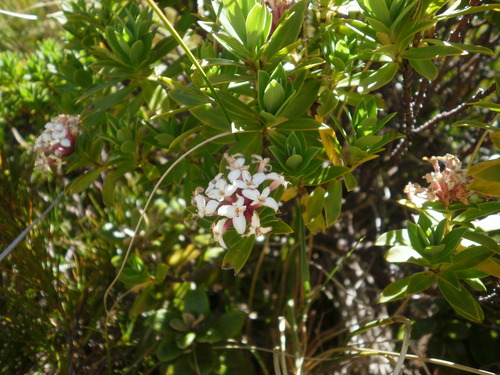
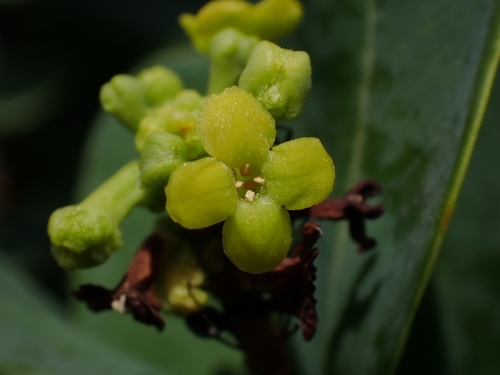
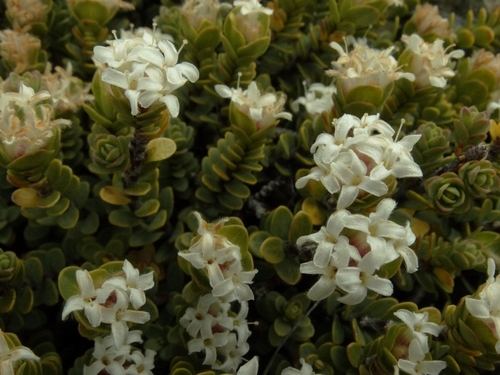
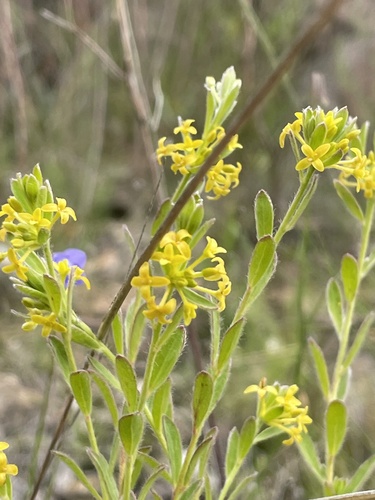
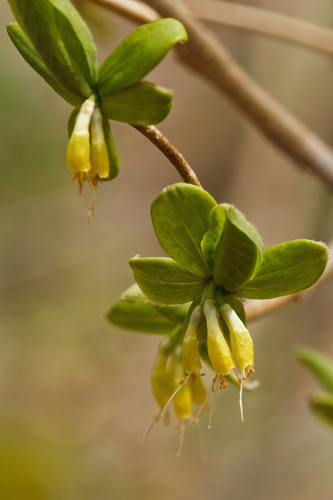
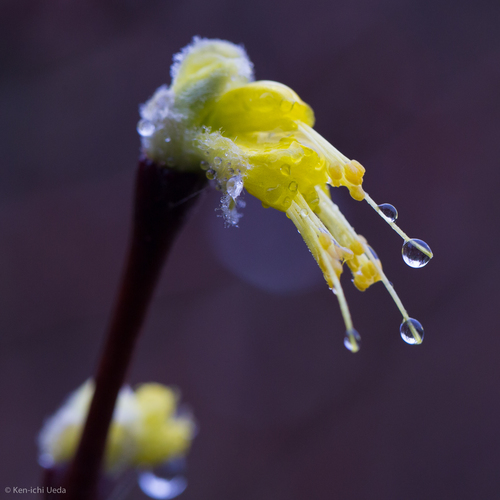
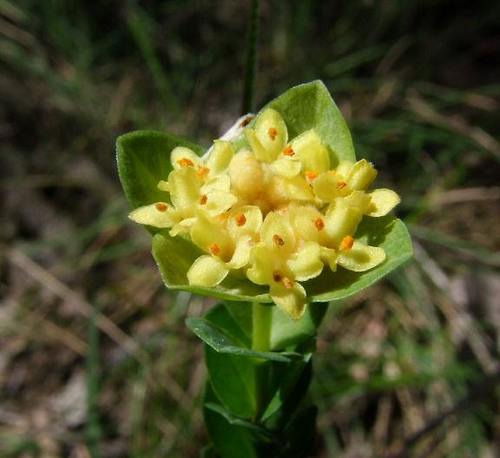
Pimelea flava R.Br. is a shrub that typically grows to a height of 0.3–2.5 m, and has hairy young stems. Its leaves are arranged in opposite pairs, often crowded, and range in shape from narrowly elliptic to egg-shaped with the narrower end toward the base, or almost circular. The leaves measure 2–10 mm long and 1–6 mm wide, sit on a short petiole, and are glabrous. The flowers form compact clusters of 9 to many at the ends of branches, on a peduncle 1–10 mm long. The clusters are accompanied by 2 to 4 elliptic, leaf-like involucral bracts that are 3–16 mm long and 2–10 mm wide. Each individual flower is either male or female, hairy, and yellow or white, with flower color differing by subspecies. The floral tube is 2–6 mm long, the sepals are 1–3 mm long, and the stamens are shorter than the sepals. Flowering occurs mainly from August to December. This species has two accepted subspecies with different distributions and habitats. Diosma rice-flower, Pimelea flava subsp. dichotoma, grows in sand or heavier soil, most often in mallee shrubland. Its range extends from the Eyre Peninsula in South Australia to near West Wyalong in New South Wales, and to the Grampians in Victoria. Yellow rice-flower, Pimelea flava subsp. flava, grows mainly in sandy soil. It occurs from the Yorke Peninsula in South Australia to East Gippsland in Victoria, and across south-eastern to northern Tasmania.