About Physaria didymocarpa (Hook.) A.Gray
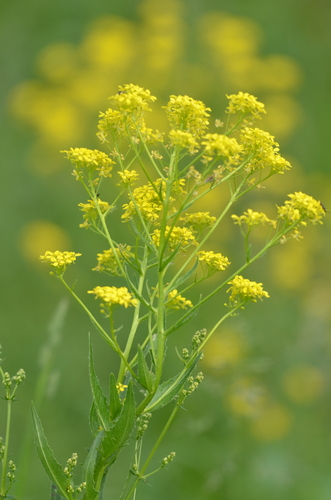
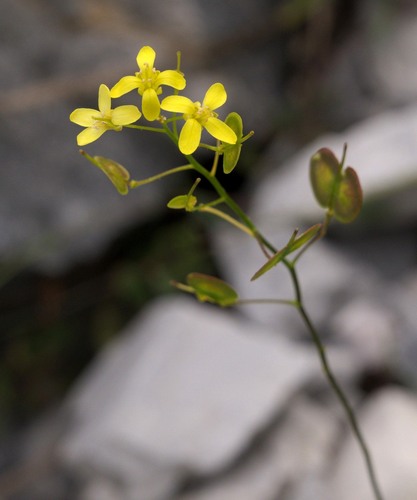
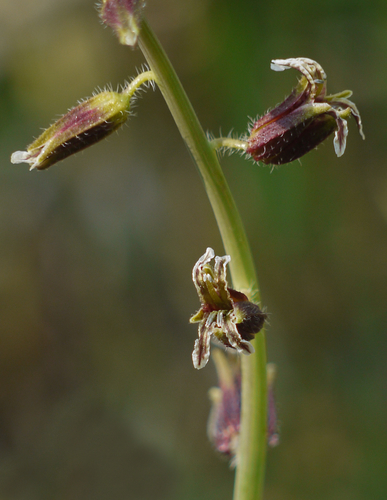
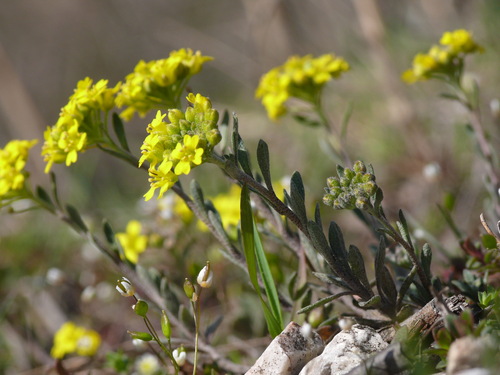
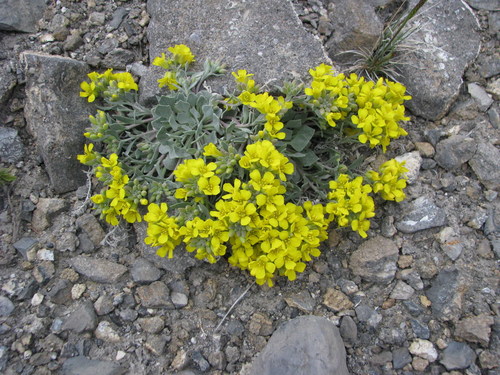
Physaria didymocarpa is a species of flowering plant in the mustard family, commonly known as common twinpod. It is native to western North America, occurring in British Columbia and Alberta in Canada, as well as the northwestern United States. This perennial herb grows several decumbent stems from a hairy caudex. The stems reach around 10 centimeters (3.9 inches) in length, and bear lance-shaped leaves that measure one to two centimeters long. Dense raceme inflorescences of yellow flowers form at the ends of the stems. The petals are roughly one centimeter long. The plant produces an inflated silicle fruit, up to 2 centimeters (0.79 inches) long by 2 centimeters (0.79 inches) wide, with a texture ranging from firm to papery and a fuzzy surface. There are three recognized subspecies of Physaria didymocarpa. Subspecies lanata is native to Montana and Wyoming, while subspecies lyrata, a taxon distinguished by its very inflated, papery fruits, is endemic to Idaho.