About Physalaemus nattereri (Steindachner, 1863)
Dorsal Coloration
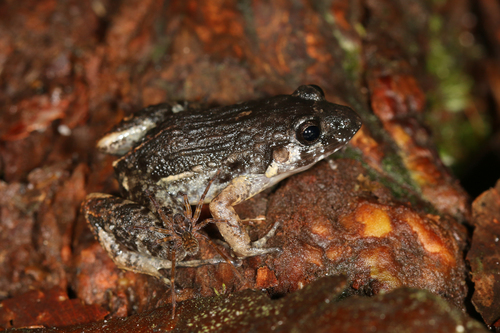
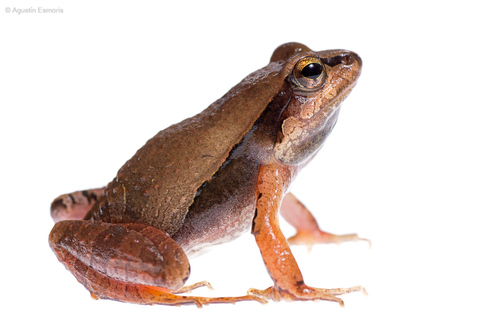
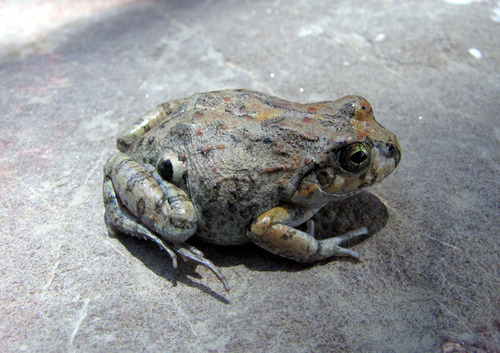
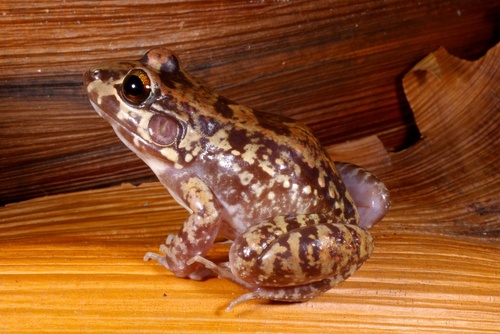
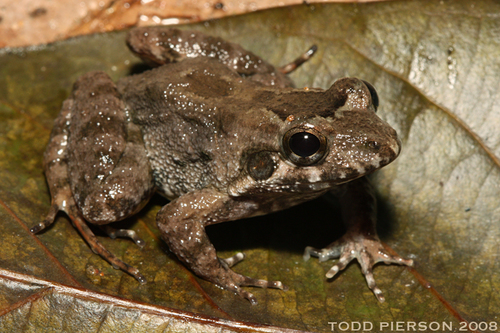
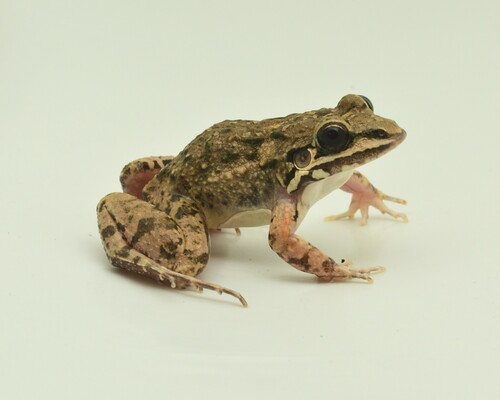
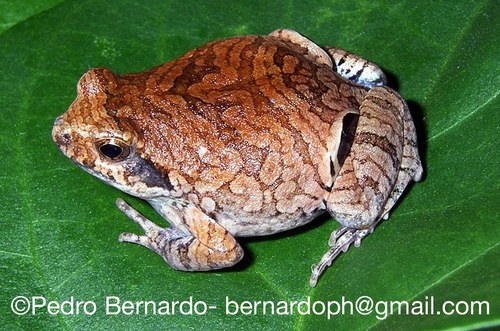
This species, Physalaemus nattereri, is a frog with a dorsal coloration that ranges from light brown to dark brown or reddish, patterned with a mosaic of darker spots and stripes.
Inguinal Ocelli Feature
A key distinctive feature is the presence of two large black ocelli positioned over glands in the inguinal region.
Ventral and Limb Markings
The inner thigh is white with black vermiform spots, and the abdomen is light brown with darker spots of the same tone.
Adult Body Length
Males have an average body length of 4.7 centimeters (1.9 in), while females average 4.9 centimeters (1.9 in).
Trunk Morphology
The species has a robust trunk, with trunk width ranging from 29.8 to 50.6 millimeters (1.17 to 1.99 in).
Head Structure
Its head is wider than its body; the diameter of the eye equals the distance between the two orbits.
Gland Characteristics
It has large inguinal glands, but lacks both sacral glands and parotoid glands.
Snout and Vocal Sac Traits
Its snout and canthus are rounded, the loreal region is concave, and males have a well-developed vocal sac.
Male Testicle Pigmentation
A rare characteristic of this species is that males have brightly colored testicles, often marked with spots of other colors.
Pigmentation Prevalence in Amphibians
This trait is only known in five other amphibian species, including Physalaemus cuvieri.
Pigmentation Cause and Distribution
This pigmentation is also present in other organs, such as the kidneys, peritoneum, and spleen, and is caused by a high concentration of melanocytes, possibly due to an interaction between these cells and the vascular system of these tissues.
Species Distinguishing Traits
Physalaemus nattereri can be easily distinguished from other regional anurans by its unique, easily observable traits, most notably the pair of dorsal ocelli.
Closely Related Similar Species
This ocellus trait is only shared with Physalaemus deimaticus, which is smaller, has a different dorsal mosaic pattern, and is restricted to Serra do Cipó, Minas Gerais.
Geographic Distribution
In terms of distribution and conservation, Physalaemus nattereri occurs in the Central-West, Southeast, and Northeast regions of Brazil, as well as eastern Paraguay and Bolivia, across altitudes from sea level up to 1,500 meters (4,900 ft).
Climatic Adaptations
It is a fossorial, seasonal species highly adapted to the continental semi-arid climate.
Habitat Preferences
It inhabits savannas and low-vegetation areas of the Cerrado, typically near permanent or temporary water bodies such as ponds and swamps, where it nests.
Habitat Degradation Tolerance
It cannot survive in areas degraded by human activity.
IUCN Conservation Status
The International Union for Conservation of Nature (IUCN) classifies this species as Least Concern due to its common occurrence, but its population is declining, threatened by the expansion of intensive agriculture across its range.
Protected Habitat Coverage
Parts of its distribution fall within protected environmental parks, which reduces overall risk to the species.
Genus Species Count
The genus Physalaemus holds a total of 47 species including P. nattereri.
Breeding Seasonality
For reproduction, a study conducted in Bodoquena, Mato Grosso do Sul, Brazil, found that Physalaemus nattereri is an explosive breeder: all individuals gather synchronously to breed over a few days, typically between October and January.
Male Mating Behavior
Males form choruses to attract females, and vocalize after heavy daily rainfall exceeding 50 millimeters (2.0 in).
Vocalization Properties
The species' vocalization ranges between 530 and 1620 hertz, with a dominant frequency of 710 Hz, and consists of simple, multi-pulsed, harmonic notes.
Egg Laying Process
During axillary amplexus, the breeding pair moves to the edge of a pond, and lays approximately 3500 eggs in a foam nest.
Foam Nest Construction
The nest is built from mucus secreted by the female; the male increases the nest's volume by whipping the mucus with his hind legs, in a process similar to whisking egg whites.
Communal Egg Laying
This species may produce communal egg masses.
Reproductive Mode Classification
Following the anuran reproductive mode classification of Célio Haddad and Cynthia Prado, this species uses Mode 11.
Female Fecundity Traits
Ovaries make up approximately 22% of a female's total body mass, and fecundity increases with female body size.
Tadpole Feeding and Habitat
The tadpoles of Physalaemus nattereri are exotrophic, feeding in the water column.
Tadpole Morphology
They have a grayish-brown dorsum and a lighter venter, a globular body, and are benthic.
Labial Tooth Row Formula
Their labial tooth row formula (LTRF) is 2(2)/3(1).
Tadpole Development Traits
Tadpoles feed primarily on microalgae, have low resistance to moisture stress, and complete metamorphosis in an average of 20 to 30 days.