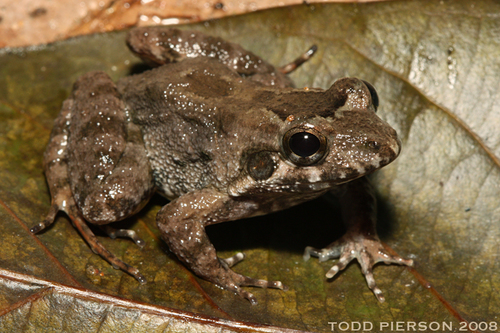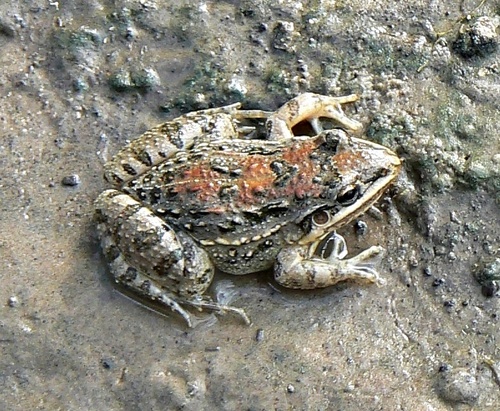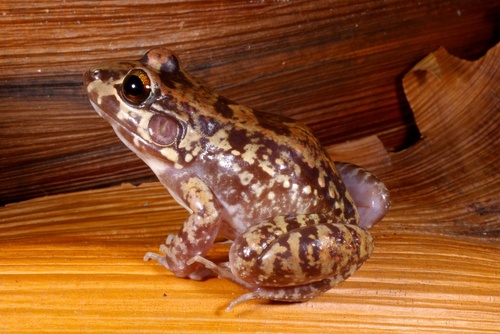
About Leptodactylus troglodytes Lutz, 1926
Adult Size
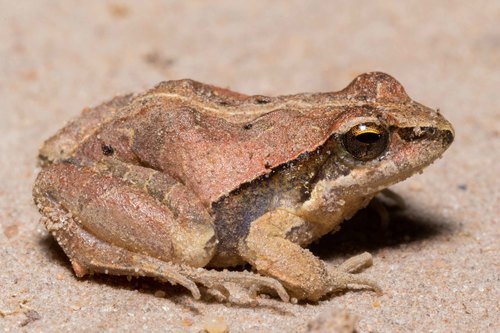
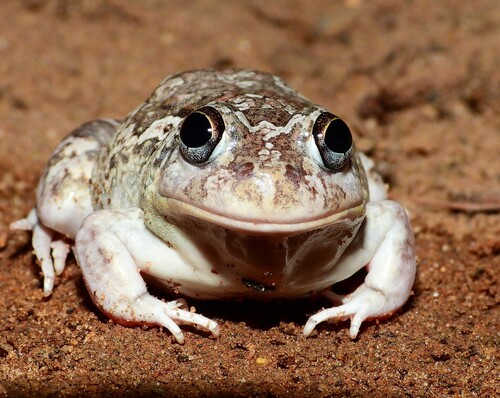
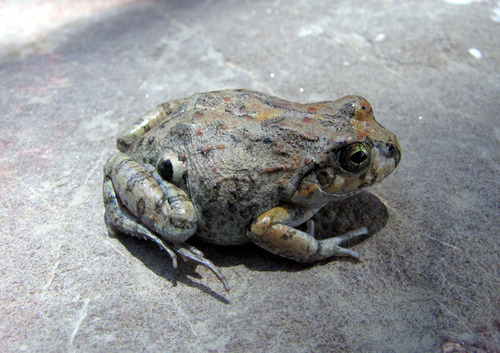
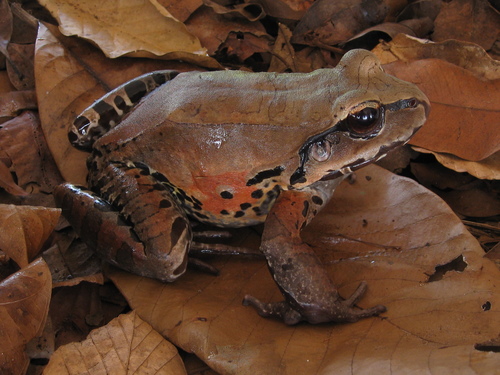
Adults of Leptodactylus troglodytes measure 46–53 mm (1.8–2.1 in) in snout–vent length for males, and 45–53 mm (1.8–2.1 in) for females. The tympanum is distinct.
Sexual Dimorphism
Male individuals have a more acuminate snout than females.
Dorsal and Lateral Fold Morphology
Dorsal folds are absent, while dorsolateral folds are indistinct or most often absent; lateral folds are also either absent or interrupted.
Belly Coloration
The belly is uniformly light in color.
Tadpole Size
Tadpoles of this species reach a total length of 43 mm (1.7 in) when at Gosner stage 36.
Habitat Range
This is a common frog species that occurs in both dry and moist savanna, agricultural land within the Cerrado and Caatinga ecosystems, and dune systems in the Atlantic Rainforest zone.
Threats and Conservation Status
Leptodactylus troglodytes is negatively affected by intensive agriculture, livestock overgrazing, and fire, but the full species is not considered threatened. It has been recorded in many protected areas.
Reproductive Nest Construction
For reproduction, Leptodactylus troglodytes constructs foam nests in underground chambers located near water. A single tunnel can hold multiple of these chambers.
Mating Behavior
Males are territorial and produce both territorial and courtship calls, which females may respond to.