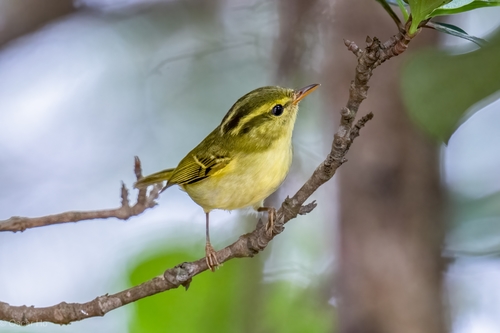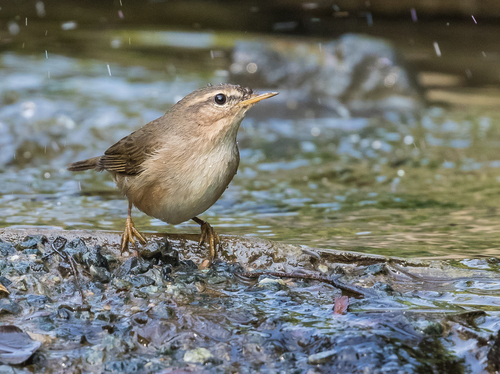
About Phylloscopus fuscatus (Blyth, 1842)
Species Introduction
The dusky warbler (Phylloscopus fuscatus) is a leaf warbler that breeds in the east Palearctic.
Name Etymology
Its genus name Phylloscopus comes from Ancient Greek: phullon means "leaf", and skopos means "seeker" (derived from skopeo, "to watch"). The specific epithet fuscatus comes from the Latin word fuscus, meaning "dark".
Migratory Range
This warbler is strongly migratory; it winters in South Asia and Southeast Asia. It sometimes appears in Alaska in North America, and has also been recorded in California.
Habitat and Abundance
It is an abundant species found in taiga bogs and wet meadows.
Nesting Behavior
It builds its nest low in a bush, and lays 5 to 6 eggs per clutch.
Primary Diet
Like most Old World warblers, this small passerine bird is insectivorous.
European Vagrant Records
The dusky warbler is known to wander as a vagrant as far as western Europe in October, even though this lies 3000 kilometers away from its breeding grounds. It has even been recorded wintering in Great Britain.
Size and Shape
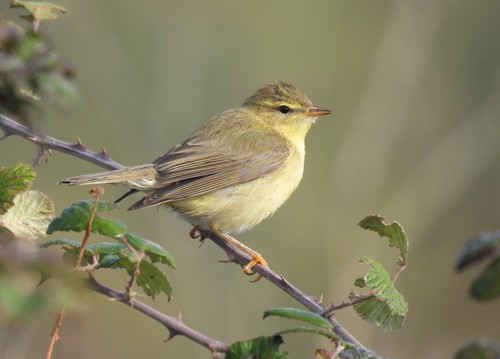
This warbler is similar in size and shape to a common chiffchaff.
Adult Plumage
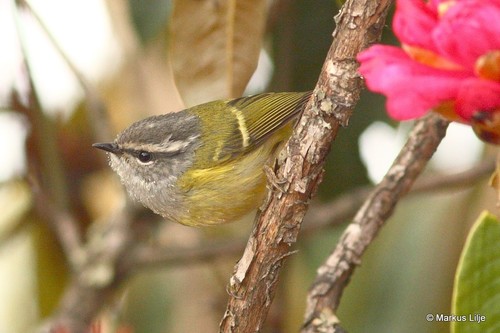
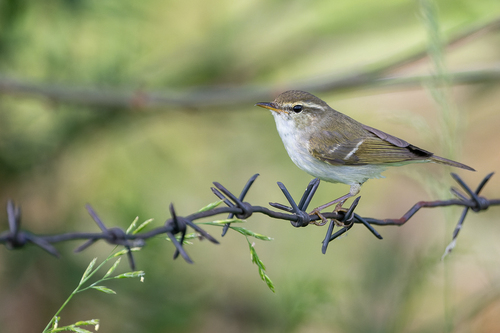
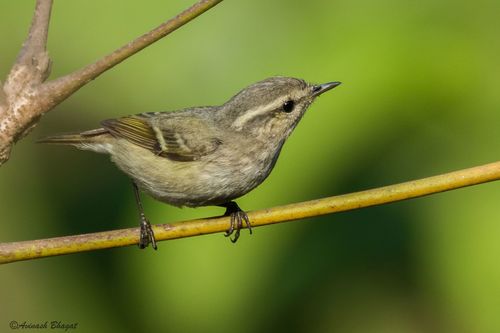
Adult dusky warblers have an unstreaked brown back and buff underparts, with a prominent whitish supercilium, and a fine, pointed bill.
Plumage Variation
As with most warblers, the sexes are identical in appearance, but young birds have a more olive tint to their upper plumage.
Supplementary Diet
Like most warblers, it primarily eats insects, but will also consume other small food items including berries.
Vocalizations
Its song is a monotonous whistle, and its call is a harsh "check" sound. Away from the breeding grounds, the call is often the first clue that this typically skulking species is present.
2025 Portugal Sighting
An individual of this locally rare species was detected in an urban park and later ringed in December 2025 in Porto, Portugal.