About Phyllomedusa tarsius (Cope, 1868)
Species Nomenclature
Phyllomedusa tarsius, commonly known as the brownbelly leaf frog or tarsier leaf frog, is a species of frog in the subfamily Phyllomedusinae.
Confirmed Distribution
Its confirmed distribution includes Brazil, Colombia, Ecuador, Peru, and Venezuela, and it may also live in Bolivia and Guyana.
Elevation Range
This species has been observed at elevations up to 800 meters above sea level.
Adult Size
Adult male frogs measure 82 mm (3.2 in) to 90 mm (3.5 in) in snout-vent length, while adult female frogs reach 110 mm in snout-vent length.
Dorsum and Toe Coloration
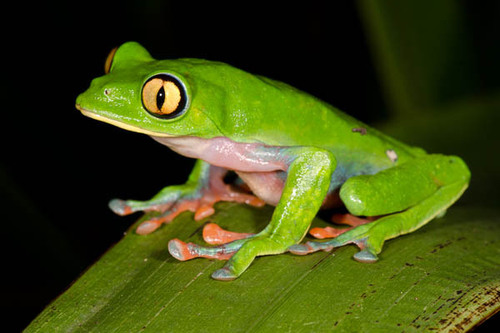
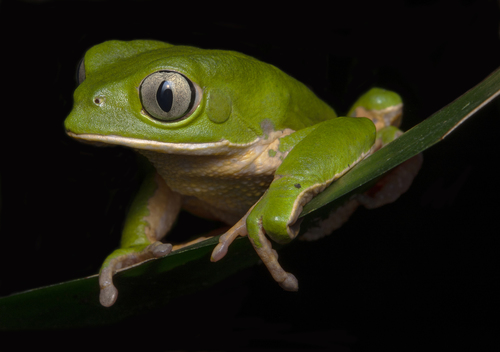
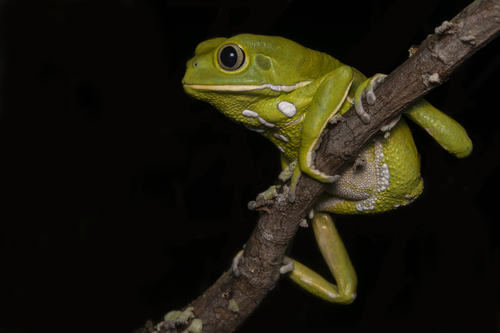
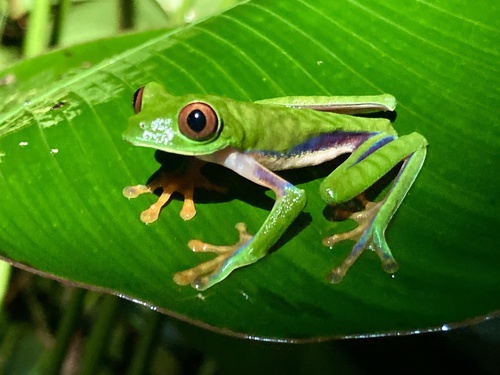
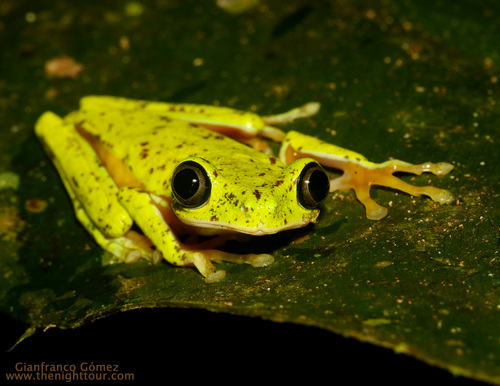
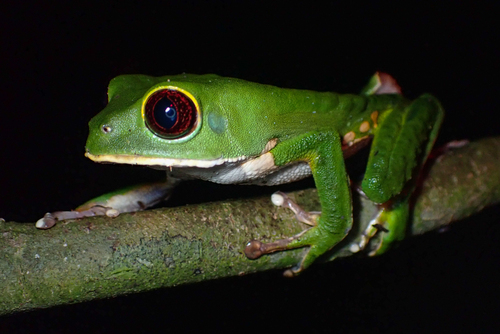
The skin on the dorsum is green, and some of the toes are brown and white.
Ventral Coloration
The belly is colored white and orange, and the throat is white.
Eye Coloration
Their eyes have a mixed coloration of orange, red, and black.
Activity and Habitat Type
This is an arboreal, nocturnal species of frog.
Male Mating Behavior
Males perch on tall plants near ponds and call to attract females.
Egg Laying
Females lay clutches of 200 to 500 eggs in leaf-formed nests positioned overhanging ponds.
Egg Protection
The female coats the eggs in a jellylike substance to keep them from drying out.
Tadpole Hatching
When tadpoles hatch, they fall from the nest into the water below.
Habitat Threats
Although considerable habitat degradation has occurred across the frog's range, including from deforestation, overgrazing, and agriculture, scientists have classified this species as least concern for extinction.
Population Status
This frog has demonstrated an ability to survive in altered habitats, so its population is assumed to be quite large.