About Phrynobatrachus acridoides (Cope, 1867)
Size and Sexual Dimorphism
Males of Phrynobatrachus acridoides reach a maximum snout–vent length of 27 to 28 mm (1.1 to 1.1 in), while females reach 25 to 30 mm (1.0 to 1.2 in), with measurements varying by source.
Head and Limb Features
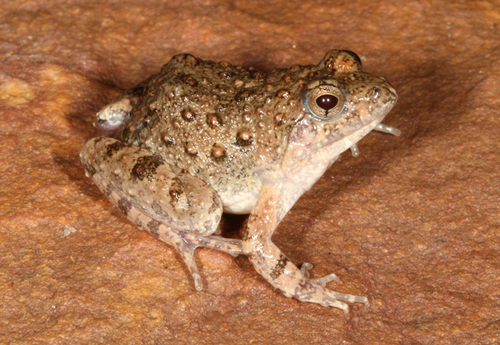
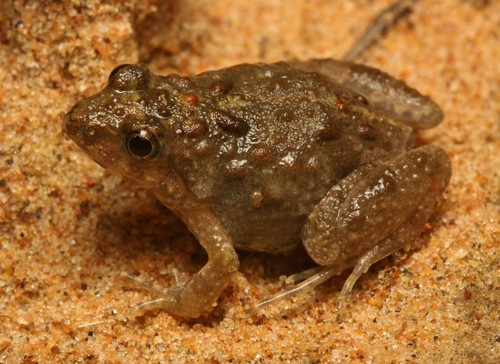
The tympanum is round and usually visible. The snout is narrowed, rounded, and somewhat prominent. The toes are moderately webbed.
Dorsal Coloration
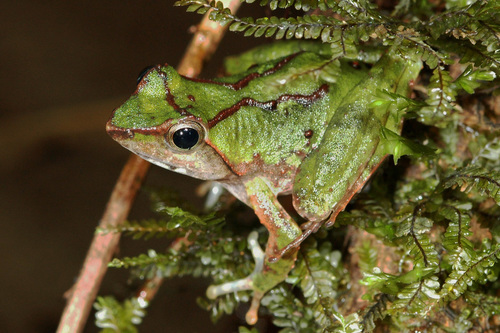
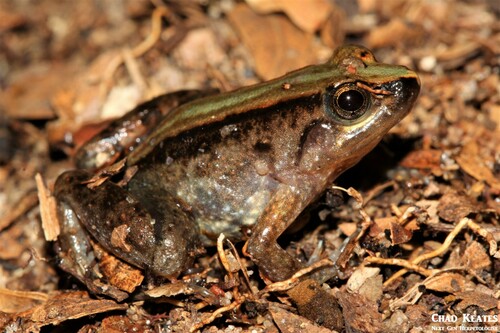
The dorsum is greyish-olive or greyish-brown. This species has multiple distinct color morphs, and a narrow pale or green vertebral band is often present. The limbs have barring.
Venter and Markings
The venter is white, with a yellowish hue near the groin, and a pale stripe runs along the back of the thigh. In both sexes, the throat and breast are white with brown punctuations, or are uniformly darkened.
Male Traits and Vocalization
Males have a vocal sac. The male advertisement call of this species has been described as "a coarse, rasping croak", "a continual harsh creaking snore", or "cricket-like".
Habitat Range
Phrynobatrachus acridoides inhabits dry and humid savanna, shrubland, grassland, and coastal habitats, and it adapts well to modified habitats.
Breeding Habits
Breeding occurs in mostly temporary, but also permanent waterbodies including puddles, pools, swamps, vleis, roadside ditches, and flooded grassy depressions. Eggs are mostly laid in aquatic vegetation below the water surface.
Predators
This species is known to be preyed on by the snakes Psammophis sibilans and Thelotornis capensis.
Conservation Status
Phrynobatrachus acridoides is an adaptable, common, and sometimes abundant species that does not face significant threats. However, it appears to have declined at the margins of its range in South Africa for unknown reasons. It occurs in many protected areas.