About Pholis gunnellus (Linnaeus, 1758)
Common Names and Taxonomy
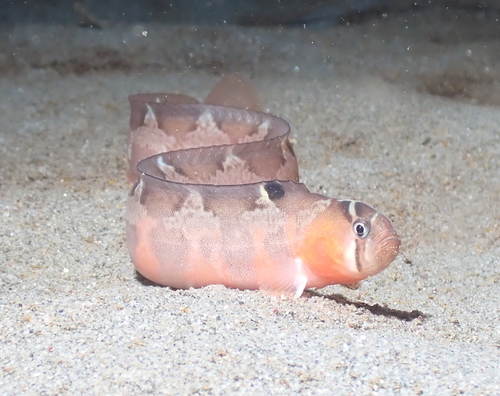
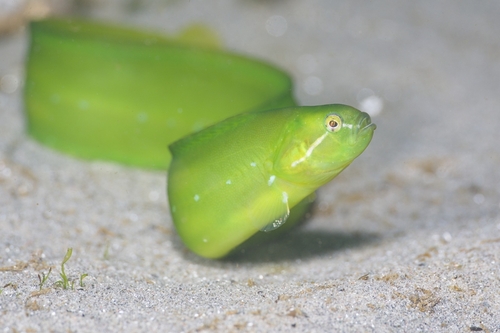
This species, commonly known as both the rock gunnel and the butterfish (scientific name Pholis gunnellus (Linnaeus, 1758)), is frequently confused for an eel because of its flattened, elongated body shape.
Size
Fully grown adult rock gunnels can reach up to 30 cm in total length, while the maximum published standard length for this butterfish is 25 cm (9.8 in).
Dorsal Fin Structure
A long dorsal fin runs along the creature’s body starting just behind the head, and this fin is supported by soft spiny rays.
Anal Fin Structure
Its anal fin starts approximately halfway along the length of the body.
Head Morphology
The rock gunnel has a relatively small head, with a protruding lower jaw and an upward-turned mouth.
Body Coloration
Its body coloration is extremely variable, ranging across shades of yellow-green, brown, and crimson.
Dorsal Fin Markings
A row of 9 to 13 dark spots, each outlined by a pale ring, runs along the length of the dorsal fin.
Geographic Distribution
The rock gunnel occurs in the coastal waters of North America and Europe.
Atlantic Range Details
In the western Atlantic Ocean, its range extends from Labrador and Greenland south to Delaware Bay; in the eastern Atlantic Ocean, it ranges from the Kanin Peninsula south to the Bay of Biscay.
Depth Range
Across this range, the species can be found from the intertidal zone down to depths of more than 100 m.
Habitat Preferences
Rock gunnels occupy sheltered habitats hidden by rocks and algae, both above and below the waterline.
Predators
This shelter likely protects them from their natural predators, which include seabirds, other fish, and marine mammals.