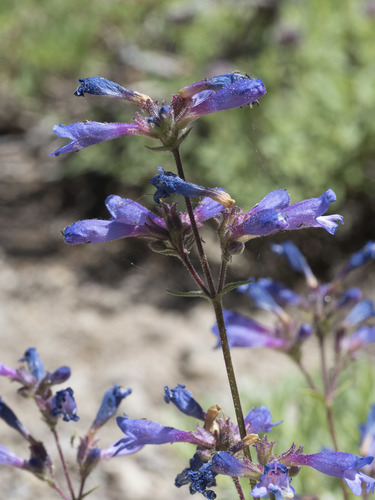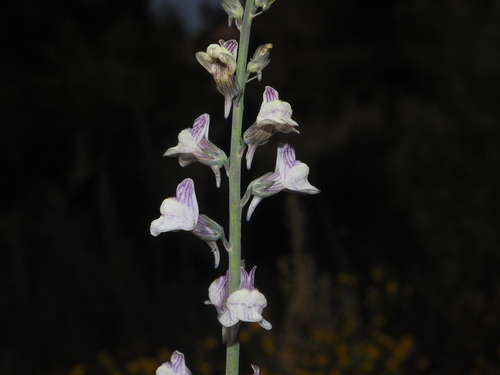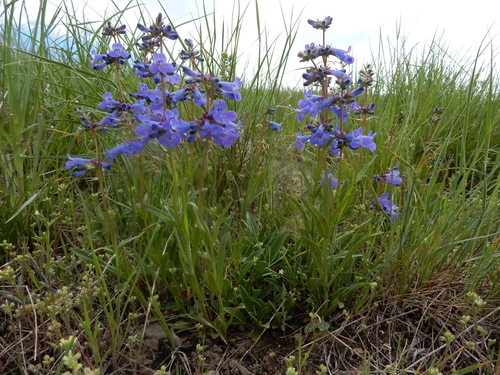
About Penstemon attenuatus Douglas
Nomenclature and Taxonomy
Penstemon attenuatus Douglas is a species of flowering plant in the plantain family, with the common names sulphur penstemon and taperleaf beardtongue. It is native to the northwestern United States.
Growth Habit and Size
This species is a perennial herb that grows up to 90 centimeters tall.
Leaf Arrangement and Edge Morphology
Its dark green leaves are arranged oppositely, and most varieties generally have smooth edges; only var. attenuatus may have slightly toothed leaf edges.
Leaf Size and Attachment
Basal leaves grow up to 17 centimeters long and have petioles, while leaves positioned higher on the stem are smaller and may clasp the stem at their bases.
Flower Characteristics
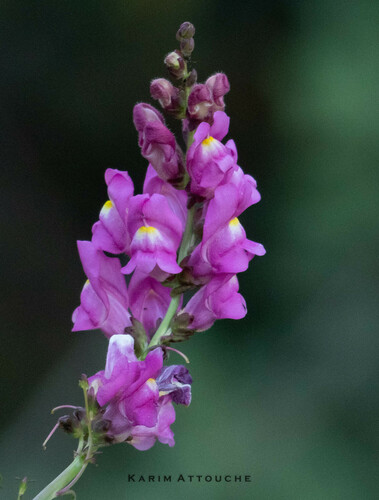
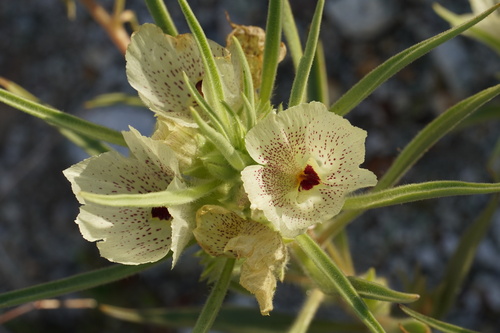
The plant produces tubular flowers that range in color from blue and purple to pink, yellow, or white, and each individual flower reaches up to 2 centimeters in length.
Pollinator Association
The flowers attract many types of insects, including bees.
Similarity to Congeners
Penstemon attenuatus can look very similar to other species in the Penstemon genus, and is often difficult to distinguish from them.
Intraspecific Taxa Overview
There are four recognized ecotypes or varieties of this species.
Var. militaris Distribution and Common Name
Var. militaris, commonly called South Idaho penstemon, occurs in Idaho and Montana.
Var. palustris Distribution
Var. palustris is endemic to Oregon, and only found in the Blue Mountains.
Var. pseudoprocerus Distribution and Common Name
Var. pseudoprocerus, native to Idaho, Montana, and Wyoming, is commonly called small penstemon.
Habitat Types
This species grows in dry meadows and moist woods.
Elevation and Precipitation Range
It can be found at elevations up to 3000 meters, in areas that receive 30 to 64 centimeters (12 to 25 inches) of precipitation per year.
Human Uses
This plant may be used in landscaping, and added to seed mixes for rangeland revegetation projects.