About Pelecanoides urinatrix (Gmelin, 1789)
Species Introduction
Pelecanoides urinatrix, the common diving petrel, is a small, plump petrel that ranges from 200 to 250 mm (7.9–9.8 in) in length and weighs approximately 86 to 186 g (3.0–6.6 oz).
Body Plumage and Bill
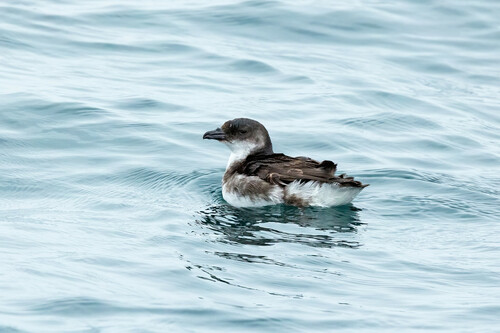
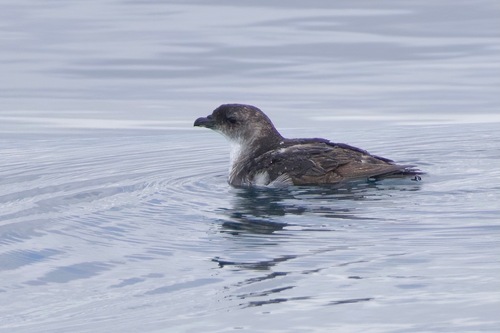
Its plumage is black on the upper body and dull white on the lower body, and it has a relatively short black bill.
Wing and Head Coloration
Thin white strips run along its wings, and its face and neck are often more brown than black.
Leg and Foot Features
Its legs and feet are blue, with blackish-brown webbing between the toes.
Similar Species Comparison
Unless observed from very close range, the common diving petrel is almost indistinguishable from the related South Georgian diving petrel, P. georgicus.
Interspecies Key Differences
Key differences separate the two species: the common diving petrel has brown inner webs on its primary feathers, while the South Georgian diving petrel has light-colored inner feather webs; the common diving petrel has a smaller, narrower bill than the South Georgian diving petrel; the South Georgian diving petrel has a posterior black line running down the tarsi that the common diving petrel lacks; and the common diving petrel is slightly larger than the South Georgian diving petrel.
Geographic Distribution
The common diving petrel is distributed between 35 and 55 degrees southern latitude, and occurs mostly around islands.
Population Trend
Its overall population is decreasing, but the rate of decline is not rapid enough for the species to be considered a conservation concern.
Nesting Burrow Characteristics
Common diving petrels usually dig 1.5 m (4.9 ft) burrows on vegetated slopes, though they occasionally build their burrows on flatland.