About Pelecanoides garnotii (Lesson, 1828)
Scientific Nomenclature and Body Length
The Peruvian diving petrel, scientifically named Pelecanoides garnotii (Lesson, 1828), has an overall body length of 20–24 cm (7.9–9.4 in).
General Plumage and Appearance
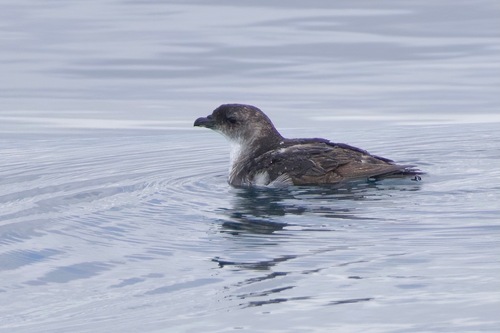
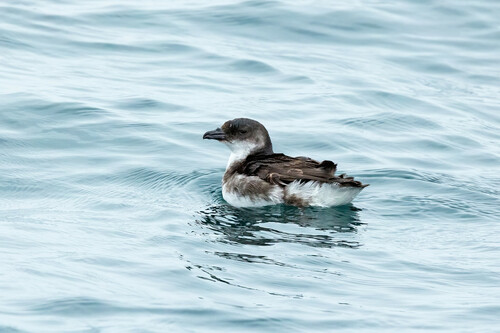
Like other diving petrels, it is a nondescript bird with a dark back, pale belly, and blue feet.
Distinguishing Morphological Features
It can only be distinguished from other members of its family by differences in its beak and nostrils.
Feeding Habitat
Unlike the common diving petrel and the South Georgia diving petrel, the Peruvian diving petrel feeds in cold, offshore, often pelagic water.
Prey Capture Method
It catches small fish larvae and planktonic crustaceans by pursuit diving.
Planktonic Diet Share
Planktonic organisms make up 85.3-91.1% of its diet, the main portion of its food.
Fish Diet Share
The remaining share of its diet consists of fish, primarily anchovies.
Diving Depth
Peruvian diving petrels can dive to depths of up to 83 metres (270 ft), while the recorded average diving depth is around 30 metres (100 ft).
Historical Flight Perception
For a long time, people believed the Peruvian diving petrel was a poor flyer.
Observed Foraging Range
However, large numbers of these birds have been observed regularly fishing between Asia Island and Pachacamac Island, an area 150-200 kilometres north of their Peruvian breeding grounds.