About Paubrasilia echinata (Lam.) Gagnon, H.C.Lima & G.P.Lewis
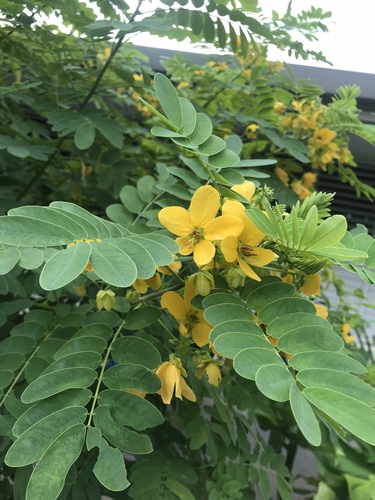
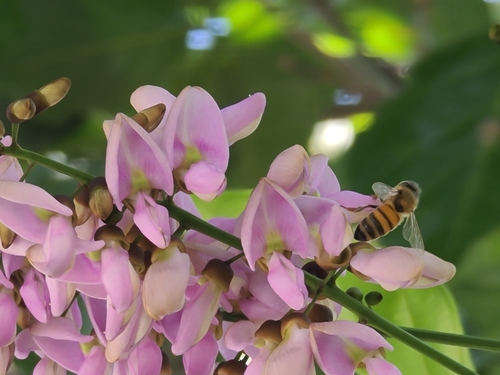
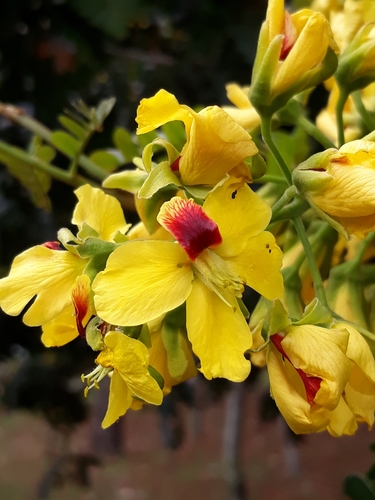
This species, commonly known as brazilwood or pau brasil, is a tree that may reach up to 15 metres (49 ft) in height. Its dark brown bark flakes in large patches, revealing lustrous blood-red sapwood underneath. The leaves are pinnate, and each leaf contains between 9 and 19 small, leathery, broadly oblong leaflets. Its branched inflorescence (flower stalk) holds between 15 and 40 yellow, strongly scented flowers that may be pollinated by bees; flower petals are typically yellow with a blood-red blotch. Fruits are oval-shaped woody seedpods, measuring up to 7.3 centimetres (2.9 in) long and 2.6 centimetres (1.0 in) across, that hang from branches. After seeds are expelled, the pods become twisted. Small thorns cover the tree's branches, leaves, and fruit. Important differences exist between geographically separate populations, leading to suggestions that separate subspecies of pau brasil may exist. Local people have used this tree as an astringent and antidiuretic, and it may have some medicinal properties; tree extracts have been tested for potential use as cancer treatments. Brazilwood is considered superior to all other materials for producing bows for stringed instruments, which has made it valuable to the music industry. Excessive harvesting caused a steep decline in brazilwood tree populations during the 18th century, leading to the collapse of the brazilwood harvesting economic activity. Today, the species is nearly extirpated across most of its original range. It is listed as an endangered species by the IUCN, and is included on Brazil's official list of endangered flora. At the 2024 annual meeting of the Convention on International Trade in Endangered Species of Wild Fauna and Flora (CITES), representatives passed a resolution requiring existing stockpiles of the wood to be registered, finished bows made from the wood to be marked and traceable, and suitable plantations in Brazil to be identified to maintain a sustainable supply of the material. Future trade and conservation of brazilwood was discussed at the November 2025 CITES conference, where suppliers and users were directed to improve traceability for both the wood and musical instruments made from it. The International Pernambuco Conservation Initiative (IPCI), whose members are bowmakers who rely on this wood for their livelihoods, works to replant brazilwood trees. IPCI promotes the use of alternative woods for violin bows to raise money to grow brazilwood seedlings. The ongoing shortage of brazilwood (also called pernambuco) has also supported the growth of the carbon fiber and composite bow industry.