About Paspalum scrobiculatum L.
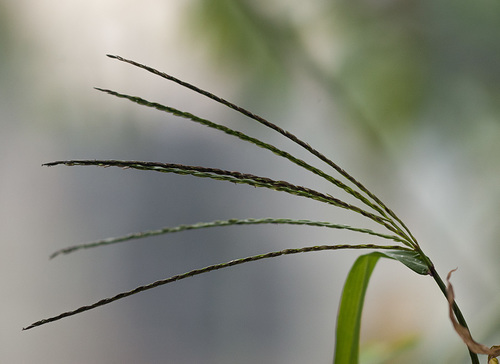
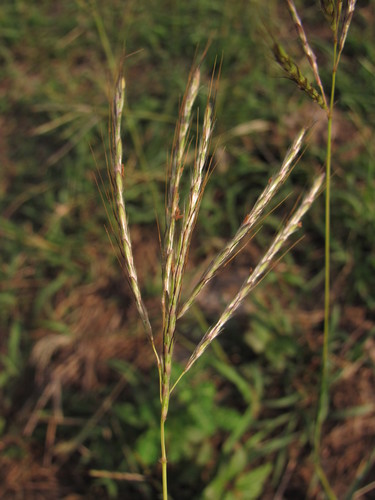
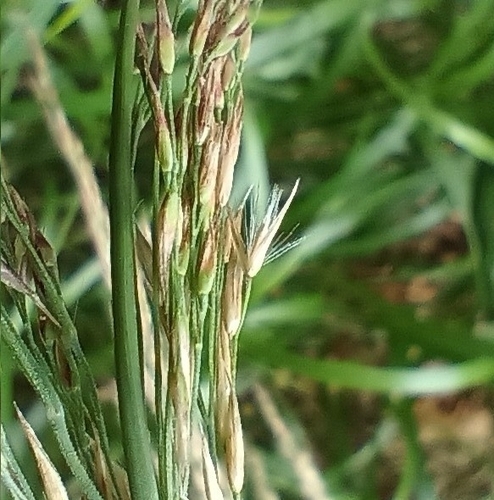
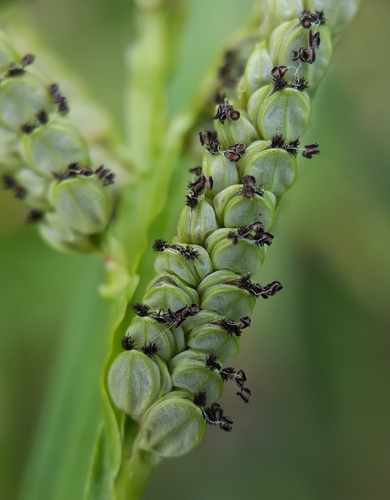
Kodo millet, scientifically named Paspalum scrobiculatum L., is an annual monocot grass that reaches approximately 4 feet in height. Its inflorescence produces 4 to 6 racemes, each 4 to 9 centimeters long. The plant’s slender, light green leaves grow 20 to 40 centimeters long. Its seeds are very small, ellipsoidal, roughly 1.5 mm wide and 2 mm long, and range in color from light brown to dark grey. Kodo millet has a shallow root system, which may make it ideal for intercropping.
There are two recognized varieties of this species: Paspalum scrobiculatum var. scrobiculatum is grown as an important crop in India, while Paspalum scrobiculatum var. commersonii is a wild variety indigenous to Africa. Kodo millet, which also has the common names cow grass, rice grass, ditch millet, Native paspalum, and Indian crown grass, originated in tropical Africa, and is estimated to have been domesticated in India 3000 years ago; the domestication process is still ongoing. In southern India, it is called varaku or koovaraku, and the name "kodo" is likely a corrupted form of kodra, the plant’s Hindi name. It is grown as an annual crop, and is a minor food crop eaten across many Asian countries, most importantly in India where it is a critical staple in some regions. It grows wild as a perennial in western Africa, where it is consumed as a famine food. It often grows as a weed in rice fields, and many farmers tolerate it because it can be harvested as an alternative crop if their main crop fails. In the southern United States and Hawaii, it is classified as a noxious weed.
For consumption and uses: in India, kodo millet is ground into flour to make pudding, while in Africa it is cooked like rice. It is also good animal fodder for cattle, goats, pigs, sheep, and poultry. In Hawaii, the var. scrobiculatum variety grows well on hillside slopes where other grasses do not thrive. It has potential to be grown as a food source on hillside farms, and can also be used as grass ties on hillside plots to prevent soil erosion while providing famine food as a secondary benefit. It has been noted to make an excellent cover crop.