About Thinopyrum intermedium (Host) Barkworth & D.R.Dewey
Nomenclature and Taxonomy
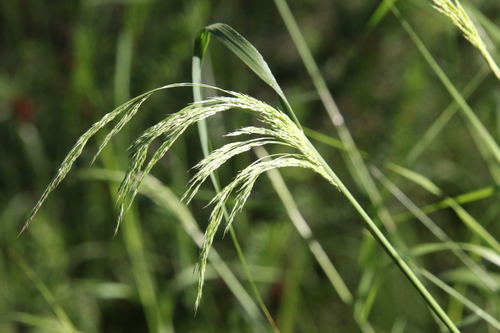
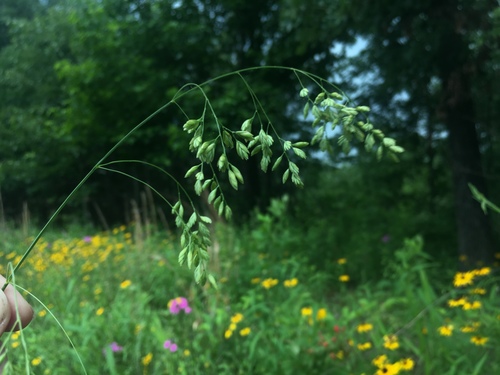
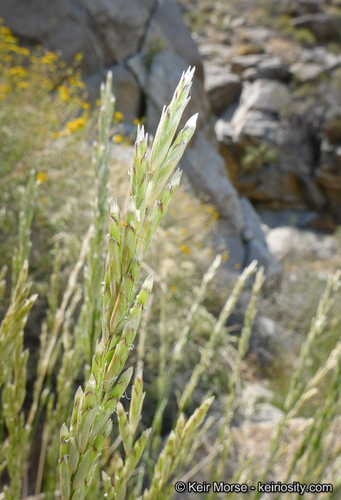
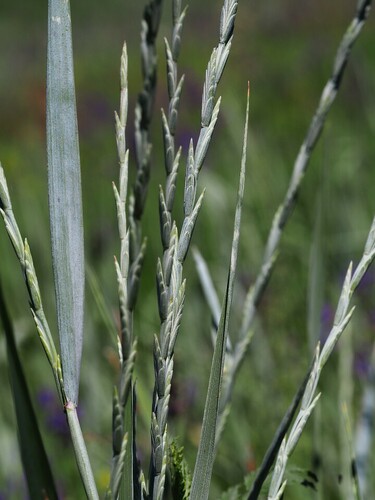
Thinopyrum intermedium, commonly known as intermediate wheatgrass, is a sod-forming perennial grass belonging to the Triticeae tribe of Pooideae, native to Europe and Western Asia. It is grouped with other plants called wheatgrasses because its seed heads, or ears, resemble those of common wheat.
Growth Cycle Trait
Unlike annual common wheat, wheatgrasses like intermediate wheatgrass are generally perennial plants.
Grain Trademark
The grain harvested from intermediate wheatgrass is trademarked as "Kernza" by the Land Institute.
Crop Functionality
Trials have shown that this species can be grown as a multi-functional crop, producing various commodities while also providing ecosystem services. Unlike annual crops such as corn, which tend to deplete soil organic matter and require more agricultural inputs, this perennial grain can produce a harvest while building soil organic matter.
Native Range
The native range of intermediate wheatgrass stretches from central and southeastern Europe to Asia Minor.
Introduction to North America
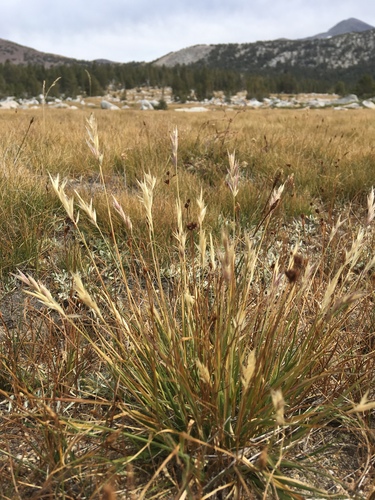
It was first introduced to the United States in 1907, with the first successful introduction coming from the Caucasus region in 1932. Today, it can be found growing wild across the Western United States and Western Canada.
Preferred Growing Conditions
Intermediate wheatgrass grows best under specific conditions: regions with annual rainfall between 12 and 30 inches (30 and 76 cm), soil with a pH between 5.6 and 8.4, locations with full sun exposure, a wide range of soils that are at least 16 inches (41 cm) deep, and areas where the minimum temperature does not drop below −38 °F (−39 °C).
Wildlife Food Source
As a habitat for wildlife, intermediate wheatgrass is an excellent food source for grazing and browsing animals.
Wildlife Nesting Habitat
When left unharvested, its standing vegetation provides good nesting habitat for some birds and waterfowl.
Invasive Potential
It is generally not invasive, and coexists well with native plant species.
Kernza Nutritional Composition
Kernza has higher protein, ash, and dietary fiber content than wheat. A 100-gram serving of uncooked Kernza provides 1540 kilojoules (368 kcal) of food energy, and is a good source of calcium (120 mg) and iron (5.5 mg).
Kernza Mineral Comparison
Compared to white wheat berries, Kernza has 4.8 times more calcium and more than double the iron content.
Kernza Baking Limitation
Kernza contains gluten, but it lacks sufficient high molecular weight glutenin, which limits its use particularly in baking.
Kernza Shelf Life Properties
While its higher fat content makes it more prone to rancidity than wheat, its higher antioxidant content compared to wheat offers a protective effect against this issue.
Commercial Kernza Products
Commercial products made with Kernza already exist, including Cascadian Farms' Honey Toasted Kernza and Patagonia Provisions' Kernza beer.
Ornamental Status
As an ornamental plant, this species has received the Royal Horticultural Society's Award of Garden Merit.