About Parkinsonia microphylla Torr.
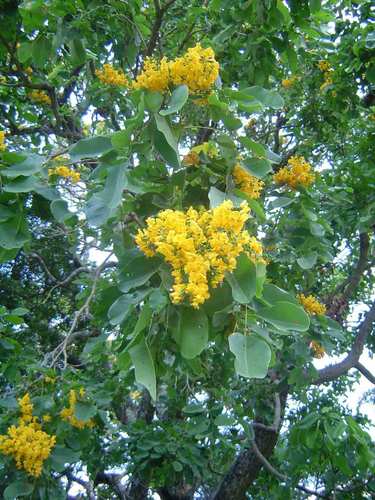
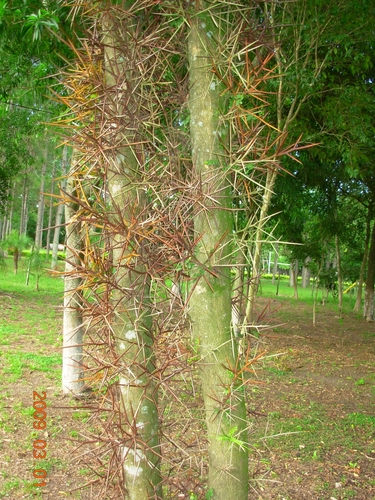
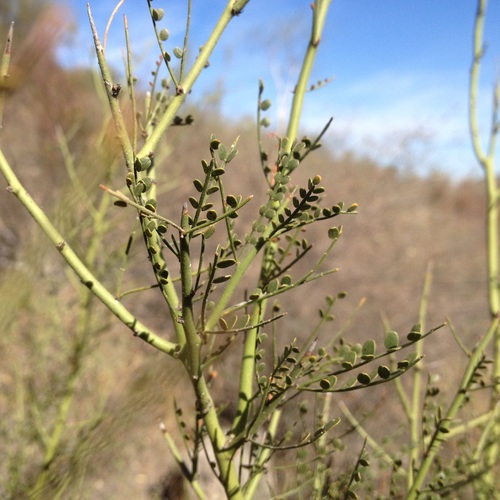
Parkinsonia microphylla Torr. is a bristling tree with upright branches. It is a slow-growing species that can sometimes live for several hundred years. It typically grows to around 5 metres (16 ft) in height, and rarely reaches 6 to 7 metres (20 to 23 ft) tall. Its leaves are yellowish green, and the tree sheds its leaves during extended periods of dry and hot weather. Its bark can perform photosynthesis, which gives the bark its green color and allows the tree to survive while leafless during hot periods. Small, pale yellow flowers grow at the ends of branches, and bloom in late spring. This tree does not always flower every year; flowering depends on the amount of rainfall. If rainfall is sufficient, the tree produces soft seed pods 4 to 8 cm long that dip inward between each seed. These pods ripen in July and remain attached to the tree's branches. Seedlings are very sensitive to drought during the first two to three months of life; only about 1.6% of seedlings survive after germination. The African exotic grass Buffelgrass, which was first introduced into the Sonoran Desert for livestock grazing, spreads very quickly. Buffelgrass often kills Parkinsonia microphylla seedlings by using up available water, and this could become a future threat to the species. Ecologically, Parkinsonia microphylla is a honey plant. Its twigs are browsed by wildlife such as jackrabbits, and livestock may gnaw on it during periods of food scarcity. Rodents often carry and store the tree's seeds underground, and some of these stored seeds will germinate after a rainy season. The Seri people, a Native American group from northwestern Mexico, call this tree ziipxöl [ʃiːpχʷɬ]. The Seri grind the seeds to make flour, boil green pods with meat, and eat the sweet green seeds and the tree's flowers. They also string the seeds to make jewelry. Parkinsonia microphylla is cultivated as an ornamental tree for use in xeriscapic, modernist, and native plant gardens. It is also planted as a small tree in parking lot landscaping for commercial developments.