About Paranomus bracteolaris Knight
Taxonomic Naming and Growth Form
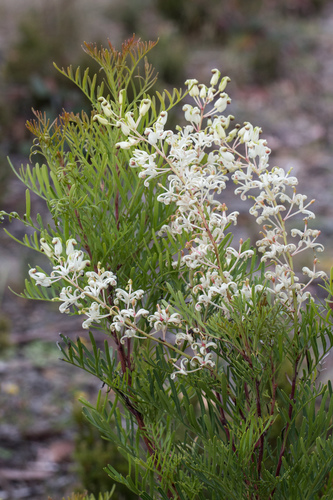
This species, scientifically named Paranomus bracteolaris Knight, is a monoecious shrub that grows up to 2 metres (6.6 feet) tall.
Flowering Period
It flowers from August to October.
Leaf Characteristics
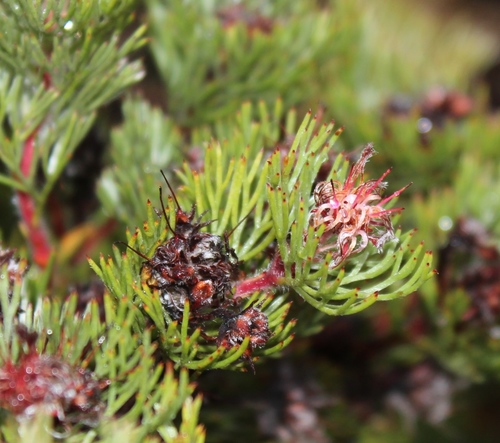
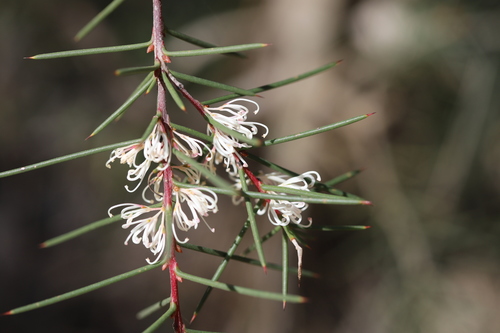
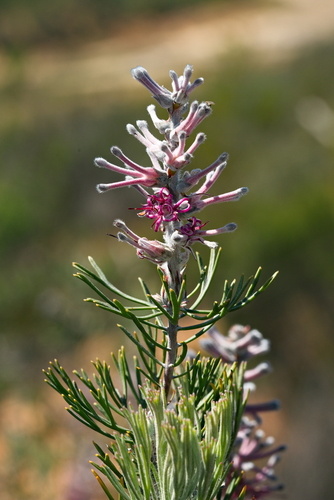
Its leaves are finely divided into needle-shaped acicular segments, and are hairy when young.
Flower Features
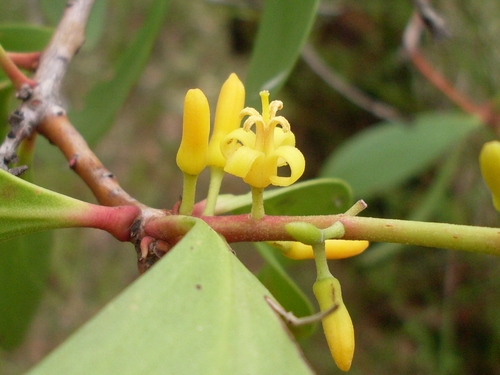
The purple-pink flowers, which measure 20–25 mm (0.79–0.98 in) long, grow in small clusters along veins at the tips of branches.
Fire Response
While fire kills the adult plant, its seeds can survive fire events.
Pollination
Individual plants are bisexual, and pollination is carried out by insects.
Fruit and Seed Dispersal
The fruit ripens two months after flowering, after which seeds fall to the ground and are spread by ants.
Afrikaans Common Names
In Afrikaans, this plant has multiple common names: bokkeveld-septerboom, afveebos, balbyterbos, haakbos, heuningbos, kloofbesem, perdebos, sousbos, trosbos, and vliegbos.
South African Tree Listing
It holds the national number 72.3 on the official list of South African indigenous trees.
Distribution Range
This plant is distributed in the Bokkeveld Carp, Cold Bokkeveld, and Olifants River Mountains of South Africa.
Habitat and Altitude
It grows in sandstone soil at altitudes between 250 and 1,300 m (820–4,270 ft).