About Packera aurea (L.) Á.Löve & D.Löve
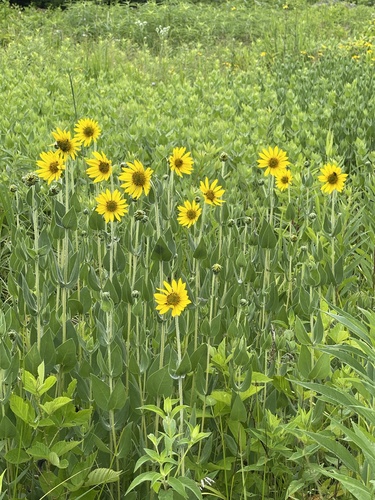
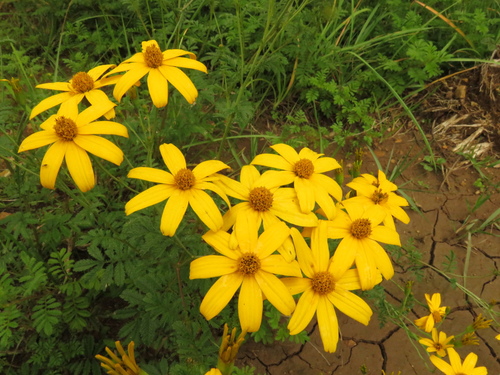
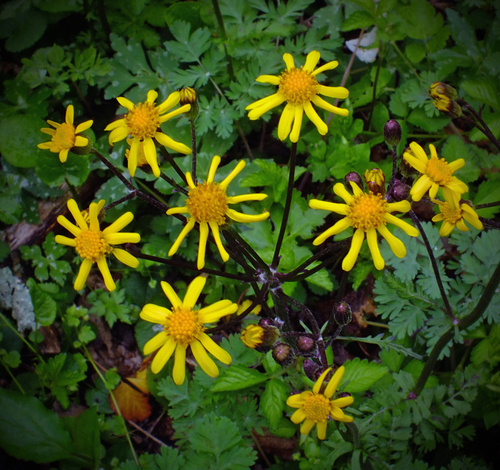
Packera aurea (L.) Á.Löve & D.Löve, formerly classified as Senecio aureus, is commonly called golden ragwort or just ragwort. It is a perennial flowering species in the plant family Asteraceae. It has many other common names: golden groundsel, squaw weed, life root, golden Senecio, uncum, uncum root, waw weed, false valerian, cough weed, female regulator, cocash weed, ragweed, staggerwort, and St. James wort. This species is native to eastern North America, with a range extending from Labrador to Minnesota and from North Carolina to Arkansas; additional distinct populations grow in the panhandle of Florida.
In modern practice, Packera aurea is rarely used medicinally, because it contains saturated pyrrolizidine alkaloids that can cause liver veno-occlusive disease after being metabolized by the body. If the plant is used for medicinal purposes, a PA-free extract is required to allow safe use for courses longer than two weeks. Known as life root by Eclectic medical practitioners, it was historically used as a uterine tonic, and it is an ingredient in Lydia Pinkham's compound. The plant was an important treatment for reproductive conditions both among Native American groups and among Eclectic medicine physicians. Scudder wrote of this plant: "The Senecio exerts a specific influence upon the reproductive organs of the female, and to a less extent upon the male. It relieves irritation and strengthens functional activity. Hence it has acquired the reputation of a 'uterine tonic.' It may be prescribed in all cases in which there is an atonic condition of ovaries or uterus, with derangement of function. It makes little difference whether it is amenorrhoea, dysmenorrhoea or menorrhagia, or whether it takes the form of increased mucous or purulent secretion, or displacement. The remedy acts slowly, and sufficient time must be given. In the male we prescribe it in cases of fullness and weight in the perineum, dragging sensations in the testicle, and difficult or tardy urination. In both male and female we sometimes use it with advantage in painful micturition with tenesmus."