About Oxytropis sericea Nutt.
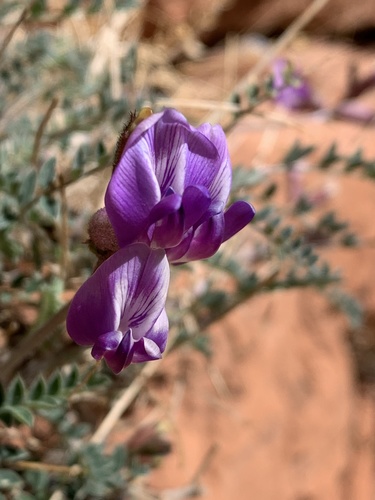
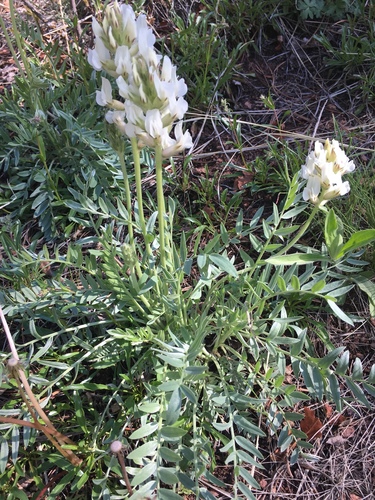
Oxytropis sericea Nutt. is a species of flowering plant in the legume family, with common names including white locoweed, white point-vetch, whitepoint crazyweed, and silky crazyweed. It is native to western North America, ranging from Yukon and British Columbia south through the Pacific Northwest, the Rocky Mountains, and the Great Plains. This perennial herb grows from a long taproot, reaching a maximum height of about 30 centimeters (12 inches). Its leaves can grow up to 20 cm (7.9 in) long. A single plant may produce multiple flowering stalks, each bearing up to 27 flowers. Its fruit is a legume pod up to 2.5 cm (0.98 in) long, which holds many hairy, leathery, kidney-shaped seeds. These tough seeds can stay dormant for a long time in the soil seed bank, helping the species survive stress conditions like cold, exposure, and desiccation. It is often one of the first plants to emerge in spring. This species can grow in a wide variety of habitat types, including areas with subalpine and alpine climates, and it can be found at elevations up to 3,708 metres (12,165 feet) in Colorado. It readily establishes on disturbed rangeland and also grows in mature, climax plant communities. As a locoweed species, it is a common cause of livestock poisoning in North America. Locoweed poisoning is described as "the most widespread poisonous plant problem in the western United States." Locoweeds cause locoism, a disease caused by chronic neurological damage. Symptoms of locoism include depression, blindness, loss of coordination, emaciation, tremors, paralysis, constipation, coat deterioration, decreased libido, abortion, seizures, and death. It can also make cattle more prone to high mountain brisket disease, a form of congestive heart failure. The plant's toxic agent is swainsonine, an alkaloid. Affected animals include cattle, sheep, horses, goats, and wild species such as elk and mule deer. Horses are very susceptible to this poisoning, and never recover from locoism. Cattle, sheep, and horses find the plant palatable, even preferring it to other forages when grass is easily available, and may become chemically addicted to it. Cattle tend to prefer the plant's flowers and fruits, which have higher swainsonine levels than the leaves. Death can occur after one to three months of heavy exposure.