About Ovis gmelini Linnaeus, 1758
Coat Coloration
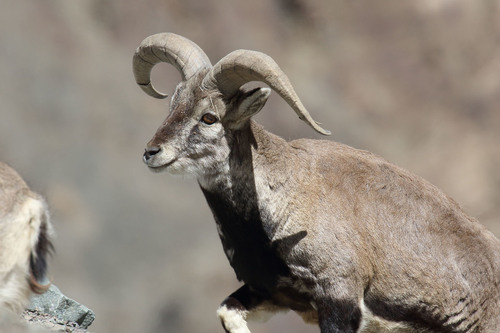
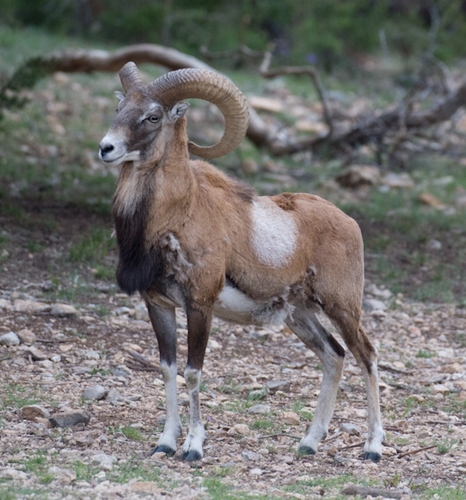
Mouflons (Ovis gmelini Linnaeus, 1758) have short coats ranging from reddish to dark brown. Their coats feature dark stripes along the back, black ventral areas, and light-colored saddle patches.
Horn Characteristics
All males are horned; some females have horns, while others are polled (hornless). The horns of mature rams curve through almost one full revolution and can grow up to 85 cm long.
Body Size
Adult mouflons stand around 0.9 meters tall at the shoulder. Males have an average body weight of 50 kg, while females average 35 kg.
Native Range
Mouflons are native to the Lesser Caucasus, including southeastern Turkey, Armenia, and Azerbaijan. They also live in Iran's western Alborz region, and the Zagros Mountains that span eastern Iraq and western Iran.
Introduction History
They were possibly introduced to Cyprus during the Neolithic period.
Ram Dominance Hierarchy
Mouflon rams follow a strict dominance hierarchy. Before the annual mating season called rut, which occurs from late autumn to early winter, rams compete to establish this hierarchy to determine access to female mouflons (ewes) for mating.
Rut Competition
Rams fight one another to gain dominance and earn the chance to mate.
Sexual Maturity
Mouflons reach sexual maturity between two and four years of age. Young rams must gain dominance before they can mate, a process that takes an additional three years.
Ewe Social Hierarchy
Female mouflons also go through a similar social hierarchy process during their first two years of life, but even low-status ewes are able to breed.
Reproduction
Female pregnancy lasts five months, and ewes produce one to two offspring per pregnancy.
2001 Cloning Event
In early 2001, a mouflon was successfully cloned, and this clone survived for at least seven months. This made it the first clone of an endangered mammal to survive beyond infancy.
Cloning Surrogacy Finding
The successful cloning demonstrated that a common domestic sheep can act as a successful gestational surrogate to give birth to an exotic species like the mouflon.
Cloning Conservation Potential
If mouflon cloning can be successfully continued, it has the potential to reduce pressure on existing wild mouflon populations.