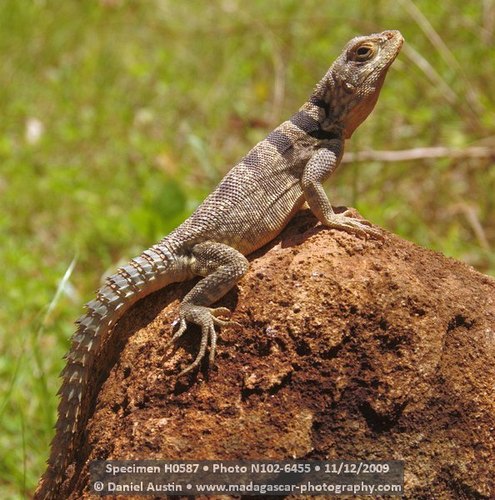
About Oplurus cuvieri (Gray, 1831)
Common Names
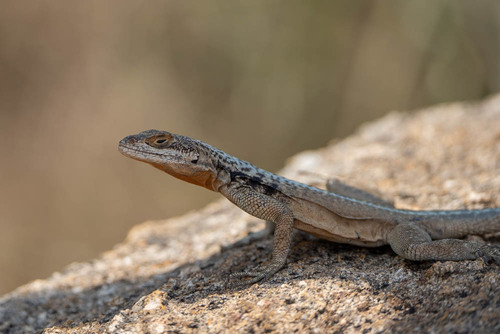
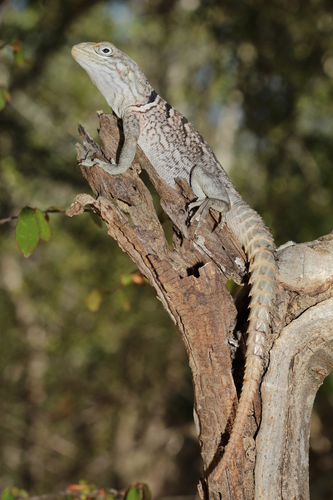
Oplurus cuvieri, also commonly called collared iguana or Madagascar collared iguana, has a distinctive black collar that contrasts sharply with its body, which is speckled with lighter spots.
Body & Tail Morphology
It has a large head, and its relatively short tail is covered in spiny scales.
Sexual Color Dimorphism
Females of this species have a duller brown coloration than males.
Size & Weight
On average, O. cuvieri reaches 16 inches in length, and weighs between 160 and 190 grams.
Coloration Variation
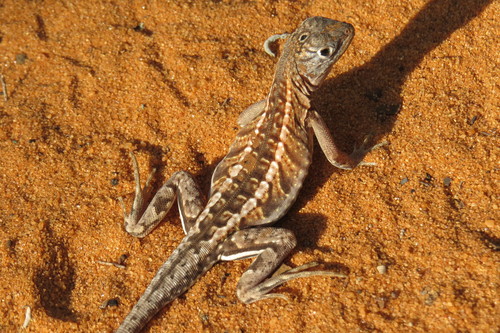
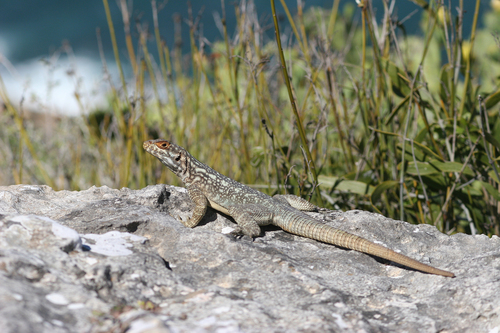
Observed specimens show considerable variation in their markings and overall coloration.
Geographic Range
This lizard's geographic range includes the western tropical forests of Madagascar, and the island of Grand Comore in Comoros.
Sexual Maturity Age
Oplurus cuvieri is estimated to reach sexual maturity at around 2 to 3 years of age.
Breeding Season Timing
Its breeding season aligns with the arrival of the rainy season, and nesting typically takes place shortly after the first heavy rains of the season.
Male Mating Competition
Males will spar with each other to compete for access to females, and these fights often result in injury or even death.
Nest Burrow Characteristics
Females dig shallow burrows for nesting that are about 10 cm (4 inches) deep. These burrows are placed in exposed areas with no major vegetation, which provides maximum sunlight and warmth to the developing eggs.
Nest Site Location
Nest sites are often located on or adjacent to man-made forest trails or animal-worn trails.
Clutch & Initial Nest Covering
After a female lays her clutch, which typically contains 2 to 5 eggs, she backfills the nest with the loose soil she excavated to provide insulation. She then covers the entire nest area with sand, leaves, and twigs to further conceal it.
Parental Care Behavior
Like many reptile species, the female leaves the nest permanently after covering it, and neither parent provides any care for the eventual hatchlings.
Incubation Period
The eggs incubate for 60 to 70 days, after which the young lizards hatch.
Hatchling Post-Hatching Behavior
The hatchlings leave the nest immediately and seek cover, as small young lizards are at their most vulnerable to predation at this stage. Even newly hatched lizards are fully self-sufficient.
Diet
They find food in small, appropriately sized invertebrates such as ants and termites, and gradually move on to hunt larger prey species as they grow.
Annual Clutch Frequency
Female Oplurus cuvieri may lay several clutches of eggs per year.