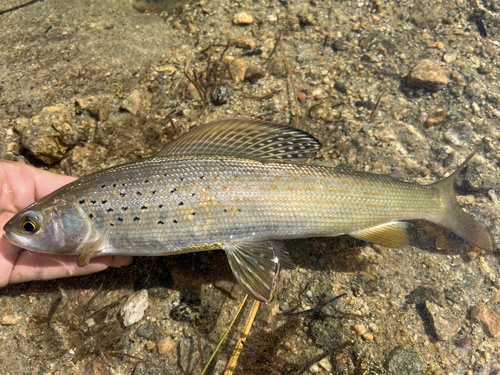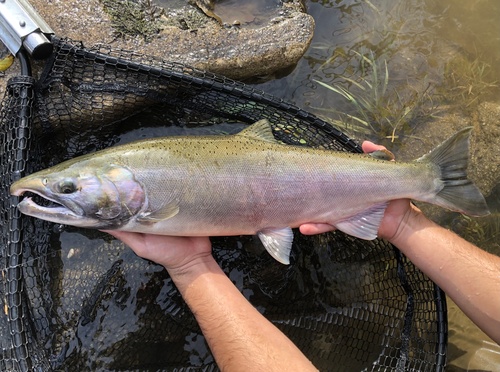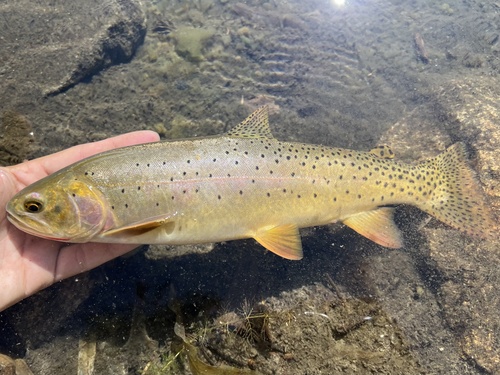
About Oncorhynchus virginalis (Girard, 1856)
Nomenclature and Variability
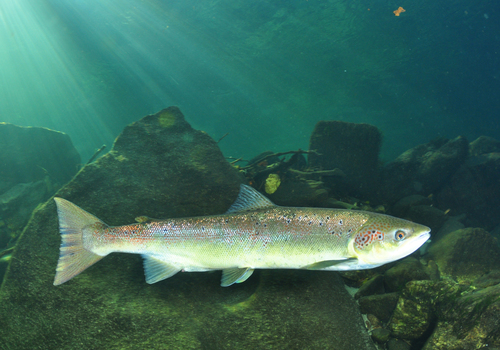
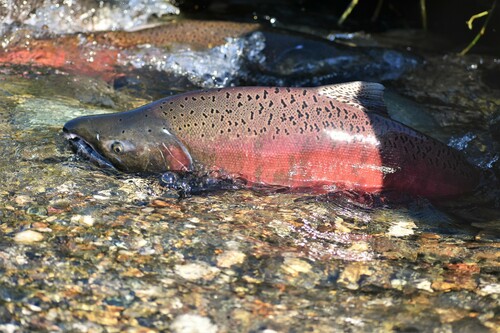
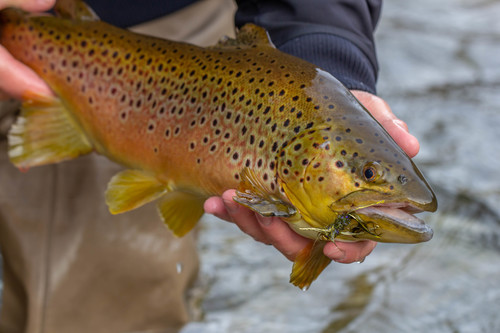
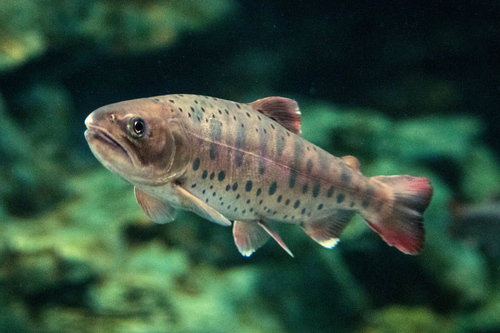
Rocky Mountain cutthroat trout, which has the scientific name Oncorhynchus virginalis (Girard, 1856), shares the high variability in size, coloration, and habitat selection seen in all other cutthroat trout.
Body Coloration
Their body colors range from yellowish-brown, silvery, and brassy, to brilliant orange-red and golden, and they may also have bright golden-orange, red, or rose tints across their bodies.
Body Spot Patterns
Their body spots vary in size and shape, from medium-large and rounded to small and pepper-like; spots can either be concentrated on the caudal peduncle or evenly distributed over the body sides.
Morphological Counts
This subspecies typically has between 60 and 63 vertebrae, and has between 150 and 200 lateral scales.
Weight Range
Adult weights vary broadly, from approximately 10 grams to over 7 kilograms; the largest known Rocky Mountain cutthroat trout is the Yellowfin variety.
Identification Challenges
Because of historical human introductions and hybridization with other cutthroat subspecies, it can be difficult to definitively distinguish some Rocky Mountain cutthroat trout from closely related subspecies based on physical appearance alone.
Distinctive Cutthroat Markings
All members of this group share a distinctive trait: red, pink, or orange linear marks along the underside of their mandibles, in the lower folds of the gill plates.
Common Name Etymology
These markings give the group the common name "cutthroat", a term coined in an 1884 article in The American Angler by outdoor writer Charles Hallock.
Historic Native Range
Historically, Rocky Mountain cutthroat trout were native to a broad range of river drainages and basins across the western United States.
Southern and Northern Range Extent
Their native range extends from the Rio Grande, Canadian, and Pecos River drainages in New Mexico and southern Colorado, north to the Yellowstone and Upper Snake River drainages in Montana, Idaho, Wyoming, and parts of Utah and Nevada.
Additional Native Watersheds
They are also native to the Bear River watershed on the border of Idaho, Utah, and Wyoming, the Dolores, Colorado, Gunnison, White, Yampa, and upper Green River watersheds across Colorado, Wyoming, and Utah, and the South Platte and Arkansas drainages.
Former Texas Population
At one point, they were also likely established in the Davis Mountains in Texas.
Current Range Restriction
Today, their range is broadly restricted to the headwater reaches of these original watersheds.
Water Quality Requirements
Like other salmonids, Rocky Mountain cutthroat trout require cold, clean, well-oxygenated water to survive and grow.
Preferred Habitats
They most often live in creeks, streams, and small rivers with gravelly bottoms, or in cold, moderately deep lakes.
Streamside Vegetation Benefits
Streamside vegetation provides shade, stabilizes stream banks to reduce erosion and limit silt sediment loads, which would otherwise harm trout habitat and spawning grounds.
Beaver Pond Habitat Value
Beaver ponds provide refuge during droughts and serve as overwintering habitat.
Feeding Strategy General
Like other cutthroat trout, Rocky Mountain cutthroat trout are opportunistic feeders with diverse diets, and their food size increases as the trout grows.
Primary Aquatic Invertebrate Prey
Their primary forage includes macroinvertebrates such as caddisflies, stoneflies, mayflies, and aquatic dipterans including midges and craneflies, in their adult, larval, and pupal stages; these prey types are frequently imitated by fly fishers.
Additional Prey Types
Additional prey includes adult terrestrial insects such as ants, beetles, spiders, grasshoppers, and crickets, as well as aquatic prey such as crayfish, freshwater molluscs, fish eggs, shrimp and other crustaceans, and other fish.
Diet Influencing Factors
In general, the trout adjust their diet and feeding behavior based on factors including food availability, habitat, age, and size.
Population-Specific Diet Examples
For example, lake-dwelling Yellowstone Rocky Mountain cutthroat eat zooplankton and bottom-dwelling insects, while Bear River cutthroat in Bear Lake have evolved a diet that depends largely on smaller fish such as the endemic Bonneville cisco.
Stream-Resident Feeding Behavior
Stream-resident cutthroat are primarily drift feeders, eating insects carried along by the stream current.
Anthropogenic Habitat Threats
Rocky Mountain cutthroat trout populations are negatively affected by habitat loss and degradation caused by human activities.
List of Harmful Human Activities
These harmful activities include damming, logging, mining, grazing, agriculture, water diversions, and urban development.
Dam Impacts
Dams alter the natural flow of rivers and streams, fragment habitats, and change water temperatures, which can disrupt the trout's breeding and migration patterns.
Logging and Grazing Impacts
Logging and grazing remove streamside vegetation, leading to increased water temperatures and higher sedimentation, which reduces survival rates for trout eggs and juvenile trout.
Mining and Urban Development Impacts
Mining activities often release pollutants into waterways, degrading water quality and harming trout populations, while urban development increases stormwater runoff that carries pollutants and sediment into streams, further reducing habitat quality.
Cumulative Stressor Effects
All of these activities alter water temperature, flow patterns, and the availability of food and habitat, all of which are critical for the survival and reproduction of cutthroat trout.
Historical Habitat Connectivity Benefits
Historically, habitat connectivity served as a buffer against extinction by linking habitats of varying quality to stream headwaters; source-sink habitat processes allowed different cutthroat strains to evolve, survive, and thrive over long periods of time.
Habitat Fragmentation Threat
In contrast, the loss of drainage connections caused by human activities has been a major threat to cutthroat trout across the western United States.