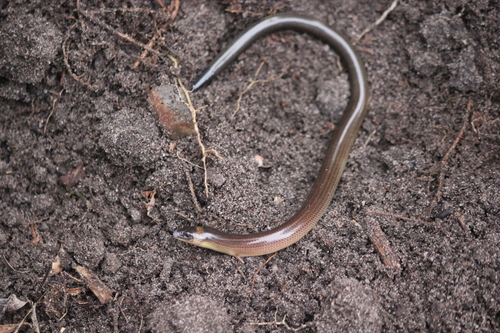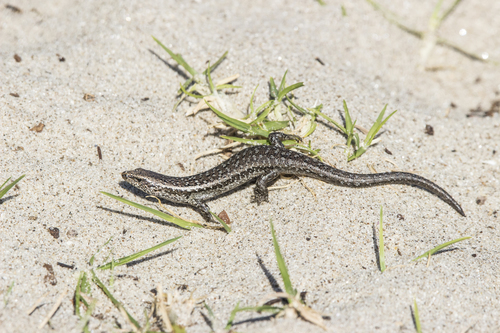
About Oligosoma smithi (Gray, 1845)
Taxonomic Identity
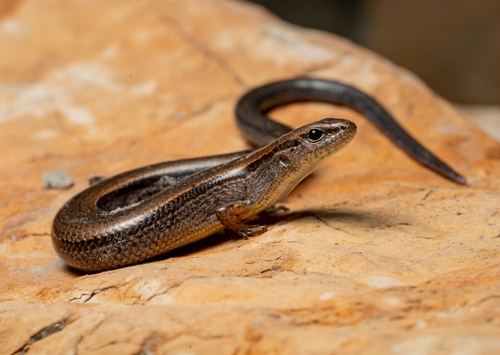
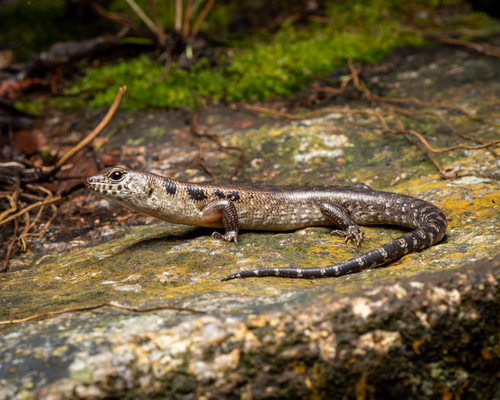
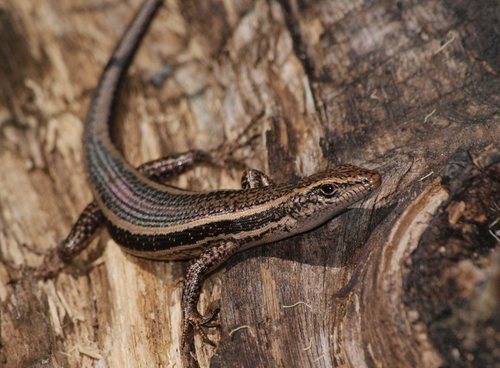
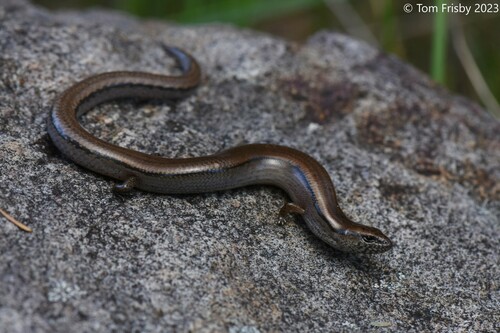
Oligosoma smithi (Gray, 1845) is a small species of skink, reaching a maximum snout-to-vent length (SVL) of 82 mm (3.2 in).
Coloration and Camouflage
It has effective camouflage and occurs in a wide range of colours, with substantial colour variation both between different populations and within single population groups. Individuals that inhabit white sandy habitats are typically lighter in colour, while individuals living on offshore islands are typically glossy jet black.
Distinguishing Morphological Features
This species can be told apart from Oligosoma suteri by its smaller eyes, smaller feet, shorter toes, and less prominent brow.
Native Distribution Range
Oligosoma smithi is native to the northern half of New Zealand's North Island, where it lives along the eastern coast, ranging from the Aupōuri Peninsula in the north down to Gisborne in the south.
Taxonomic Revision Note
Closely related skinks found on the western shore of the North Island and the Three Kings Islands were previously classified as part of this species, but are now recognized as a separate taxon: tātahi skinks (Oligosoma aff. smithi "Three Kings, Te Paki, Western Northland").
Habitat Preferences
Oligosoma smithi is always found near the shoreline, and prefers open habitats such as areas around driftwood at the high tide mark.