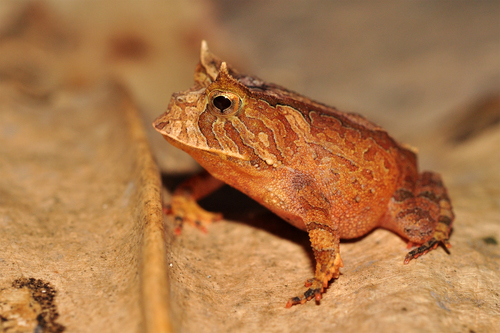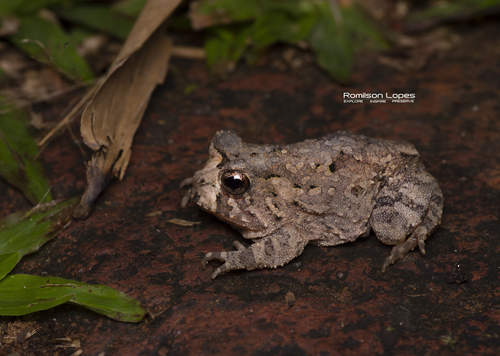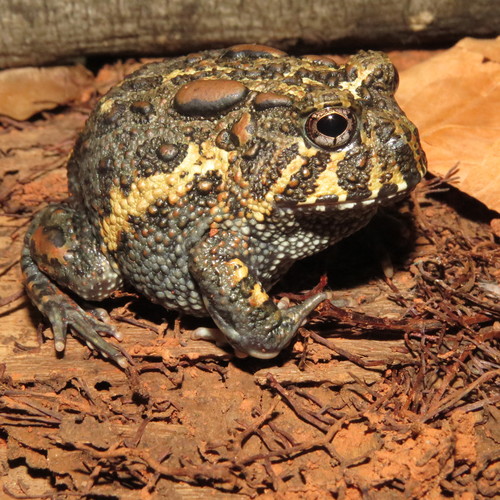
About Odontophrynus cultripes Reinhardt & Lütken, 1862
Size
Males of Odontophrynus cultripes measure 50–60 mm (2.0–2.4 in) in snout–vent length, while females measure 45–70 mm (1.8–2.8 in).
Head Features
This species has prominent eyes, and a snout that is vertical when viewed in profile. Its parotoid glands are large and ovoid.
Advertisement Call
The male advertisement call of this frog is made up of a single, multi-pulsed note.
Limb Structure
The front feet have no webbed skin, and instead feature a shovel-shaped front toe that the frog uses for burrowing.
Dorsal Coloration
The dorsal surfaces of the head, back, and legs are brown; the head is a lighter brown shade, and there are black markings on the legs and back. This frog has large brown warts, and yellow pigmentation on its flanks.
Ventral Coloration
Its belly is yellow with some brown coloration, and male frogs have brown throats.
Habitat
Odontophrynus cultripes is a fossorial species that lives in open areas, forest edges, and suburban gardens.
Breeding
It is an abundant species that engages in explosive breeding in temporary pools, including human-made ones.
Conservation Status
While the IUCN classifies this species as least concern, habitat loss from infrastructure development, agricultural activities, and livestock rearing can negatively affect it.
Protected Occurrences
This frog has been recorded in multiple protected parks: Área de Proteção Ambiental Corumbataí, Botucatu e Tejupa Perimetro Corumbataí, Área de Proteção Ambiental das Nascentes do Rio Vermelho, Área de Proteção Ambiental Jalapão, Área de Proteção Ambiental Serra do Lajeado, Área de Proteção Ambiental Sul RMBH, Parque Nacional da Chapada dos Veadeiros, and Parque Nacional de Itatiaia.