About Ocimum basilicum L.
Taxonomy and Nomenclature
Ocimum basilicum L., commonly known as basil, is a herb that usually grows as an annual, and sometimes as a perennial.
Plant Height
Mature plant height ranges between 30 and 150 centimetres (1 and 5 feet), varying by variety.
Leaf Characteristics
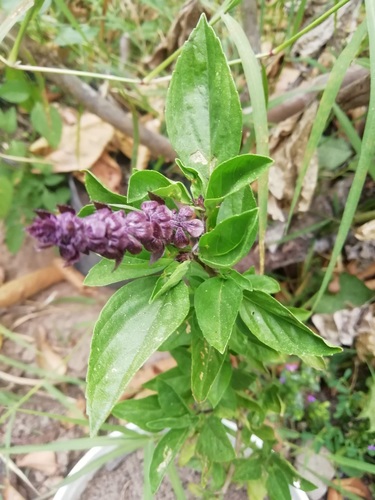
Basil has glossy, ovate leaves with smooth or slightly toothed margins that typically curve slightly upward; leaves are arranged oppositely along the plant's square stems, and leaf color may be either green or purple.
Flower Structure
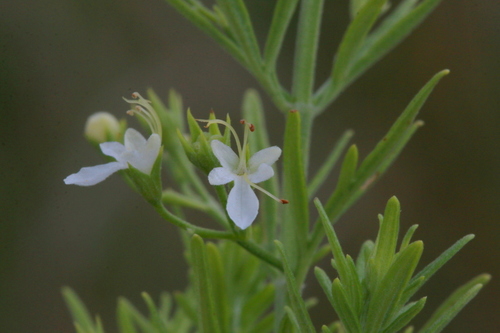
It produces small white flowers that grow from a central spike inflorescence that emerges from the top of the central stem.
Stamen and Pistil Position
Unlike most other members of the Lamiaceae family, this species does not have its four stamens and pistil positioned under the upper lip of the corolla; instead, these structures lie over the lower lip.
Fruit Development
Following insect pollination, the corolla detaches, and four round achenes develop inside the bilabiate calyx.
Native Range and Cultivation Spread
Basil is native to India and other tropical regions spanning from Africa to Southeast Asia, but it has been spread globally through human cultivation.
Traditional Medicinal Uses
It is used in folk medicine traditions, including Ayurveda and traditional Chinese medicine.