About Oceanodroma leucorhoa socorroensis C.H.Townsend, 1890
Size Measurements
Leach's petrel is a small seabird, measuring 18–21 cm in length with a 43–48 cm wingspan.
Plumage Characteristics
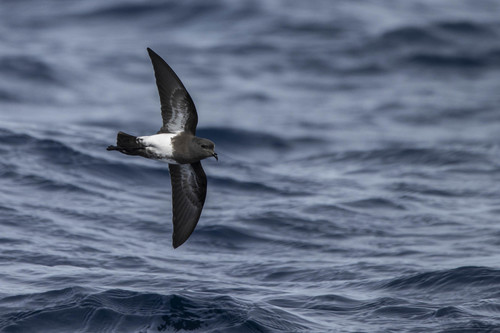
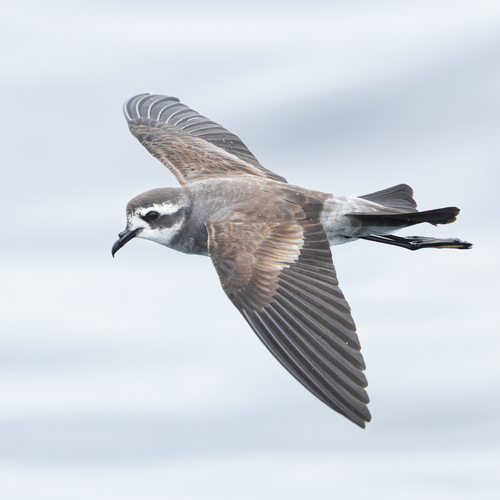
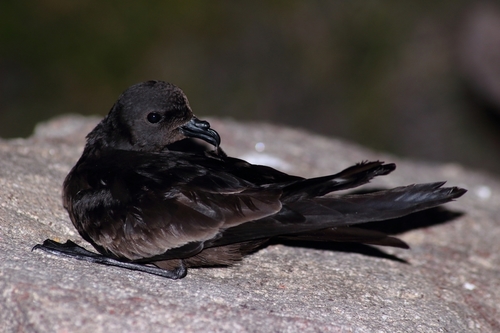
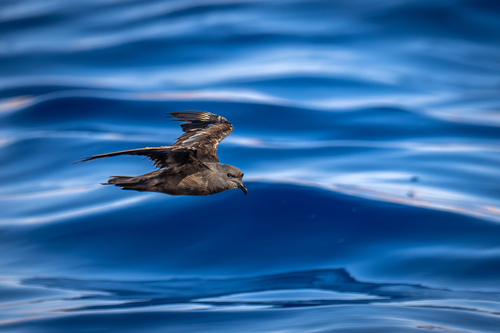
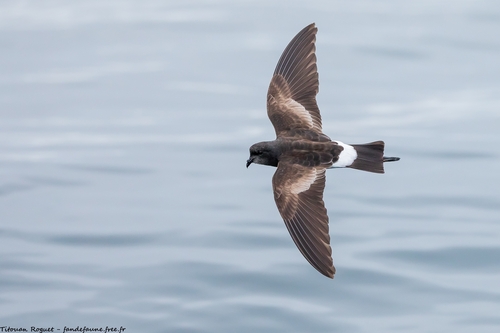
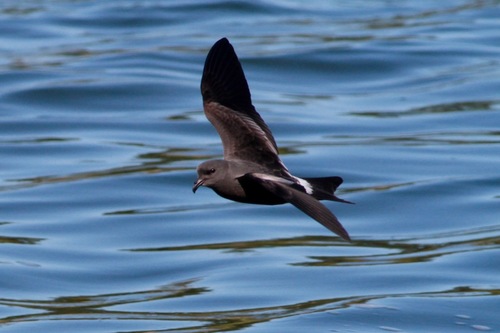
Like many other storm petrels, it has all-black plumage overall, with a paler grey-brown bar across the secondary wing coverts, a slightly paler face, and usually a white rump that often has a faint dark stripe down its center.
Dark-rumped Morph Distribution
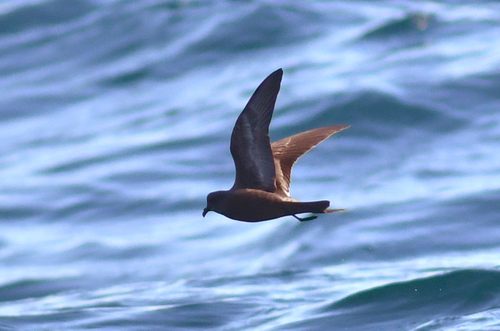
Dark-rumped individuals do occur on the west coast of North America; they are very rare north of southern California, but the share of dark-rumped birds rises sharply at the United States-Mexico border, where 90-100% of breeding Leach's petrels are dark-rumped.
Atlantic Identification Distinctions
In the Atlantic Ocean, Leach's petrel can be easily told apart from the European storm petrel and Wilson's storm petrel by its larger size, forked tail, different rump pattern, and flight behavior.
Band-rumped Storm Petrel Identification
However, separating it from band-rumped storm petrels is difficult, and identification relies on features such as the extent of white on the rump and flight pattern.
Pacific Identification Challenges
Identification is even more challenging in the Pacific, where the dark-rumped form can be confused with at least three other all-dark storm petrel species.
Pacific Identification Features
For this region, correct identification requires close attention to wingbeat pattern and overall body color.
Flight and Feeding Behavior
Leach's petrel has a fluttering flight, and patters on the water surface to pick planktonic food items.
Walking Ability
Like most petrels, its walking ability is limited to a short shuffle to reach its nesting burrow.
Non-breeding Pelagic Habitat
Outside of the breeding season, Leach's petrel is strictly pelagic, meaning it lives entirely out on the open ocean.
Land Observability Rarity
Combined with its use of remote island breeding sites, this habit makes the species very difficult to observe from land.
Storm-related Coastal Occurrence
The species is only pushed close to headlands during storms, and unlike the European storm petrel, it does not follow ships.
European Viewing Location
In Europe, the best opportunity to see Leach's petrel is during autumn in Liverpool Bay, located between north Wales and northwest England.
Liverpool Bay Migration Funneling
Strong north-westerly gales can funnel migrating Leach's petrels into this bay.
1930s Scottish Observations
British ornithologists Robert Atkinson and John Ainslie observed Leach's petrel communities on the remote Scottish island of North Rona between 16 July and 12 August 1936, and on Sula Sgeir between 3 and 4 August 1939.
First Nest Photograph
The first photograph of this species at its nest was taken in 1958 on Eilean Mor, one of the Flannan Isles off the west coast of Scotland's Outer Hebrides, by Jo Moran.
Lifespan Records
For a bird of its small size, Leach's petrel has an unusually long lifespan, with an average of 13 years and a maximum recorded lifespan of over 38 years.
Longest Lifespan Individual Source
This record comes from a bird ringed between 1979 and 1982, recaptured in 2019 while still healthy.
Telomere Aging Trait
In 2003, researchers found that Leach's petrel telomeres lengthen with age, which was the only confirmed example of this phenomenon at the time.
Telomere Trait Prevalence
It is likely that this trait also occurs in other Procellariiformes, a group that all have unusually long lifespans for their body size.
Primary Plankton Diet
Leach's petrels feed primarily on plankton, including euphausiids, copepods, and an amphipod species that parasitizes the gonadal pouches of jellyfish.
Lantern Fish Prey
They also feed heavily on myctophids, or lantern fish, which only come to the surface at night in waters over the continental slope.
Foraging Range
Individual Leach's petrels have been recorded foraging up to 1000 km away from their breeding colony.
Stomach Lipid Storage
Breeding individuals store energy-rich lipids in a sac located just in front of their stomach.
Lipid Uses
This stored lipid is used to sustain the bird while it incubates its single egg, to feed its chick, or as a defensive mechanism when caught by a predator, a trait shared with many other Procellariiformes.
Adult vs Chick Prey Differences
Some evidence indicates that parent birds feed their chicks different prey species than the ones they consume themselves.
Plastic Ingestion Risk
Parent birds also accidentally feed plastic debris to their chicks, mistaking the floating plastic for food on the ocean surface.
Pre-fledging Weight Gain
Before fledging, Leach's petrel chicks grow to a pre-fledging weight that is almost double their weight when they actually leave the burrow in late September.
Migration Destinations
During migration, Leach's petrels travel to waters associated with the North Equatorial Current, or to waters associated with the Benguela Current.
Storm-related Wrecking Events
Autumn storms can push these newly fledged young birds off course and cause them to wreck on mainland coasts.