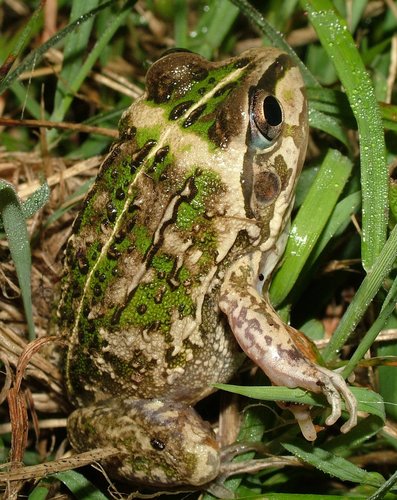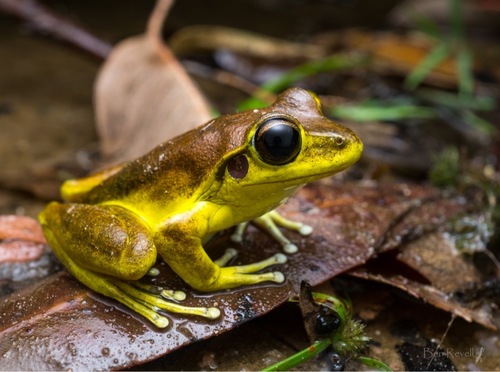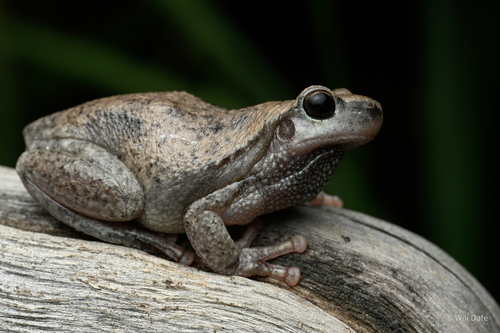
About Litoria rubella (Gray, 1842)
Body Structure
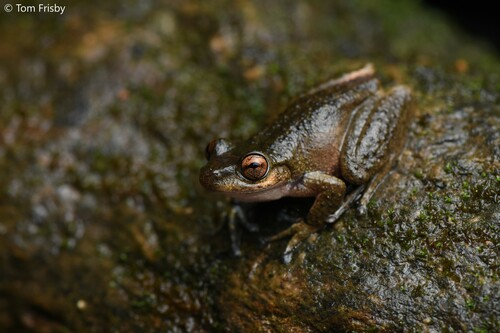
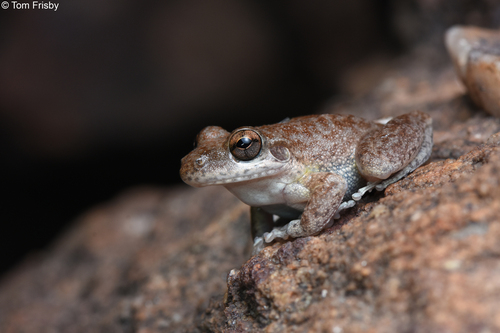
This species has a rotund body, a small flat head, short arms, and strong short legs.
Adult Size
Adult individuals measure 28 to 43 mm (1.1 to 1.7 inches) in snout-vent length.
General Coloration
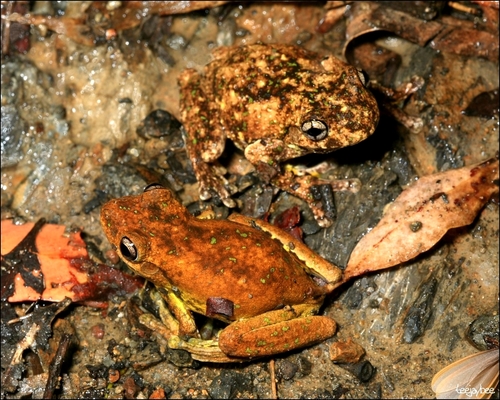
Its ventral surface is white, while the dorsal surface ranges from light grey to dark red and is marked with small black flecks.
Cooktown Specimen Dorsal Trait
Adult specimens from Cooktown, Queensland, often have a distinct metallic sheen on their dorsal surface, which ranges in color from bronze to gold.
Facial and Flank Markings
A dark band extends from the snout, across the eye, and along the flanks of the frog.
Breeding Season Male Trait
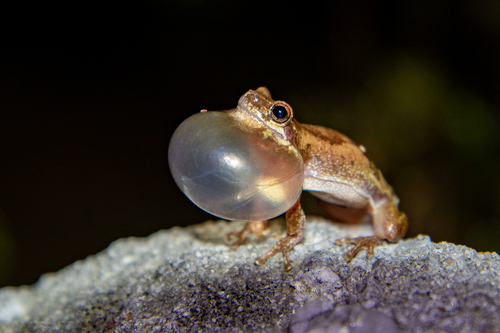
Male individuals have dark grey throats during the breeding season.
Groin and Tympanum Traits
The groin is lemon-yellow, and the tympanum is visible.
Juvenile Abdomen Trait
Juvenile frogs have an almost completely transparent abdomen, which makes their abdominal organs clearly visible from the outside.
Breeding Habit Variation Basis
This species has a wide distribution across many different habitat types, leading to significant variation in its breeding habits.
Breeding Timing by Region
Populations living in temperate or tropical zones breed once annually during the wet season or summer, while populations in desert regions breed whenever rainfall occurs.
Tadpole Development Drivers
The rate of tadpole development depends on water temperature.
Fast Tadpole Development Context
Small volumes of water reach higher temperatures, which trigger faster tadpole development; some individuals complete development in as little as 14 days.
Heat Avoidance Behavior
Unlike most other desert frogs, this species does not burrow to avoid heat and desiccation.
Shelter Sites
Instead, individuals seek shelter under rocks, trees, or leaf litter.
Human Proximity Habitats
They are commonly found near human dwellings where water is available, and can even be found inside sinks, toilets, or drain pipes.
Evaporative Water Loss Rate
Compared to other similar-sized desert frogs, this species has a relatively low rate of evaporative water loss, and does not dry out as quickly as expected under hot, dry conditions.
Water-Conserving Posture
This low rate of evaporative water loss can be partially explained by the species' water-conserving posture: frogs tuck their limbs close to their body, sealing off ventral skin from exposure to the outside environment.
Posture and Water Loss Study
A study found that frog species like the desert tree frog that use water-conserving postures typically have higher resistance to evaporative water loss.
Skin Color Change Ability
This species can also change its skin color from dark brown to bright white.
Color Change Thermoregulation Function
This color change increases solar reflectance off the skin, reducing the amount of heat the frog absorbs.
Dry Air Color Change Trigger
Unlike most amphibians, this species will change color in response to dry air exposure regardless of the color of its previous background.