About Chalinolobus gouldii (Gray, 1841)
Size
Chalinolobus gouldii (Gray, 1841) is the largest species in the genus Chalinolobus, a group of bats characterized by fleshy lobes at the corners of the mouth. Across the species' entire range, average combined head and body length is 70 ± 5 mm, and average body mass is 14 ± 4 g.
Fur
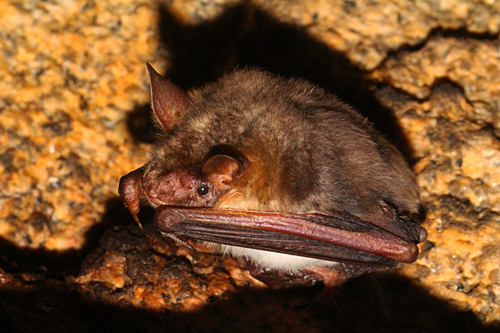
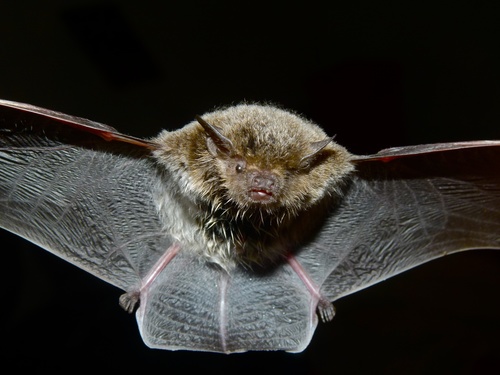
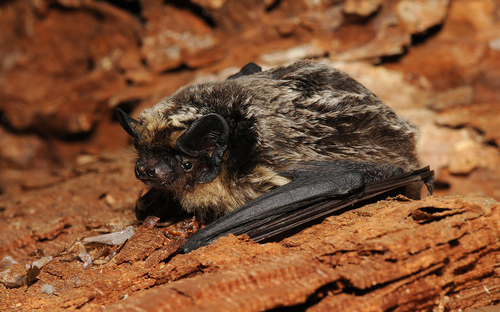
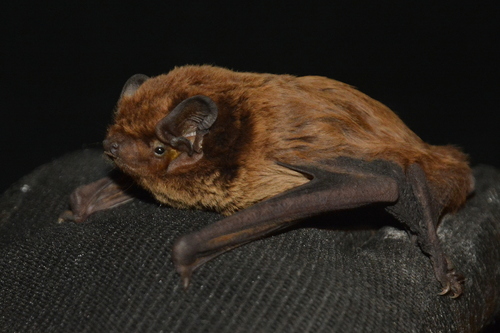
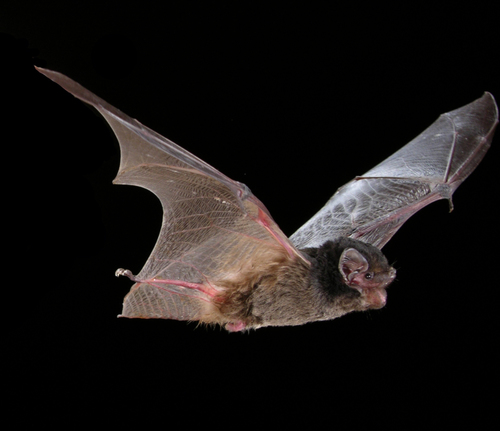
The fur on its back is dark brown, and darkens to black on the head and shoulders.
Range
This species is found across mainland Australia (with the exception of northern Cape York Peninsula and the Nullarbor Plain), as well as Tasmania, New Caledonia, and Norfolk Island.
Habitats
It occupies a wide variety of habitats. In wooded areas, it is mostly arboreal, but individuals have also been found in tree stumps, hollow tree limbs, and bird nests. It may also live in urban areas, taking shelter in building ceilings and basements.
Roosting
While some individuals, usually males, roost alone, colonies typically hold around 30 bats; colonies of up to 200 individuals have also been recorded.
Reproduction
The reproductive behavior of C. gouldii, including the months gestation occurs, varies between different regions.
Pregnancy Timing
In Victoria, pregnancy usually takes place in September and October, lactation in November and December, and young bats fledge in December and January. In Western Australia, the 6–8 week birthing period starts from late September to November, varying with the latitude of the population.
Sperm Storage
Females are able to store fertile sperm for at least 33 days, which lets them conceive long after mating.
Twins
Pregnancy develops in both uterine horns, so offspring are often twins.