About Notiosorex crawfordi (Coues, 1877)
Taxonomic Identity
Crawford's gray shrew, with the scientific name Notiosorex crawfordi, is one of the smallest desert mammals and one of the world's smallest homeotherms.
Adult Size
When fully grown, it measures only 1.5 to 2 inches (3.8 to 5.1 cm) long, with half of that total length made up by the tail, and weighs just 3 to 5 grams (0.11 to 0.18 oz).
Body Fur Coloration
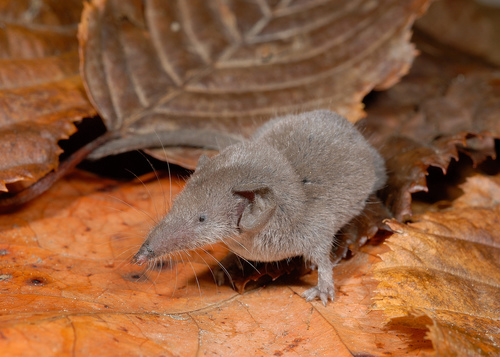
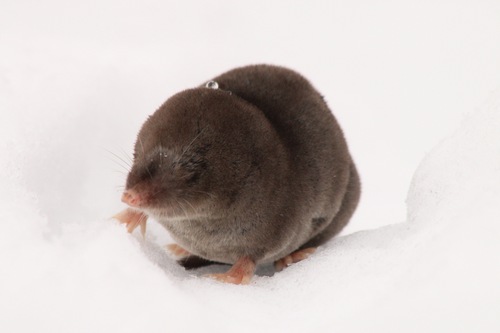
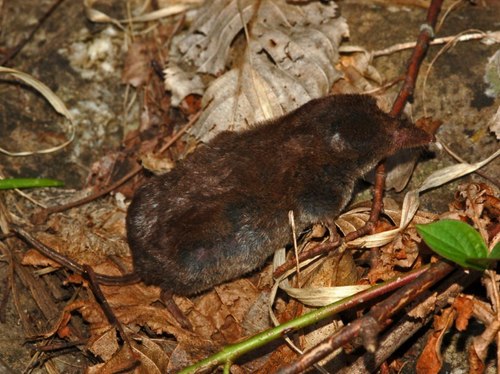
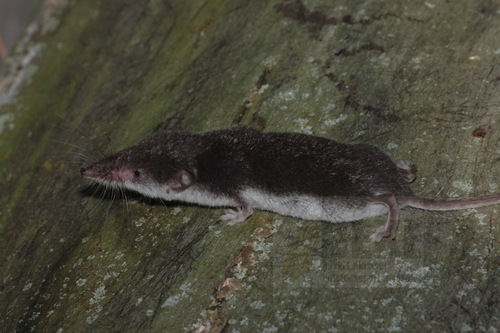
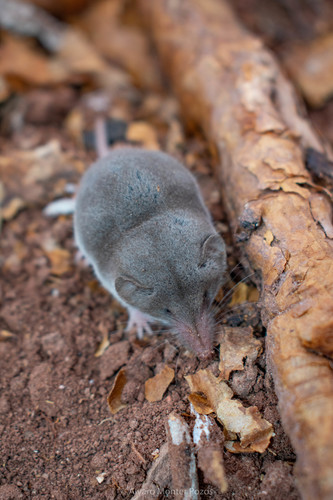
It has gray-brown fur on its upper body and light gray fur on its underparts.
Tail Appearance
Its long tail is gray, with a lighter shade of gray on the underside.
Ear Features
It has small but relatively prominent ears.
Birth Details
Crawford's gray shrews are born in the summer in litters of three to six individuals.
Newborn Characteristics
At birth, they are naked and pink, and are roughly the same size as a honeybee.
Juvenile Growth Rate
They grow rapidly and reach adult size in about four to five weeks.
Early Juvenile Diet
Young Crawford's gray shrews feed solely on milk produced by their mother, with no additional water intake.
Weaning Diet Transition
After two to three weeks, their diet shifts to food that the mother brings back to the nest and regurgitates for the juveniles.
Nest Departure Timeline
By fall, young Crawford's gray shrews leave the nest to live independently.
Post-Nest Diet Shift
As adults, their diet shifts from regurgitated food to intact prey that they kill themselves.
Adult Prey Range
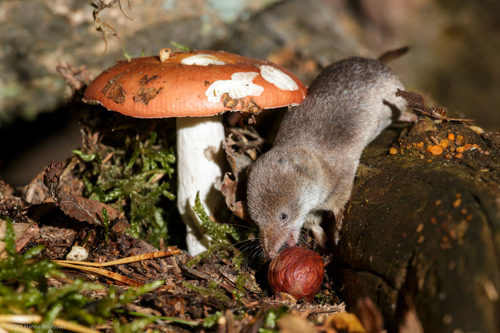
Adult Crawford's gray shrews eat lizards, small mice, and scorpions, but their main food source is a wide variety of arthropods.
Metabolic Feeding Requirements
This shrew has a very high metabolic rate, so it eats up to 75% of its body weight every day, and occasionally eats its full body weight in a single day.
Overheating Risk
This high metabolic rate can be dangerous because it can cause the shrew to overheat. Heat generated from metabolism, combined with heat absorbed from the surrounding environment, leaves the shrew at high risk of overheating.
Energy Expenditure Rate
This species expends energy at a very fast rate.
Resting Physiological Rates
When resting, the average Crawford's gray shrew has a heart rate of about 1000 beats per minute, and a respiratory rate of 800 breaths per minute.
Breeding Season
The breeding season of Crawford's gray shrew is reported to range from spring to fall, or to occur year-round.
Gestation and Litter Size
About three weeks after mating, the female gives birth to three to five offspring.
Hunting Sensory Adaptations
Crawford's gray shrew has poor vision, so it uses its highly sensitive ears and long nose to hunt prey.
Echolocation Use
It also uses echolocation, similar to bats, emitting high-pitched squeaks to locate prey.
Food Storage Behavior
The shrews store food during the night so they do not need to forage outside during the day.
Anti-Predator Defense
When threatened, the gray shrew can emit a musky odor to make itself less appealing to mammalian predators.