About Myotis dasycneme (Boie, 1825)
Species Identification
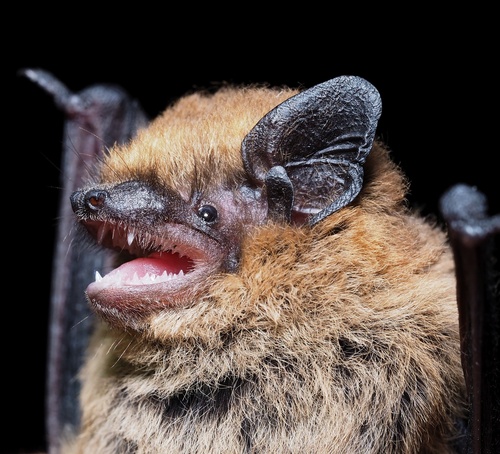
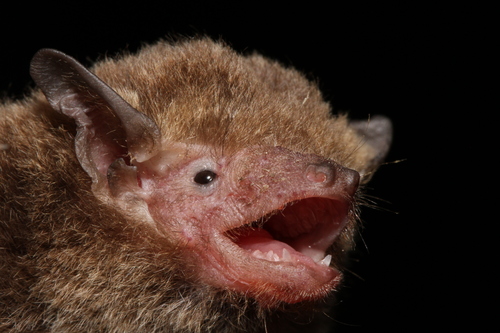
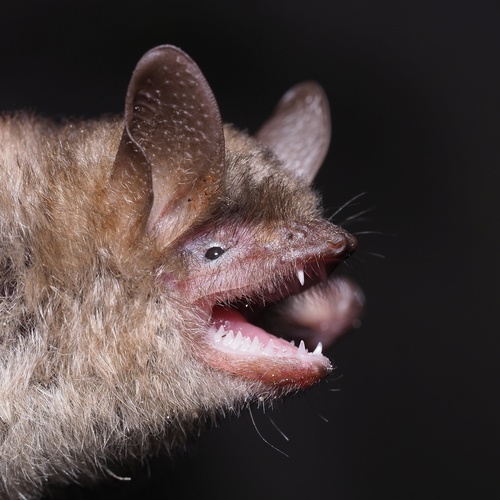
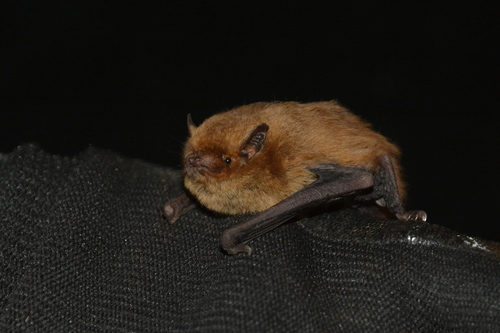
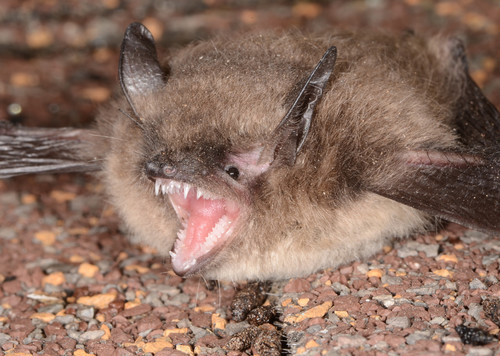
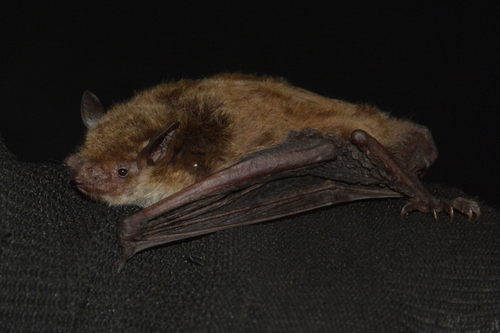
This species, the pond bat Myotis dasycneme (Boie, 1825), is a medium-sized bat.
Tragus Morphology
It has a noticeably short tragus, which is distinct for a species in the Myotis genus.
Fur Base Characteristics
Its fur is thick, with a black-brown base.
Fur Coloration
Dorsal fur is brownish or yellowish-grey, while ventral fur is white-grey or yellowish-grey.
Summer Roost Habitat
In the summer, this species roosts in lowland areas that include water, meadows and woods.
Winter Roost Habitat
Winter roosts can also be found in mountain foothills.
Roost Altitude Range
The highest recorded altitude for any M. dasycneme roost is 1000 meters above sea level, and winter roosts do not typically occur above 300 meters above sea level.
Summer Roost Locations
Most summer roosts are located in roof spaces or church towers, though individual bats will sometimes nest in hollow trees.
Female Sexual Maturity
Females of this species reach sexual maturity in their second year.
Mating Season Timing
Mating season begins at the end of August.
Nursery Roost Composition
The following May, 40 to 400 females occupy nursery roosts; males are rarely present in these roosts.
Maximum Lifespan
The maximum recorded lifespan for this species is 19 years.
Human-Made Nursery Roosts
Most summer nursery roosts are located in human-built structures, most commonly attics and church steeples.
Alternative Roost Sites
Occasionally, pond bats will also roost in trees and nest boxes.