About Myotis austroriparius (Rhoads, 1897)
Size and Wingspan
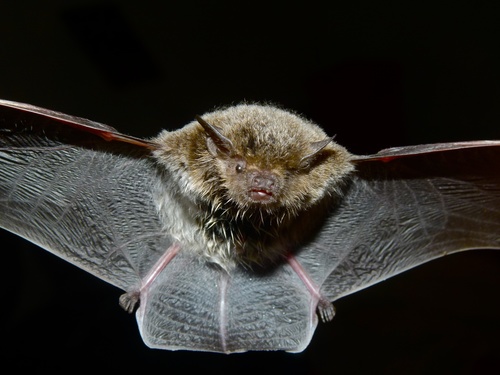
The southeastern myotis, Myotis austroriparius, weighs 5–8 grams and has a wingspan of approximately 9 to 11 inches.
Fur Coloration
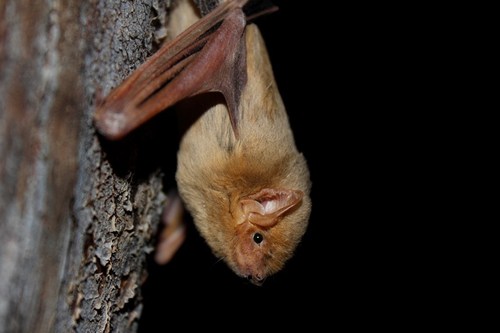
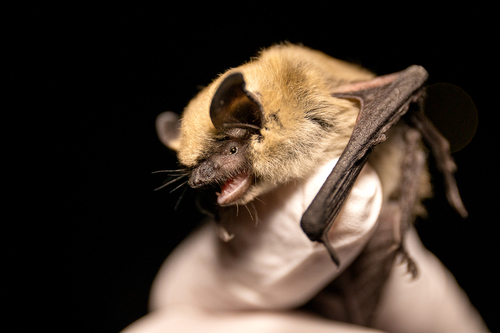
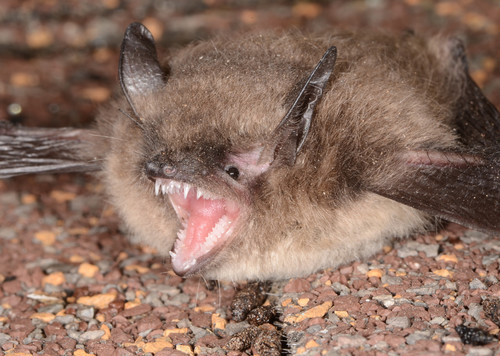
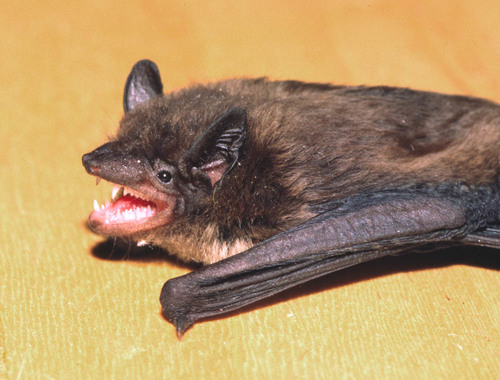
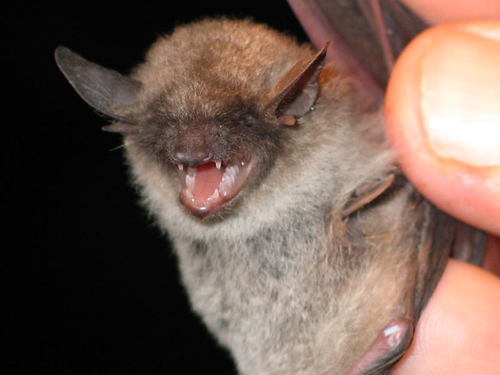
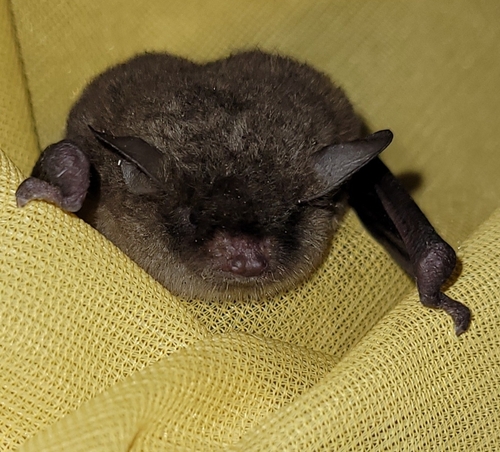
Its fur color ranges from gray to bright orange-brown, and females are generally more brightly colored than males.
Activity Cycle
Like all other species in the genus Myotis, the southeastern myotis rests during the day and forages for food at night.
Diet Composition
Its diet is made up predominantly of insects, and the bats often hunt and feed over water.
Feeding Behavior
Feeding flights usually alternate with rest periods, during which the bats hang to digest their caught prey.
Reproductive Traits
Unlike other United States Myotis species, which usually only produce one offspring per female, southeastern myotis regularly produce twins, a trait unique to this species among North American Myotis.
Roosting Associations
This species is occasionally seen roosting alongside Rafinesque's big-eared bats.
Geographic Range
The range of the southeastern myotis extends from southern Illinois and Indiana in the north, west to southeastern Oklahoma, western Tennessee, Arkansas, and northeastern Texas, and east to southern North Carolina.
Population Distribution
Disjunct populations live in the Ohio River Valley of Kentucky, and the majority of the species' total population lives in the northern half of the Florida peninsula.
Core Habitat
Bottomland hardwood forests are a key part of southeastern myotis ecology, as this species roosts and forages near water.
Common Roost Trees
Bald cypress and water tupelo, common tree species in bottomland hardwood forests, are frequent roosting trees for these bats.
Roost Tree Requirements
Suitable roosting habitat requires mature, large enough trees to form natural tree cavities.
Forest Correlation
Capture rates of this species have a positive correlation with the percentage of oak trees in an area, and a negative correlation with the percentage of bald cypress.
Prefered Forest Characteristics
More southeastern myotis are captured in younger forests that have high stem density, low canopy height, and increased ground cover.
Alternate Roost Sites
The species also roosts in caves, cisterns, abandoned buildings, and under bridges.
Roost Tree and Cluster Traits
Southeastern myotis prefer roost trees with the smallest available diameter at breast height (DBH) values, and they tend to roost in densely packed clusters at the top of tree cavities.
Predation Role
Southeastern myotis are an important food source for barred owls, especially during the owls' nesting season, and are a less important food source outside of this nesting season.