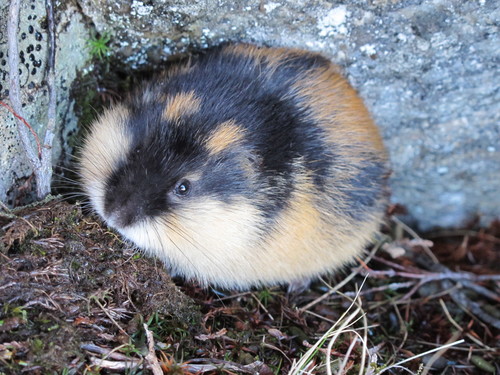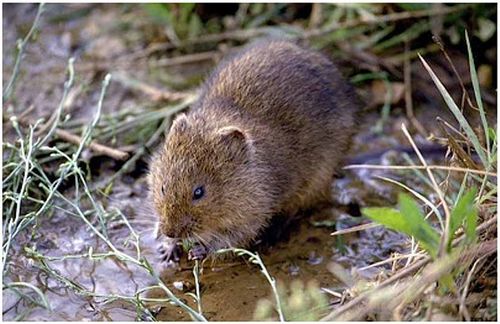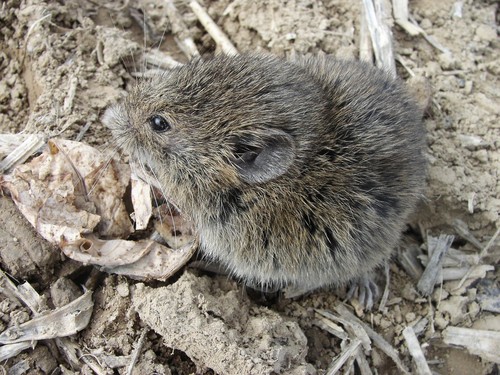
About Microtus arvalis (Pallas, 1779)
Nomenclature and Native Range
The common vole, scientifically named Microtus arvalis, is a rodent species native to Europe.
Eurasian Distribution
This species has a broad distribution across large areas of Eurasia, but it is not naturally present in Ireland or Britain (apart from the Orkney vole, a subspecies of M. arvalis); in Britain and Ireland, it is replaced by the closely related field vole, Microtus agrestis.
Habitat Classification Rationale
Because the common vole has expanded its range alongside human civilization, its habitats can be split into primary and secondary categories.
Primary Habitats
Primary habitats are all areas except dense forests, and include meadows, heathlands, and fallow land.
Secondary Habitats
Secondary habitats are mostly agricultural fields, where the common vole prefers shallow sloped areas.
Diet
The natural diet of the common vole is grass, but it also feeds on many types of agricultural crops in its secondary habitats.
Reproductive Rate by Habitat
The common vole reproduces faster in secondary habitats than it does in primary habitats.
Gestation and Litter Traits
Female common voles have a gestation period of 16 to 24 days, after which they give birth to litters of 3 to 8 juveniles that weigh between 1.0 and 3.1 grams.
Weaning Period
Weaning occurs around 20 days after birth.
Juvenile Female Sexual Maturity
Female juvenile common voles can become pregnant as early as 13 days after birth, so their first birth can occur as early as 33 days after birth.
Breeding Season and Cycles
The annual breeding season runs from March to October, and females typically go through three reproductive cycles each breeding season.
Average Lifespan
The average lifespan of the common vole is 4.5 months.
Seasonal Mortality Pattern
Most individuals die after the final reproductive cycle in October, while the latest offspring of the year survive winter and begin reproduction the following spring.
Adult Weight
Adult males can reach weights of up to 51 grams, and non-pregnant adult females can reach weights of up to 42 grams.
Sex Ratio Variation
The sex ratio at birth is equal, but becomes biased toward females as individuals mature; at higher population densities, the ratio can shift to 3:1 or even 4:1 in favor of females.
Male Mating Competition Outcomes
This female-biased ratio leads to intense competition for mates among males, which causes higher mortality and higher dispersal rates in males.
Population Density Cycles
Population density of common voles varies seasonally and shows considerable long-term fluctuation, typically following three-year or five-year cycles.
Density Range
Densities can range from 100 individuals per hectare at very low levels, to over 500 individuals per hectare at medium levels, and up to 2000 individuals per hectare in some years.
Density-Dependent Reproduction
In response to high population density, female reproduction can decrease or even stop entirely.
Additional Reproductive Influences
Reproductive rate is affected not only by population size, but also by the amount and quality of available food and the amount of light available.
Self-Regulation Hypothesis
A decrease in reproductive rate at high population densities has been suggested as a form of self-regulation in the species.
Predator Prey Role
The common vole is one of the main food sources for many predators in Central Europe.
Avian Predators
Several birds, including buzzards, kestrels, long-eared owls, tawny owls, and barn owls, prey on the common vole and help keep its population size in check.
Ground-Dwelling Predators
Main ground-dwelling predators of the common voles include weasels, stoats, adders, polecats, foxes, and boar.