About Mesembryanthemum tortuosum L.
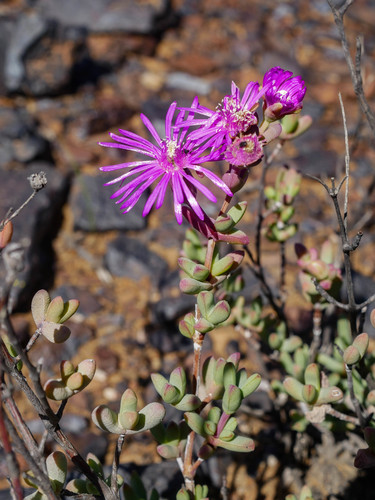
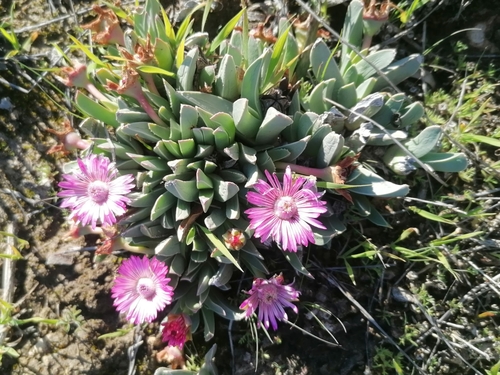
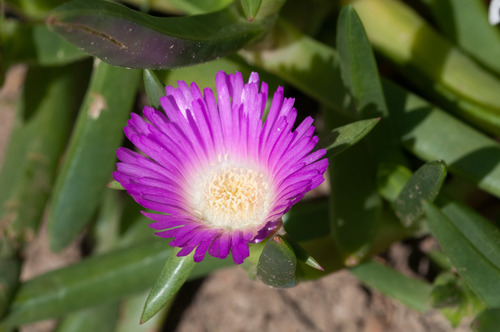
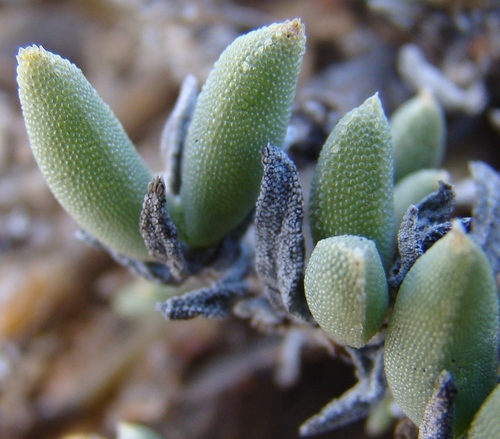
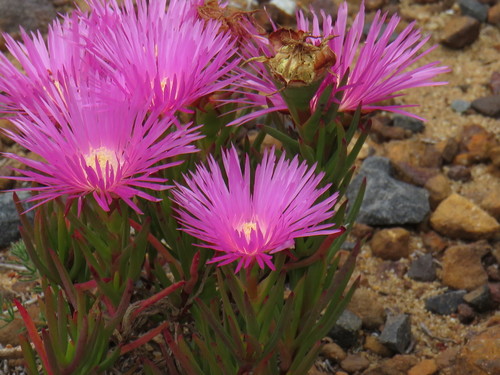
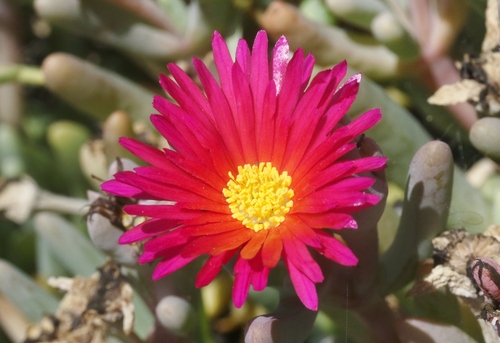
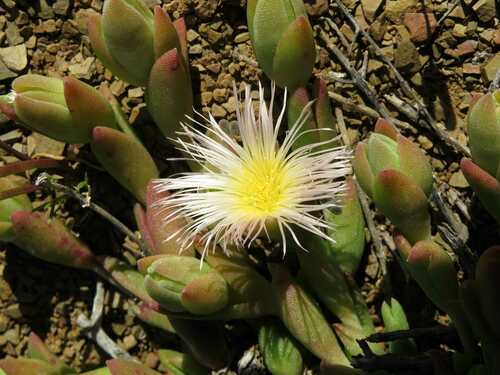
Mesembryanthemum tortuosum L. (also called Sceletium tortuosum, commonly known as kanna) is a perennial succulent plant native to South Africa. It produces pale, sessile flowers that measure around 20–30 mm wide, with 4–5 sepals. Its recurved leaves hold distinctive water cells, and stems develop a woody texture as the plant matures. Raphides have been detected in the plant's petals and filaments. M. tortuosum occurs across 50 subpopulations in South Africa's Cape provinces, ranging from Namaqualand to Montagu and Aberdeen, where it grows in karroid habitat. Since historic times, pastoralists and hunter-gatherers have consumed kanna for its mood-altering and medicinal properties, with the earliest recorded use dating to 1662. It can be prepared and consumed in many forms: chewed, fermented, made into tinctures, teas, tablets, or snuff, or smoked. Traditionally, it has been used as a narcotic, sedative, and analgesic to relieve mouth pain, and to suppress hunger and thirst during hunting. It has also been used to treat toothache, abdominal pain, and digestive problems; specifically, it has been used by pregnant women to address constipation, nausea, and uterine contractions, and for post-birth recovery. An oil prepared from the plant, mixed with sheep's tail fat, is used to relieve colic in infants. It is also used as a party drug for its euphoric effects, and has been described as producing effects similar to MDMA. It has been studied for its ability to reduce excessive nocturnal barking in dogs and excessive meowing in cats. M. tortuosum can be grown from seed and propagated from cuttings. Its cultivation and care requirements are similar to those of cacti in the family Cactaceae, such as Echinopsis. It requires an optimal temperature of at least 16 °C, and does not tolerate frost.