About Melanochelys trijuga (Schweigger, 1812)
Shell Color
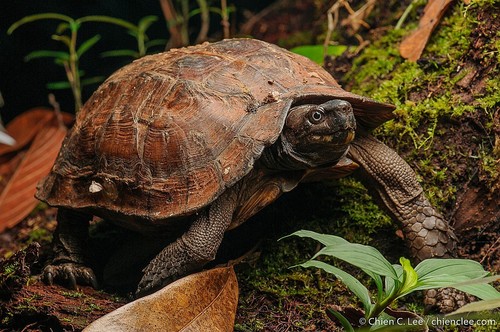
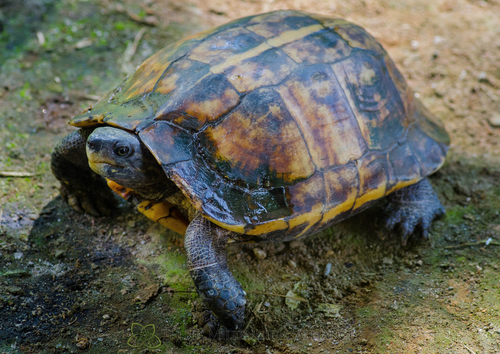
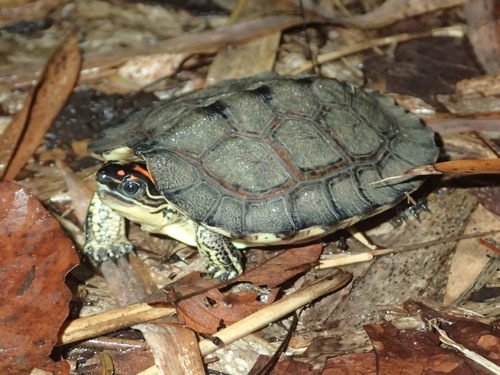
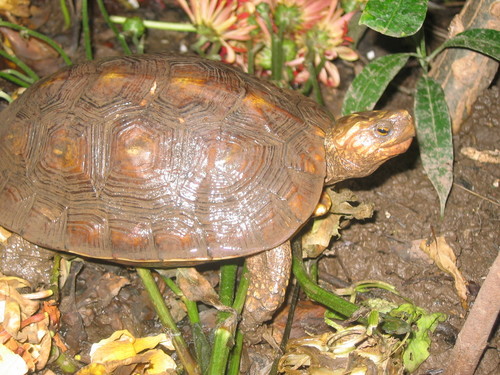
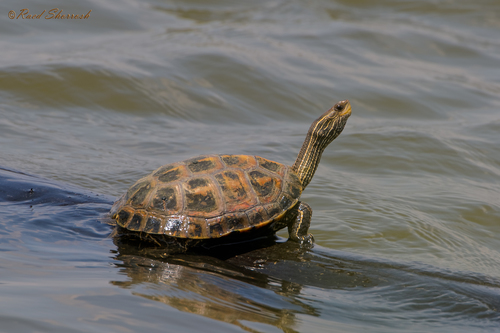
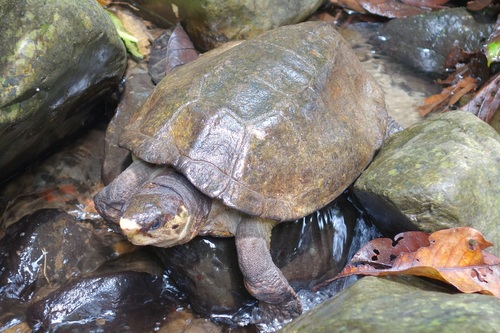
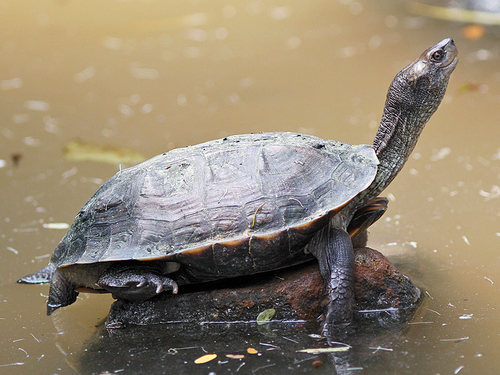
Description: The shell of Melanochelys trijuga is typically composed of shades of dark brown, green, or grey, and is not only black.
Head Coloration
Head coloration shows even more variation, with different subspecies potentially having pink or yellow spots. The subspecies Melanochelys trijuga coronata has a yellow spot on the head, while M. t. trijuga and M. t. indopeninsularis have distinct pink spots.
Body Size
On average, the shell of this species is about 6 inches long, and the full body length is usually around one foot.
Geographic Range
Distribution and habitat: This species is found in India, Bangladesh, Myanmar, Sri Lanka, the Maldives, Nepal, and the Chagos Archipelago, where it may have been introduced.
Subspecies Distribution
There are five recognized subspecies with overlapping distributions: M. t. trijuga (peninsula black turtle) occurs in India; M. t. coronata (Cochin black turtle) occurs in India; M. t. indopeninsularis (Bangladesh black turtle) occurs in India and Nepal; M. t. parkeri occurs in Sri Lanka; M. t. thermalis (Sri Lanka black turtle) occurs in India, the Maldives, and Sri Lanka.
Habitat Types
The Indian black turtle inhabits a wide range of water bodies, including natural ponds, marshes, streams, and rivers, as well as artificial water bodies such as rice paddies and watering holes.
Activity Patterns
Ecology: This species is typically most active at the beginning and end of the day, and spends most of the day basking in the sun. In contrast, the Sri Lankan subspecies tends to spend the day living in or below the ground.
Aquatic Habitat Use
The species uses many different aquatic areas as habitat; some populations live in fully aquatic areas, in either still or moving water, while others live in less aquatic areas.
Diet
It is omnivorous, feeding on a wide variety of water-adjacent plants, small animals, and animal waste. Indian black turtles can sometimes be found gathering alongside the carcass of a large dead animal.