About Malephora crocea (Jacq.) Schwantes
Taxonomy and Common Names
Malephora crocea is a species of succulent perennial flowering plant in the ice plant family, with common names coppery mesemb and red ice plant.
Native Range and Cultivation Uses
It is native to Southern Africa and grown in many other regions worldwide, primarily as an ornamental plant, and also used as fire-resistant groundcover.
Non-Native Introduction in North America
In parts of Southern California, and further south into Mexico's Baja California and Baja California Sur states, Malephora crocea is an introduced non-native species.
Original Planting Purposes
It was originally planted for highway landscaping in low-rainfall areas, and for early railroad track reinforcement, in the late 1800s.
Establishment Success in Introduced Range
Due to strong climatic similarities between the Baja California peninsula, Southern California, and its native Southern Africa, the species has become long established and now reseeds prolifically. It can even regrow from undisturbed rootstock each spring.
Noxious Weed Classification
In some introduced areas, Malephora crocea is viewed negatively, and even classified as a noxious weed.
Soil Erosion Risk
The plant's shallow root system can worsen soil erosion when planted on sloped inclines, because it cannot penetrate deeply enough to stabilize terrain the way trees or shrubs can.
Landslide Risk
Over time, a colony of the plant grows and becomes heavier from the water stored in its leaves, increasing the risk of landslides or similar events, particularly when growing on road-adjacent slopes.
Cliff Erosion Concern
This is a specific concern on California's Pacific coast, where it may self-seed and germinate on fragile sandstone cliffs, also contributing to their erosion.
Coastal Habitat Tolerance
Malephora crocea has established widely along Californian beaches and hot seaside cliffs, even growing in ground with little to no organic matter, surviving mostly on marine layer fog and any precipitation that occurs.
Sand Growth Resilience
The species' ability to sprout roots in pure, sun-baked sand demonstrates its resilience, as it grows in locations that would damage the tissues of most other plants, from both high ambient heat and sea salt exposure.
Arizona Cultivation and Xeriscaping Use
Malephora crocea has also been planted along some highways in Arizona, hundreds of miles inland from the ocean in areas with very little rainfall, and is valued in the state for xeriscaping due to its low water requirements, need for hot direct sun, and consistent blooms that support pollinators including bees, butterflies, and hummingbirds.
Drought Period Herbivory
During drought, birds (possibly because the leaves resemble worms or caterpillars) and other animals may pick at the lush, water-filled leaves, leaving the plant looking ragged and torn.
Horticultural Popularity
Despite potential issues when grown in unsuitable locations, M. crocea remains popular outside its native range for its visual appeal, prominent floral display, and general ease of care.
Wildfire Resistance
It is especially recommended for wildfire-prone regions of California because its succulent foliage gives it a low flammability rate. When planted densely alongside other succulent species, its water-storing foliage can help act as a firebreak during wildfires or other burns.
Growth Habit
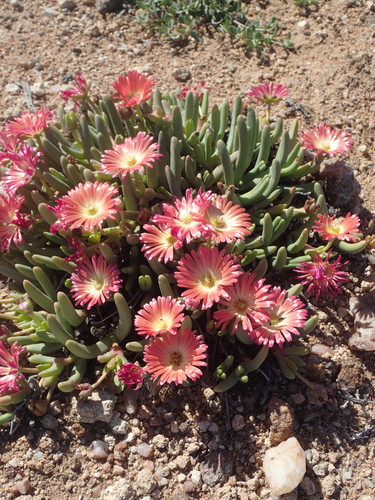
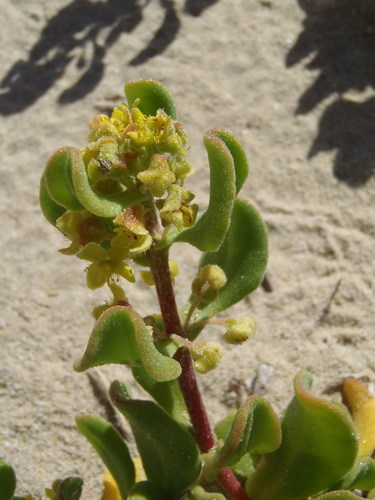
Malephora crocea is a succulent, herbaceous, perennial groundcover that reaches only a few inches in height, but can spread many feet laterally in all directions.
Stem Characteristics
It has a cork-like, woody stem that roots wherever it comes into contact with the ground, regardless of whether that ground is dirt, sand, grass, or soil.
Foliage Characteristics
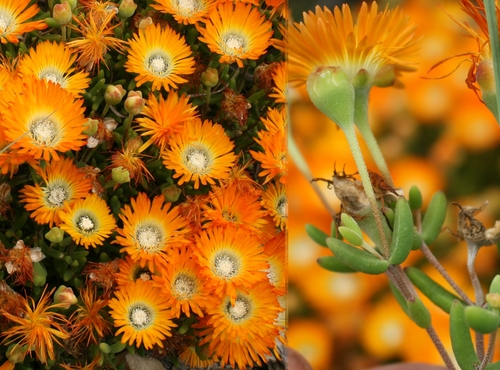
Its water-filled foliage is triangular in cross-section, a few centimeters long, ranges in color from pale green to reddish, and has a somewhat waxy texture.
Flower Characteristics
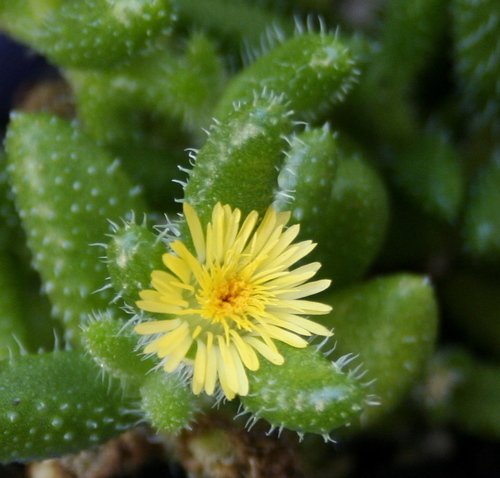
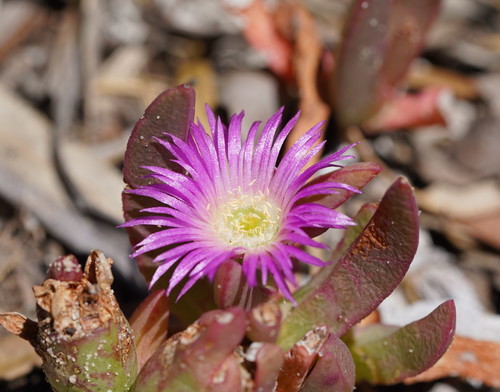
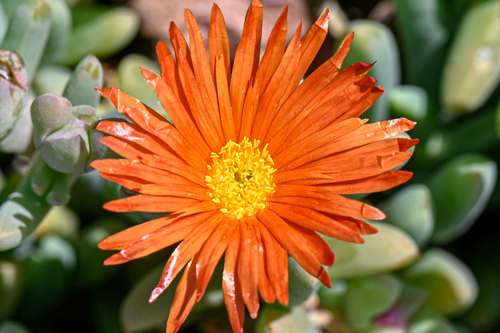
Flowers are borne on short stalks, and have many narrow petals in shades of red, orange, and yellow, sometimes with purplish undersides.
Fruit and Seed Characteristics
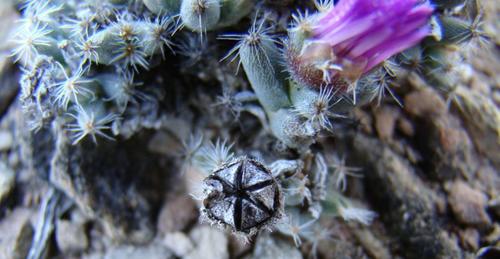
Its fruit is a valved capsule that holds many lens-shaped seeds.