About Macadamia tetraphylla L.A.S.Johnson
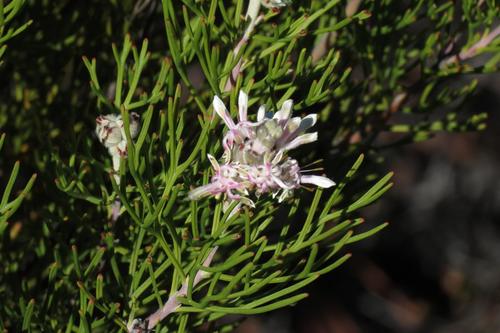
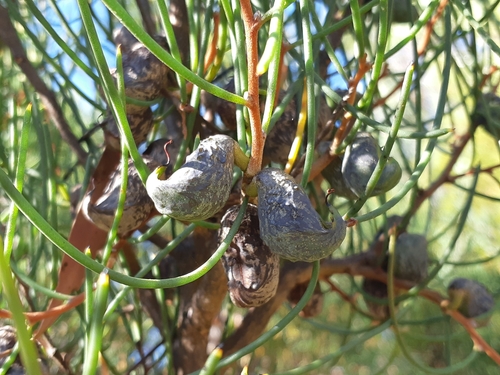
Macadamia tetraphylla L.A.S.Johnson is a tree species with dense foliage, growing up to 18 metres (59 ft) tall. Its leaves have toothed margins and range from 7 to 25 centimetres (3 to 10 in) in length. As the specific epithet tetraphylla suggests, this species typically bears four leaves arranged in roughly equal spacing around each leaf node. This differs from the other main commercial macadamia species, Macadamia integrifolia, which has a variable leaf count, most often three per node. Macadamia tetraphylla produces long, hanging flowers that range in colour from white to creamy pink to purple. After flowering, it forms woody, rounded fruits 2 to 3 cm (3⁄4 to 1+1⁄4 in) in diameter that contain edible seeds. As one of its common names notes, the fruit shell of this species is often dimpled, giving it the description 'rough shelled', in contrast to the smooth shell and white flowers of M. integrifolia. Macadamia tetraphylla is native to southern Queensland and northern New South Wales in Australia. It was the first Australian native food plant to be grown as a commercial crop by non-indigenous Australians. The first commercial macadamia plantation, made up entirely of M. tetraphylla, was established in the early 1880s by Charles Staff at Rous Mill, 12 km southeast of Lismore, New South Wales. Seedlings from this original plantation were used as rootstock for grafted modern macadamia varieties through much of the 20th century. The original plantation was finally cleared and replaced with grafted modern varieties in the 1990s. Ironically, even though macadamia cultivation has spread across the world for commercial agriculture, Macadamia tetraphylla is currently listed as a vulnerable species in its native Australian habitat. This status is caused by habitat loss and degradation, which stems from clearing of lowland rainforest for agriculture and urban development, invasion by non-native weeds, and poorly designed fire management systems.