About Lycopus virginicus L.
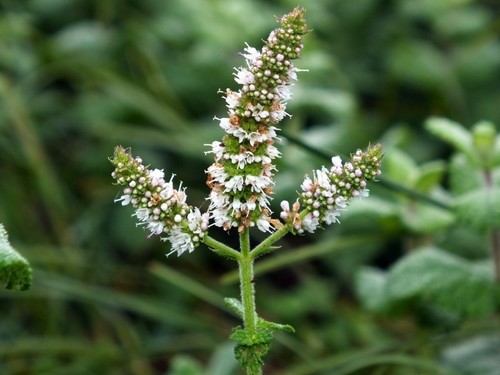
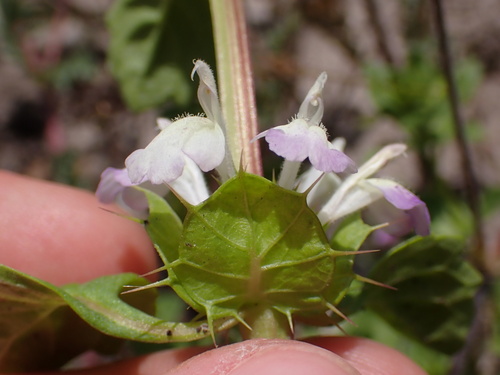
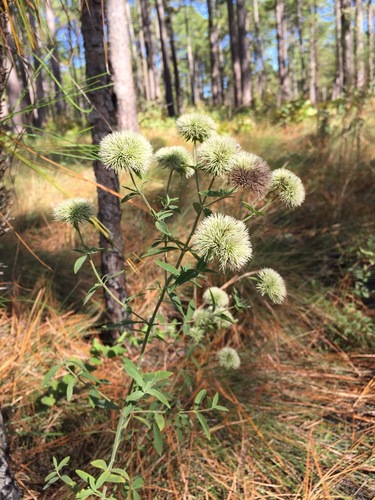
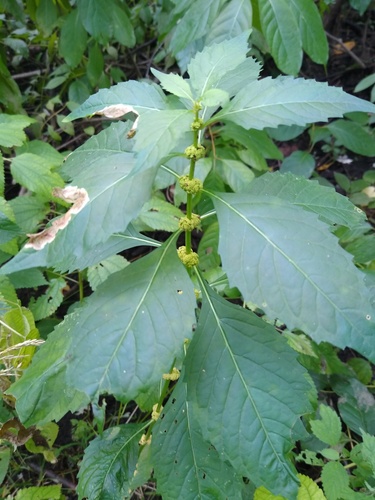
Lycopus virginicus L. is a species of flowering plant in the mint family, known by a wide range of common names: Virginia water horehound, American water hoarhound, sweet bugleweed, water bugle, carpenter's herb, green archangel, purple archangel, wolf foot, and Egyptian's herb. It is native to North America, and is widespread across eastern Canada and the eastern United States. This is a perennial herb with a hairy, squared stem that can grow up to one meter tall. Its leaves are arranged oppositely, have oval to lance-shaped blades with toothed edges, and are colored dark green or purple. Clusters of tiny white or pink-tinged flowers grow in the leaf axils. The plant has a mint scent and a bitter taste. It can be easily confused with Lycopus uniflorus; L. uniflorus has stamens that extend outside the flowers, while the stamens of L. virginicus are contained inside the flowers. The two species may hybridize to produce Lycopus × sherardii. L. virginicus grows in damp, shady habitat types, including riparian zones such as floodplains, and wet areas within forests, woodlands, and swamps. This plant has been used in traditional herbal medicine. It was perhaps most well-known as a treatment for hyperthyroidism conditions, including Graves' disease and thyrotoxicosis, with reported indications including dyspnea, tachycardia, tremor, and exophthalmia. No medical research has confirmed the effectiveness of this herb for these conditions. It was also used to treat anxiety, insomnia, and respiratory ailments including pneumonia, bronchitis, hemoptysis, and chronic cough. In Native American tradition, the Iroquois considered the plant poisonous, while the Cherokee used it to treat snakebite in people and dogs. The Cherokee also gave it to infants to help them learn to speak, and used it for ceremonial purposes.