About Lycalopex sechurae (Thomas, 1900)
Common Name and Classification
Lycalopex sechurae, commonly known as the Sechuran fox, is a small canid species.
Adult Size and Weight
Adults weigh between 2.6 and 4.2 kg (5.7 to 9.3 lb), with a head-and-body length of 50 to 78 cm (20 to 31 in) and a tail length of 27 to 34 cm (11 to 13 in).
Body Fur Coloration
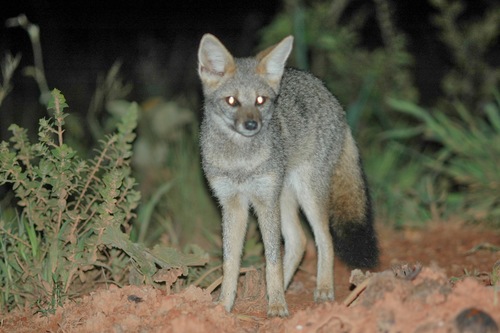
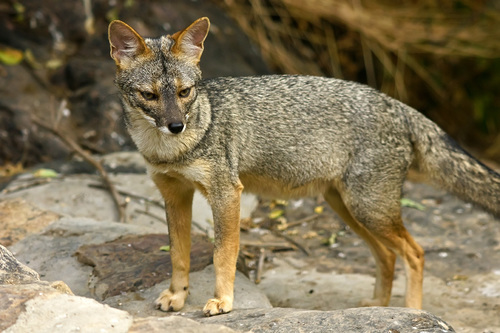
Most of its body has gray agouti fur, which fades to white or cream on the underparts.
Markings and Facial Features
It has reddish-brown markings on the back of the ears, around the eyes, and on the legs, a dark grey muzzle, a grey band across its chest, and a black-tipped tail.
Dental and Chromosomal Traits
It has small teeth adapted to feed on insects and dry plants, while retaining fox-like canine teeth, and this species has 74 chromosomes.
Genus Morphological Comparison
Within the Lycalopex genus, the Sechuran fox is not strikingly distinct from other species, though it does have measurable morphological differences.
Distinguishing Genus Characteristics
It is the smallest Lycalopex species, and lacks red body fur unlike other species in the genus.
Fossil Molar Comparison
Dental features show potential adaptive changes: fossil molars of L. sechurae are longer than molars from more modern specimens.
Survival Adaptability
The species' versatility likely contributes to its survival.
Diet Flexibility
When conditions allow it is omnivorous, but it can also survive entirely on a vegetarian diet.
Molar Size Evolution Hypothesis
Researchers have suggested that this shift toward vegetarianism may explain the observed decrease in molar size over time.
Water Scarcity Adaptation
The Sechuran fox is also thought to be able to survive without water for long periods, an adaptation to the low water availability of its native habitats; this ability is uncommon among mammals.
Water Survival Research Gaps
As of yet, no specific maximum duration of survival without water has been recorded in scientific literature, and more research is needed to confirm this trait.
Current Geographic Distribution
The species was first identified in the Sechura Desert, and currently inhabits arid environments in southwestern Ecuador and western Peru.
Elevation Range
It occurs at elevations from sea level up to at least 1,000 metres (3,300 ft), and may live at much higher elevations.
Habitat Types
Within its range, it has been recorded from the western Andes foothills down to the coast, occupying deserts, dry forests, and beaches.
Subspecies Status
No subspecies of the Sechuran fox are currently recognised.