About Lycalopex culpaeus (Molina, 1782)
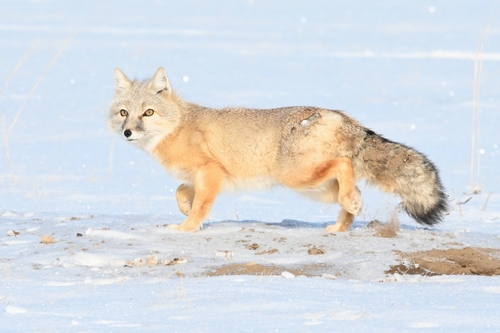
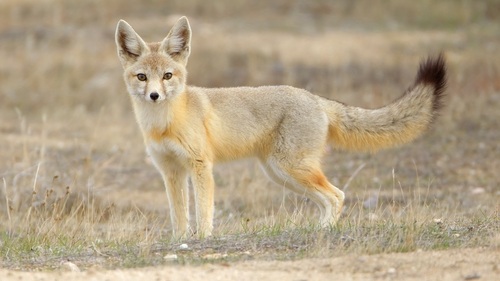
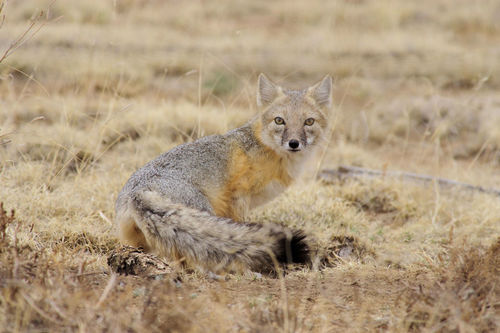
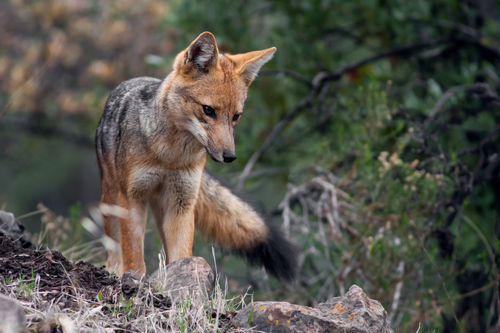
The culpeo (Lycalopex culpaeus) is a canid that falls between a red fox and a coyote in size. It is the second-largest native canid in South America, with the maned wolf being the only larger native canid on the continent. In appearance, the culpeo shares many similarities with the well-known red fox. Its fur is a mix of grey and reddish tones, with a white chin, reddish legs, and a faint, often barely visible stripe along its back. Males have an average weight of 11.4 kg (25 lb), while females are typically smaller, averaging 8.4 kg (19 lb). Overall, recorded weights for the species range from 5 to 13.5 kg (11 to 30 lb). Total body length ranges from 94 to 133 cm (37 to 52 in), which includes a tail that measures 32 to 44 cm (13 to 17 in) long. The culpeo's pelt has a grizzled appearance. The neck and shoulders are usually tawny to rufous in color, and the upper back is dark. The species' bushy tail has a black tip. The culpeo's range extends from southern Patagonia and Tierra del Fuego in the south, northward to Ecuador and Peru, and some populations reach into southern Colombia. It is also found in the Sierras Grandes mountain range in Córdoba, Argentina. It is most common on the western slopes of the Andes, where it lives in open country and deciduous forests. Across western South America, the culpeo occupies a wide variety of habitats. It can be found in broadleaf Nothofagus temperate rainforest, sclerophyllous matorral, deserts, chaparrals, and plateaus such as the Altiplano, occurring up to an elevation of 4,800 metres (15,700 ft), the tree line. For this species, the typical mating period falls between August and October. After a gestation period of 55 to 60 days, females give birth, usually to litters of two to five pups.