About Lupinus albus L.
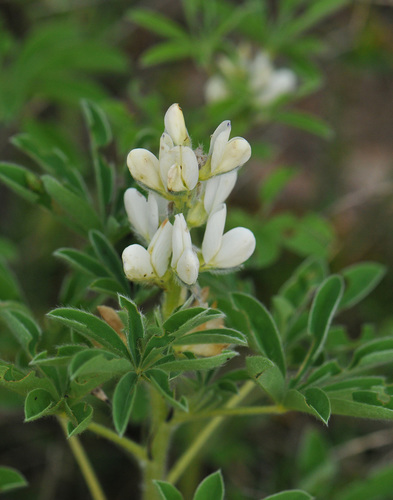
Lupinus albus L., commonly called white lupin, is an annual plant that is more or less pubescent, and typically grows 30 to 120 cm tall. It grows naturally across the Balkans, the island of Sicily, and Turkey, and is widely naturalized throughout the Mediterranean region including North Africa, Europe extending north to Great Britain, Germany, the Baltic States and western Russia, and the Indian subcontinent. Naturalized populations have also been recorded in Australia and Chile. It occurs in meadows, pastures, and grassy slopes, growing on both sandy and acidic soil. White lupin is cultivated across the Mediterranean region, Egypt, Sudan, Ethiopia, Syria, Europe, South America, and tropical and southern Africa. Until recently, ancient cultivation of this species under the local name hanchcoly was still practiced in western Georgia. It is sometimes called "field lupin" in cultivation, though this name is imprecise, as it has been used for multiple species in the Lupinus genus. Within the large, polymorphous genus Lupinus, white lupin is distinguished by its low morphological variation. However, the species shows wide intraspecific variability in physiological traits: vernalization duration, growth rate, photoperiodic sensitivity, shape tolerance, drought resistance, and cold- and winter-hardiness. Both winter and spring forms of white lupin exist. When spring-sown, the growing period lasts 106 to 180 days. Seed mass per plant ranges from 2.2 g to 40 g, green mass yield per plant ranges from 9 g to 250 g, seed protein content ranges from 35.0% to 53.7%, and seed oil content ranges from 6.2% to 12.0%. Some scholars link the start of lupin cultivation in the Old World to Ancient Egypt. It is more likely that white lupin was first domesticated in ancient Greece, where it has the greatest biodiversity and where wild forms (subspecies graecus) still survive today. On the Balkan Peninsula, other white lupin subspecies (subspecies termis and subspecies albus) have become feral and now grow in natural habitats. The Greek origin of cultivated lupin may also be supported by its Greek name thermos, which translates roughly to "hot". Over time, white lupin spread from Greece to neighboring regions and states, particularly Egypt and Ancient Rome. Forms with white seeds and pink-and-blue or light-pink flowers (originally classified as L. termis) spread mostly south to Egypt, Libya, and Palestine, while forms with white seeds and grayish-blue or white flowers (originally classified as L. albus) spread west to the Apennine Peninsula and beyond. According to Zohary and Hopf, white lupin remains a valued food crop and is still cultivated in some Mediterranean countries, especially Egypt. In Greece, particularly on Crete and in the Peloponnese, lupin seeds are a very common snack eaten during Lent. They are usually soaked in seawater for 2–3 hours to mellow their flavor before being eaten raw. Lupin is a very popular snack in France, Spain, Portugal, southern Italy, and parts of Brazil, where it goes by different regional names: tramousse or lupin in French, lupini in Italian, tremoços in Portuguese, altramuces or chochos in Spanish, and tramussos in Catalan. In Arabic it is called terms (ترمس), and soaked, brined lupin seeds are sold as a popular street snack in Egypt. Since ancient times, white lupin has been widespread in the Mediterranean region and the Middle East, valued for its high tolerance to acidic soils and its ability to restore soil health. It tolerates soil acidity up to pH 6.5, and does not grow well in alkaline or organic soils. The soil must be well drained and loose, because lupin is prone to root asphyxia. White lupin grows well in the same climate zones as maize. Except during the early growing season, it requires little water, thanks to its long tap root.