About Lithobates sphenocephalus (Cope, 1886)
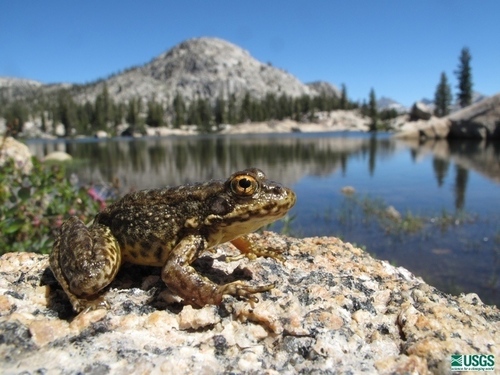
Lithobates sphenocephalus, commonly known as the southern leopard frog, reaches a maximum total length of 13 cm (5.1 in). At sexual maturity, males have an average snout-vent length (SVL) of 52.9 mm (2.08 in), while females have an average SVL of 63.8 mm (2.51 in).
Adult Coloration
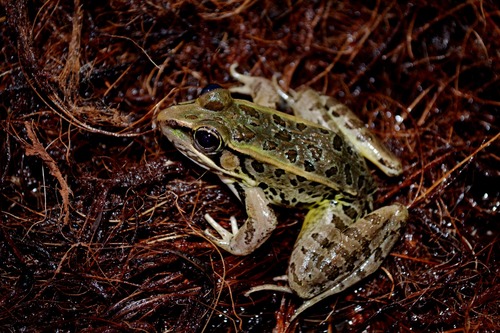
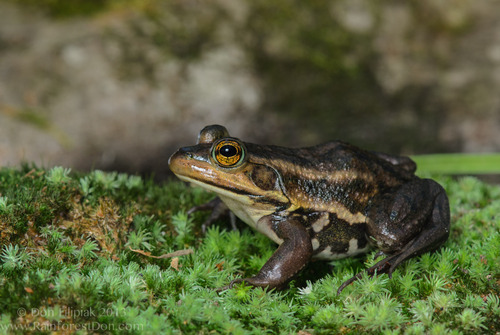
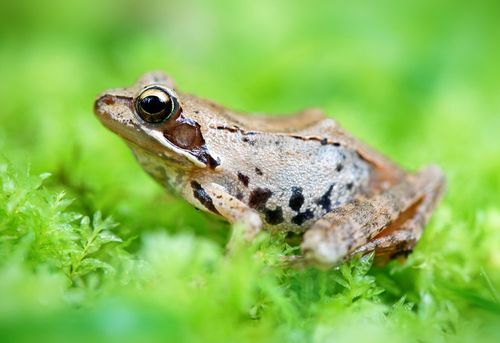
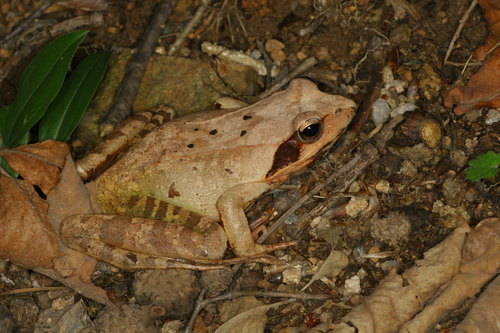
The frog’s base color is either green or brown, with a yellowish ridge running along each side of the back. Rounded dark spots appear across the back and sides, and a light-colored spot is present on each tympanum.
Sexual Dimorphism
Males have larger fore limbs than females, and the vocal sacs of breeding males are spherical when inflated. The species’ call is described variously as a "ratchet-like trill", "chuckling croak", or "squeaky balloon-like sound".
Tadpole Traits
The larval (tadpole) stage has mottled patterning, with eyes positioned on the top of the head. Tadpoles grow to 7.6 cm (3.0 in) in length before maturing into adults.
Egg Mass Features
Females produce an egg mass that reaches "baseball-sized" near hatching, and holds up to 1,500 eggs. When eggs, embryos, and larvae are exposed to pesticides during development, exposure causes significant mortality and developmental deformities.
Pickerel Frog Comparison
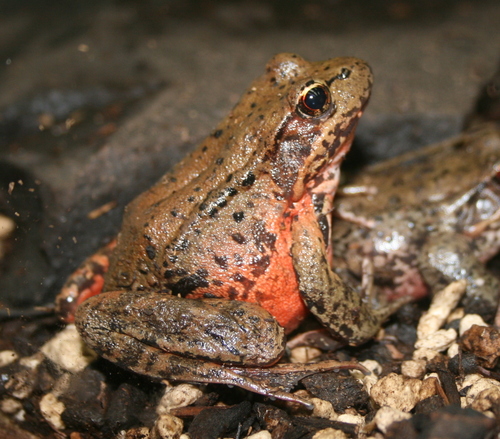
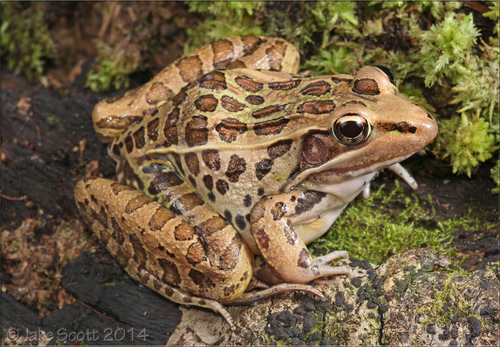
This species is easily confused with the similar-shaped, similarly colored pickerel frog (Lithobates palustris). Pickerel frogs differ by having more rectangular, uniform dark spots on the back arranged in distinct rows, and any tympanum spot, when present, is dark green or brown rather than stark white.
Atlantic Coast Leopard Frog Comparison
Southern leopard frogs may also be confused with the Atlantic Coast leopard frog (Lithobates kauffeldi) in the northern part of the southern leopard frog’s range, and confident identification between the two can be impossible where their ranges overlap. Southern leopard frogs can be distinguished by their lighter femoral reticulum on the inner thigh, more elongated snout, and consistent light spot on the tympanum.
Native Range
The southern leopard frog is widespread across eastern North America, and is particularly common in the Southeast United States. It is the most common frog species in Florida and multiple other regions.
Introduced Populations
It is an introduced species in The Bahamas, Arizona, and two locations in California. The species was first introduced to California’s Prado Flood Control Basin via a shipment of aquatic fauna to the Chino Gun Club in 1929 or 1930, and it is now common in urbanizing areas of the basin. A second established population in California is suspected after two females were discovered in March 2016 in the San Joaquin River, just northwest of Fresno on the border between Madera and Fresno Counties.
Habitat Preferences
Southern leopard frogs occupy many types of shallow freshwater habitats, and sometimes live in slightly brackish water. They most often occupy wetter environments with herbaceous plant cover and low canopy.
Movement Patterns
They are typically found close to water, but can survive on dry land for extended periods. During warmer months, they spend most of their time away from water.
Activity Cycles
They are mostly nocturnal, but may be active both day and night, especially during rainfall.
Breeding Timing
Breeding occurs in winter and spring, and sometimes also in fall. While breeding activity correlates with the time of year, mean daily precipitation is the main factor that determines when breeding takes place. Breeding can happen year-round in southern U.S. states, but typically occurs in early spring.
Breeding Physiology
Both sexes have their lowest fat stores from late winter through spring, when breeding begins. Southern populations have the longest breeding season.
Breeding Habitat
Breeding can take place in a wide range of aquatic habitats, from ephemeral to permanent. Egg masses are attached to aquatic vegetation.
Egg Laying Behavior
Females usually lay eggs communally in cooler weather, and individually in warmer weather. Communal egg deposition in cool temperatures is thought to be an adaptation that improves egg and embryo survival by providing a thermal advantage, similar to the behavior of the wood frog.
Egg Development
Eggs hatch between 4 days and nearly two weeks after laying. L. sphenocephalus eggs have been observed to hatch more quickly when predators such as crayfish are present.
Egg Survival Threats
The invasive Chinese tallow tree negatively affects the survival of leopard frog eggs: fallen tallow leaves alter dissolved oxygen levels in water, killing young eggs while more developed eggs may survive.
Tadpole Development
Tadpoles take 50 to 75 days to complete development into adulthood. In the northern parts of the species’ range, southern leopard frogs are dormant during the winter, staying in well-oxygenated, unfrozen water bodies. The highest recorded altitude for the species is 1,000 feet.
Adult Diet
Southern leopard frogs feed primarily on insects, crayfish, and other invertebrates. They forage in upland areas during the summer. In other parts of the species’ range, the diet consists mainly of spiders, beetles, and gastropods such as snails.
Antimicrobial Peptide Response
Studies of southern leopard frogs have found that geographically separated populations produce distinct numbers and combinations of antimicrobial peptides (AMPs) in response to increasing infection rates of the fungal pathogen Batrachochytrium dendrobatidis. These AMPs reach maturity and are excreted around 12 weeks after metamorphosis.