About Lithobates berlandieri (Baird, 1859)
Size
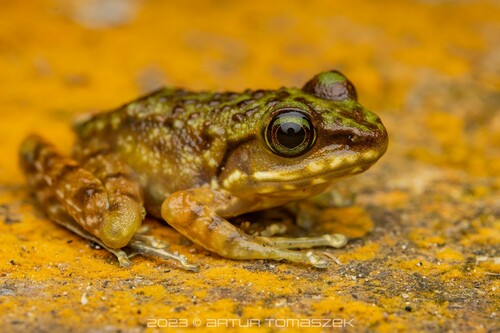
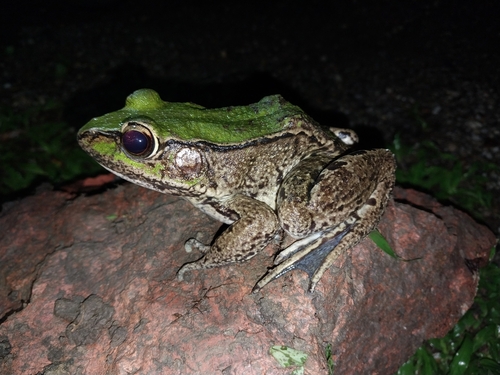
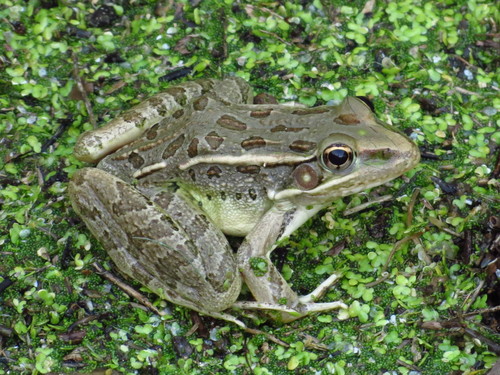
Rio Grande leopard frogs (scientific name Lithobates berlandieri) measure 2.2 to 4.5 inches (5.6 to 11.4 cm) in total length.
Coloration and Dorsal Features
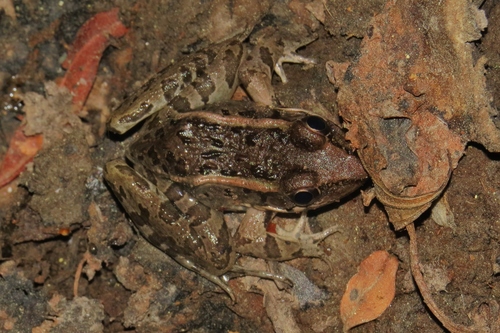
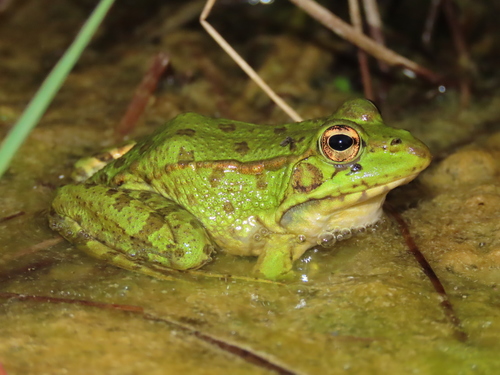
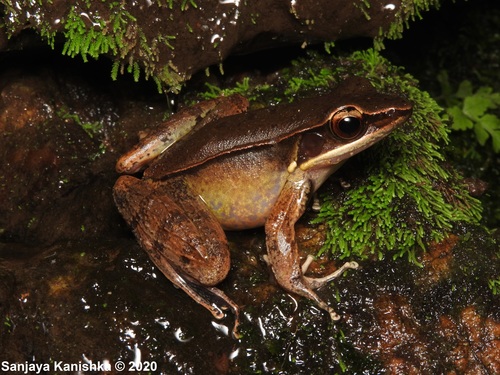
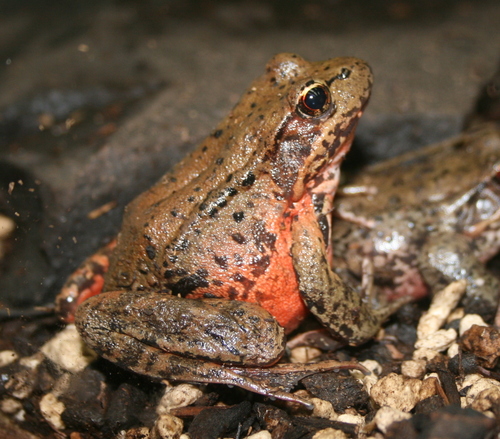
Their base color is most often tan, brown, or pale green, marked with distinctive black spots, and they have prominent light-colored ridges running down both sides of their backs.
Head and Limb Morphology
They have angular noses, long powerful legs, and webbed feet.
Native Geographic Range
This species has a geographic range extending from Central Texas to New Mexico, where it is classified as vulnerable, south through Mexico to the Yucatán Peninsula, Belize, Guatemala, and Honduras, reaching as far south as northeastern Nicaragua.
Unconfirmed Range Record
Its presence in El Salvador has not been confirmed.
Similar Species and Hybridization
It is easily confused with other species that share its range, such as the Plains leopard frog (Lithobates blairi), and it remains unknown whether hybridization between these similar species occurs.
Introduced Range
The Rio Grande leopard frog has also been introduced to the Colorado River in California and Arizona, and it is currently expanding its range south into the Mexican state of Baja California.
Impact of Introduced Population
This introduced population is thought to contribute to population declines of the native lowland leopard frog (Lithobates yavapaiensis).
Conservation Status
Due to its expanding range, the Rio Grande leopard frog is classified as Least Concern on the IUCN Red List.
Activity Pattern
The species is primarily aquatic and mostly nocturnal, though individuals can often be found resting along water edges during the day.
Habitat Requirements
Even though most of its native range is arid or semiarid, it only inhabits permanent water sources including streams, creeks, and ponds.
Diet
It is primarily insectivorous, but like most frogs will eat almost any prey it can overpower and swallow.
Mating Period
Mating takes place during rainy periods in spring and fall.
Male Mating Call
Males produce a loud rattling call that can be heard from a quarter mile or more away.
Egg Laying
Eggs are laid in large masses that attach to aquatic vegetation.