About Lepus brachyurus Temminck, 1844
Taxonomy and Fur Color
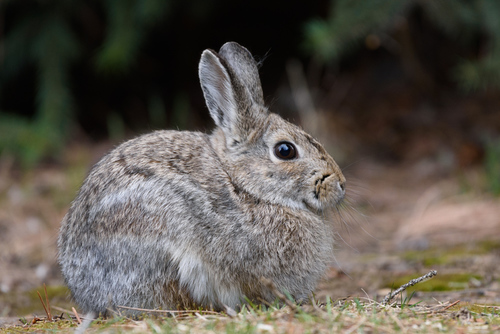
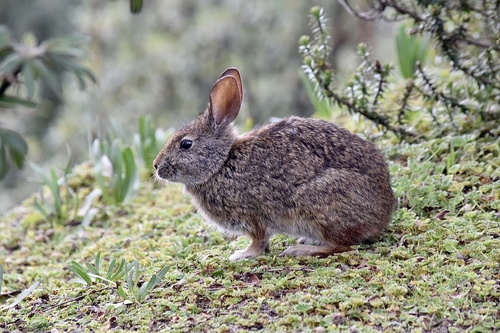
The Japanese hare, whose scientific name is Lepus brachyurus Temminck, 1844, typically has reddish-brown fur.
Body Size
Its full body length ranges from 45 to 54 cm (18 to 21 in), and its body weight ranges from 1.3 to 2.5 kg (2.9 to 5.5 lb). It has a tail that grows 2 to 5 cm (0.79 to 1.97 in) long.
Limb Length
Its front legs measure 10 to 15 cm (3.9 to 5.9 in) in length, while its back legs measure 12 to 15 cm (4.7 to 5.9 in) in length. Its ears reach 6 to 8 cm (2.4 to 3.1 in) long.
Seasonal Color Change
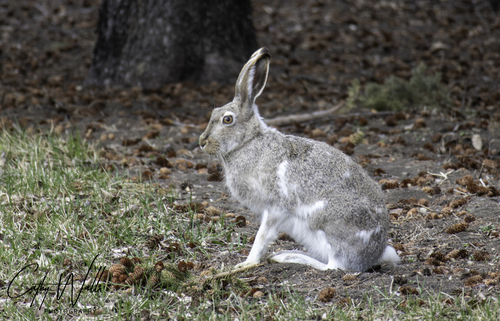
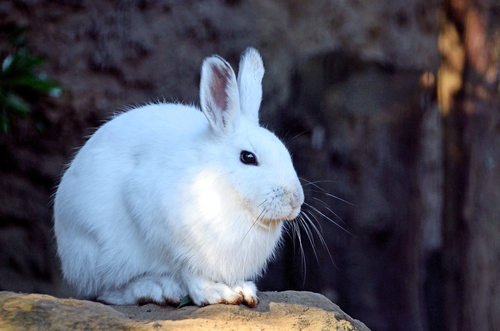
In regions of northern Japan, the west coast, and the island of Sado that receive heavy snowfall, this hare changes its color in autumn: it stays white until spring, when its reddish-brown fur grows back.
Geographical Range
Japanese hares live across Honshu, Shikoku, and Kyushu—all the main islands of Japan except Hokkaido, where the related mountain hare (Lepus timidus) replaces this species.
Elevation and Habitat
They can be found at elevations up to 2700 m, and mostly occupy mountains or hilly areas. They also live in forests and brushy areas.
Urban Adaptation
After human settlements expanded into their range, Japanese hares have adapted successfully to live in and around urban environments, and have even become a nuisance in some locations.
Litter Size
For Japanese hares, litter size ranges from 1 to 6.
Reproductive Maturity
The age at which they reach maturity is not confirmed, but females likely breed within one year of birth.
Breeding Pattern
Breeding happens year-round, and females produce several litters each year, with 2 to 4 young per litter.
Mating Behavior
Mating is promiscuous: males chase females, and fight other males by boxing to repel rivals.
Diet Overview
Japanese hares get almost all their nutrients from native vegetation in and around their habitat. They eat grasses, shrubs, and bushes.
Bark Feeding Habit
This species is one of the few hares that will eat tree bark, and it feeds on bark occasionally. This feeding behavior can cause major damage to trees and forests.
Cultivated Plant Feeding
In parts of Asia, they will sometimes feed on bark from cultivated bonsai trees.