About Leptodactylus petersii (Steindachner, 1864)
Adult Size
In terms of snout–vent length, male Leptodactylus petersii measure 27–41 mm (1.1–1.6 in), while females measure 31–51 mm (1.2–2.0 in).
Dorsal Coloration
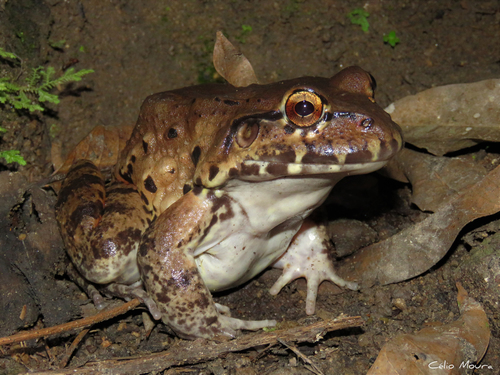
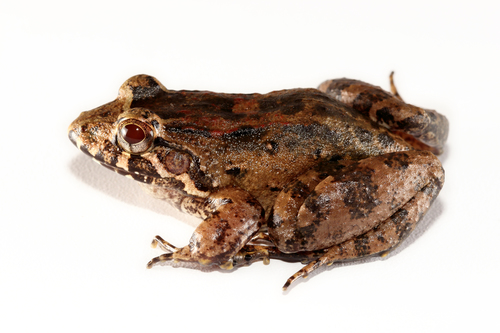
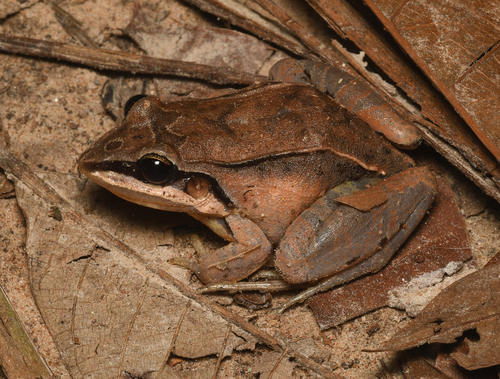
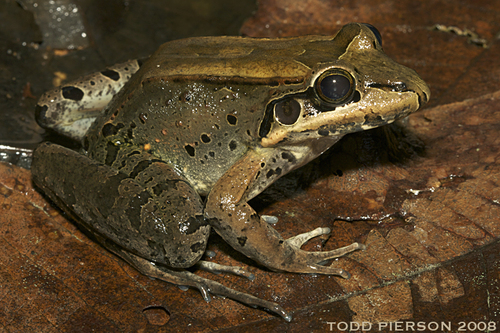
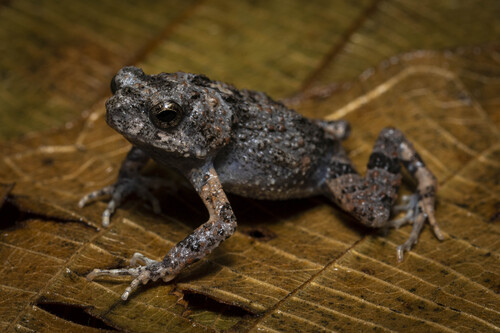
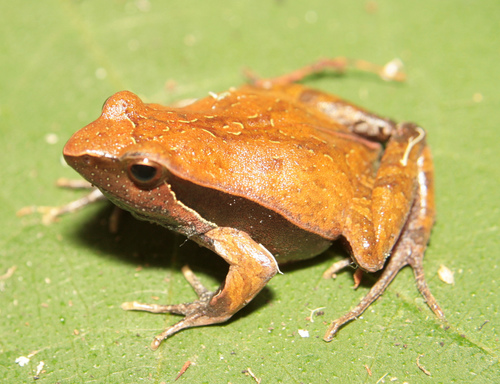
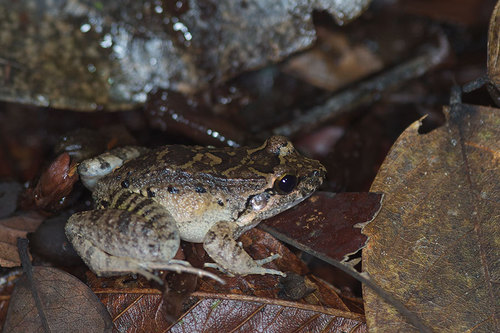
The dorsum ranges in color from greenish or greyish brown to reddish brown, and has irregular dark brown to black markings. There is also a dark, triangular mark between the eyes (inter-orbital mark).
Dorsal Skin Texture
The dorsum has many spicules and short, laterally oriented glandular ridges.
Ventral Coloration
The ventrum is smooth, with a variable pattern that has a white background and extensive anastomotic grey to black mottling. The throat is dark grey with white spots.
Tympanum & Fold Features
The tympanum is relatively large, and the supratympanic fold is distinct, reaching the arm insertion.
Iris Color
The iris is bronze to reddish brown.
Limb Morphology
Fingers have no lateral fringes, or only weak lateral fringes, while toes have extensive lateral fringes and also have basal webbing.
Male Secondary Sexual Trait
Males have two large spines on their thumbs.
Tadpole Size
Tadpoles grow to a maximum total length of 21 mm (0.83 in) at Gosner stage 36, with the tail making up 60% of this total length.
Habitat Range
Leptodactylus petersii is found in tropical rainforest, forest edges, open areas, savanna enclaves within tropical rainforest, and open cerrado formations, all below 600 m (2,000 ft) elevation.
Activity & Microhabitat
This nocturnal frog is usually found on the ground near water.
Reproduction
Eggs are laid in a foam nest near water, and tadpoles move to the water after hatching.
Conservation Status
This is a common species that occurs in many protected areas, and the IUCN does not consider it threatened.