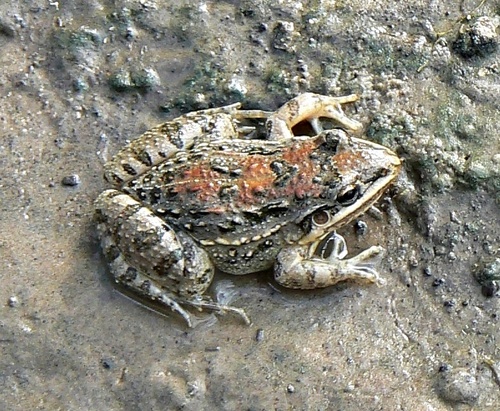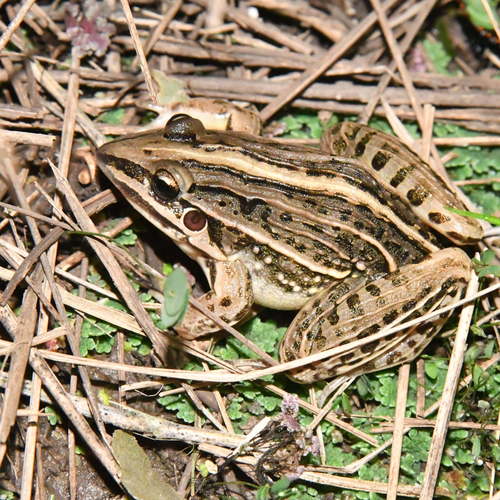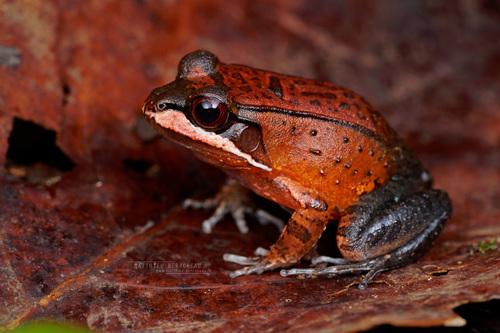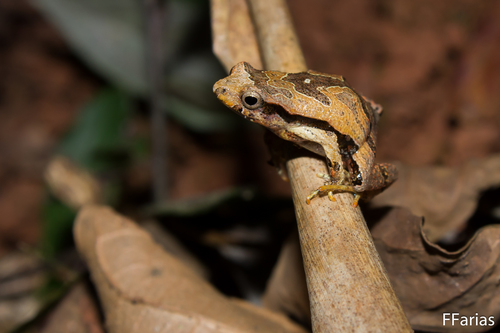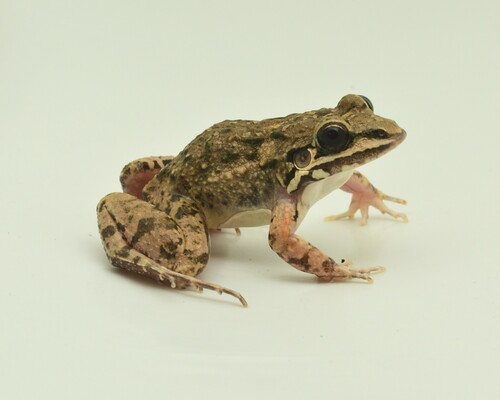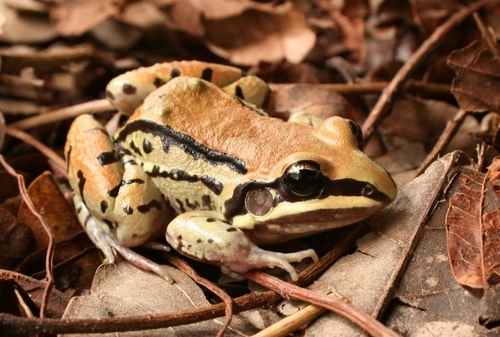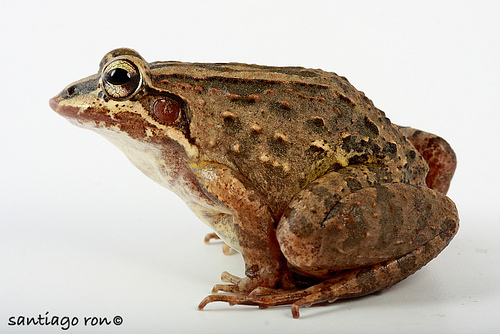
About Leptodactylus labrosus Jiménez de la Espada, 1875
Adult Size
Adult male Leptodactylus labrosus measure 49.2–61.5 mm in snout-vent length, while adult females measure 39.9–69.0 mm.
Eye Characteristics
This frog has prominent, protruding eyes.
Habitat Types
It inhabits dry environments including scrubland, and forests that contain at least some deciduous trees; it has occasionally also been found in evergreen forests, at forest edges, and on farms.
Microhabitat & Elevation Range
This nocturnal, terrestrial frog occurs in leaf litter and other microhabitats with moderate humidity, and has been recorded at elevations between 0 and 1300 meters above sea level.
Confirmed Protected Area Occurrences
Confirmed populations of the frog are found in three protected areas: Machalilla National Park, Manglares Churute National Park, and Mache Chindu National Park.
Potential Protected Area Occurrences
It is thought the species may also inhabit Parque Nacional Cerros de Amotape and El Angolo Game Preserve.
Reproductive Egg Laying
For reproduction, female Leptodactylus labrosus lay eggs in holes near water.
Tadpole Development
When water subsequently floods these holes, tadpoles emerge and swim out into the water.