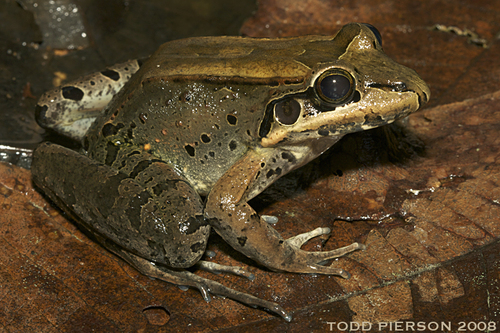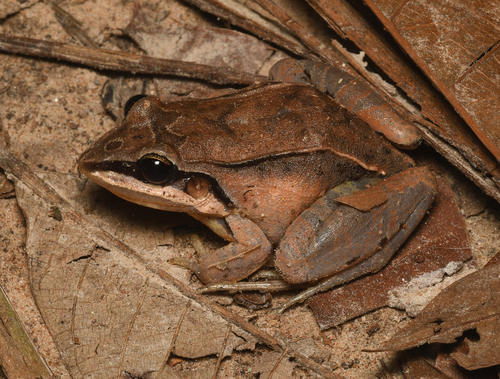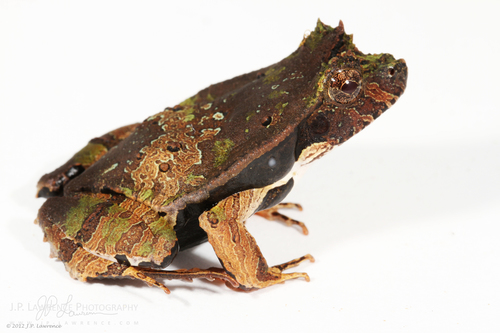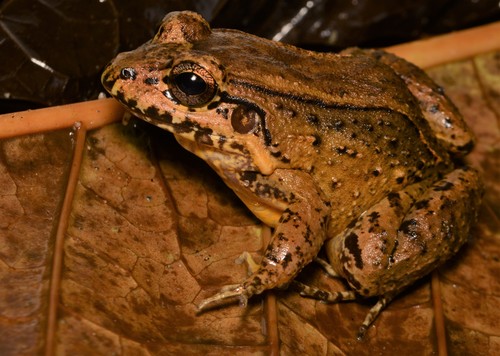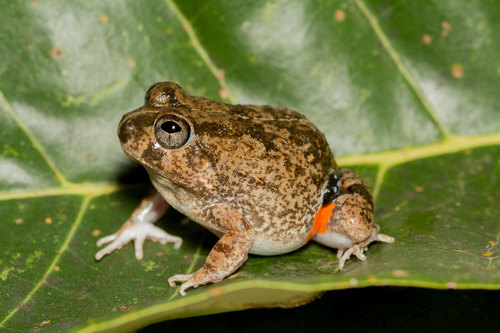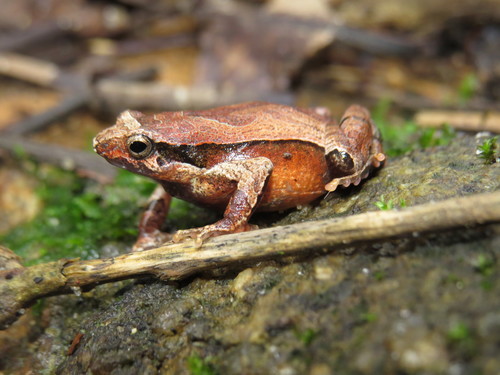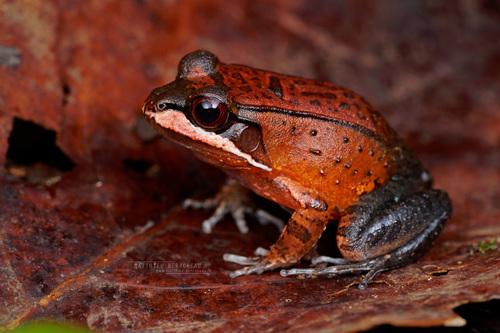
About Leptodactylus rhodomystax Boulenger, 1884
Taxonomy and Naming
Leptodactylus rhodomystax, described by Boulenger in 1884, has common names the Loreto white-lipped frog and the rose-lipped thin-toed frog. It is a species of frog belonging to the family Leptodactylidae.
Confirmed Distribution
Its confirmed distribution ranges across the Guianas (French Guiana, Guyana, and Suriname), through northern and central Brazil, to Amazonian Bolivia, Colombia, Peru, and Ecuador.
Unconfirmed Venezuela Records
Possible occurrence in Venezuela has been reported, but most if not all existing records from this country are misidentifications of Leptodactylus riveroi.
Size
This is a small species of frog. The two syntypes of this species measured 25 mm (0.98 in) in snout–vent length.
Habitat
Its habitat includes leaf-litter on the forest floor, swamps within tropical rainforest, the edges of clearings, and more open areas within forest.
Breeding Site Preferences
This frog breeds in semi-permanent waterbodies. It is not selective about breeding sites, and will use many types of temporary and semi-permanent pools.
Male Calling Behavior
Males call from inside ground holes. They do not appear to form calling choruses, and usually only one or just a few males can be heard calling at any single site.
Egg Laying Trait
Eggs of this species are laid in foam nests.