About Leptodactylus albilabris (Günther, 1859)
Common Name and Basic Biology
Leptodactylus albilabris, commonly called the white-lipped frog, is a terrestrial, smooth-bodied frog that goes through a tadpole stage. Its tadpoles are brown and grow to around 1.5 inches (38 millimeters) in length.
Distinguishing Morphological Features
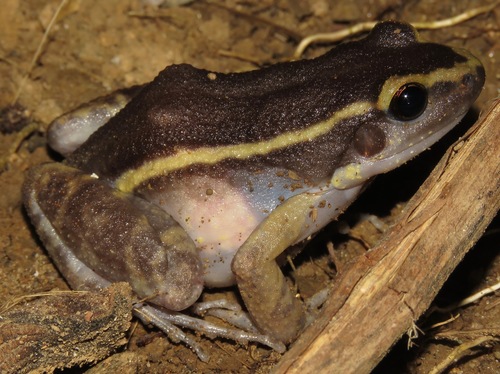
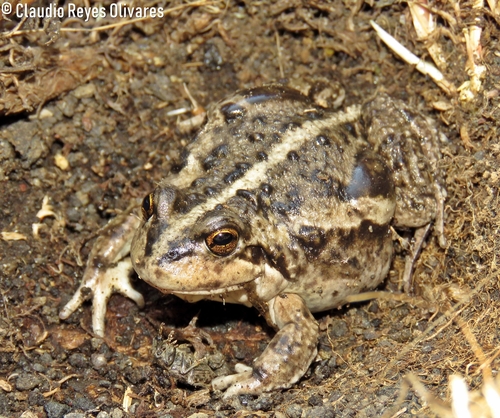
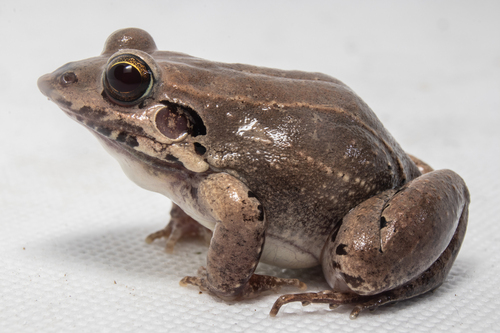
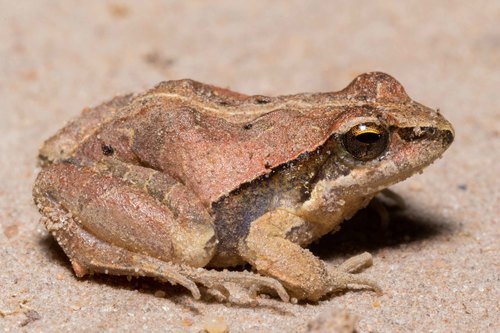
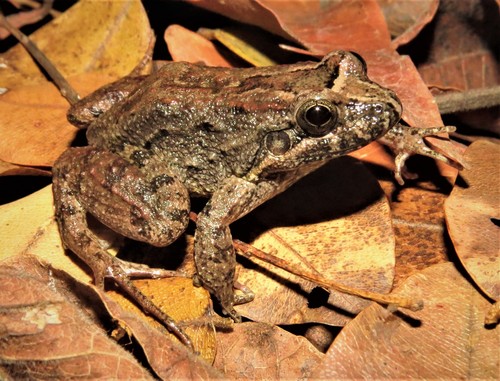
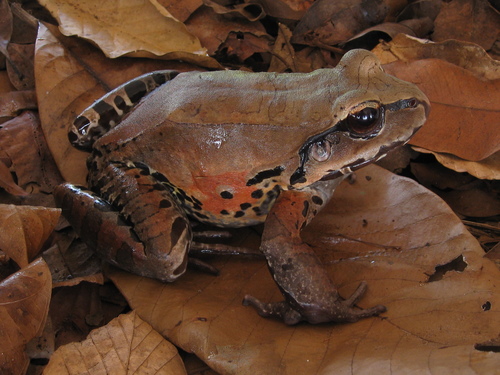
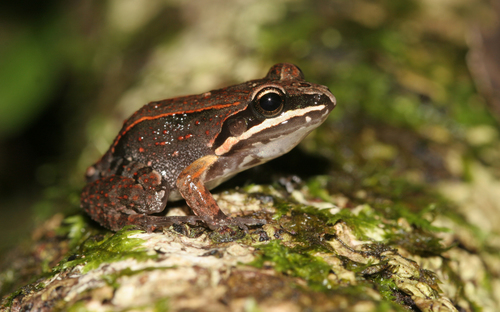
This species can be identified by its characteristic white upper lip (which gives it the species name albilabris), webless fingers and toes, and a black streak running between the eyes and the tip of the snout, as well as between the eye and shoulder. Most adults reach 1.4 inches (3.6 centimeters) in snout-vent length.
Size Variation by Elevation
Like other Puerto Rican frogs, its body size increases with elevation; adults with a snout-vent length over 2.0 inches (5.1 centimeters) are not uncommon in the higher elevations of El Yunque National Forest.
Dorsal Coloration
The frog has a grayish brown base body color, with dorsal lines and bands in varying shades of brown, cream, and reddish brown.
Ventral Coloration
Its ventral side is white, and some males have numerous dark spots on the throat.
Vocalization
Its call is a repeated "pink-pink-pink" sound, most often heard from individuals in muddy areas.
Geographic Range
It is distributed across the Dominican Republic on Hispaniola, Puerto Rico, the British Virgin Islands, and the U.S. Virgin Islands.
Habitat
It typically inhabits muddy areas near streams, marshes, and ditches.